Walk into any well-run biohazard remediation company’s truck, and you’ll notice something immediately: it doesn’t look like a cleaning van. There are no mop buckets or multi-surface sprays. What you’ll find instead is a carefully organized collection of industrial equipment — air scrubbers, fogging units, ATP luminometers, respirators rated for chemical and biological exposure — that most people have never seen outside a hospital or a hazmat response team.
The right biohazard cleanup equipment doesn’t just make a job faster. It’s the difference between a legally documented, properly remediated space and a surface that looks clean but continues to harbor pathogens, off-gas decomposition compounds, or breed mold behind the new paint. This guide covers what experienced crews actually deploy in 2026, what OSHA requires at every stage, and where the most common equipment mistakes happen — whether you’re outfitting a startup operation or auditing your current setup.
Professional Biohazard Cleanup Equipment: The 2026 Industry Standard
The equipment landscape for biohazard remediation tools for commercial properties has matured considerably over the past decade, but the gap between what professional crews use and what under-equipped operators attempt to use remains wide. The categories below represent the full deployment stack — not a wishlist, but the actual gear required to meet federal compliance standards and produce a defensible certificate of decontamination.
OSHA Level C PPE: Protecting Technicians from Bloodborne Pathogens
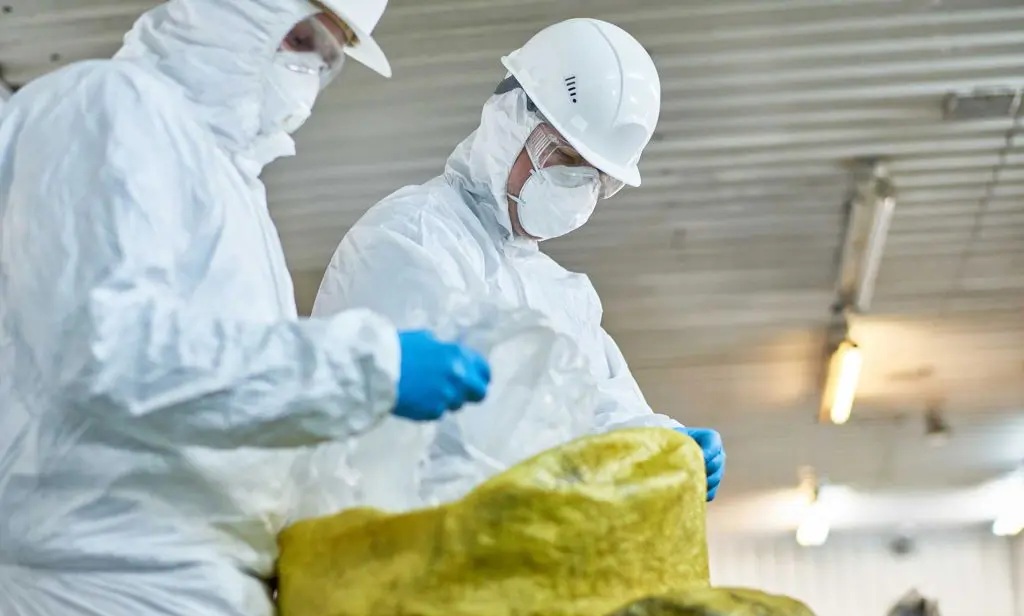
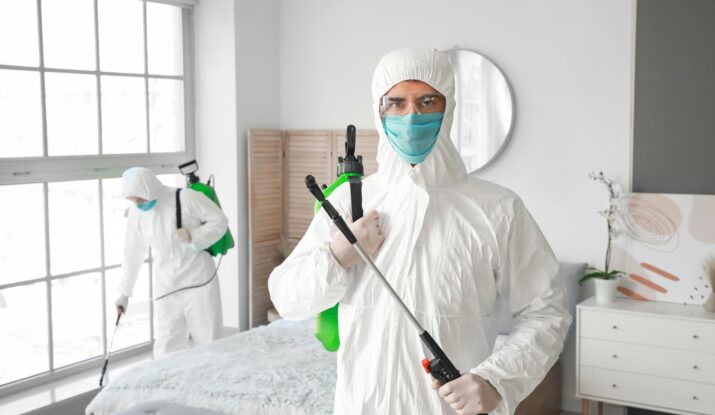
Personal protective equipment in biohazard remediation isn’t one item — it’s a classified system, and understanding the federal classification matters both for compliance and for correctly equipping a crew.
OSHA and EPA define four PPE levels — A through D — based on the hazard environment. Level A represents the highest protection, used in immediately dangerous-to-life environments with unknown airborne concentrations. Level D is essentially standard work clothes with minimal protection. Standard trauma scene cleanup typically mandates Level C protection, which is the practical standard for most biohazard remediation work:
- A fluid-resistant chemical protective coverall (Tyvek or Saranex-laminated, Category III rated)
- Double nitrile gloves — a thinner inner glove paired with a heavier outer glove, changed between containment zones
- Chemical-resistant boot covers with taped seams at the coverall ankle
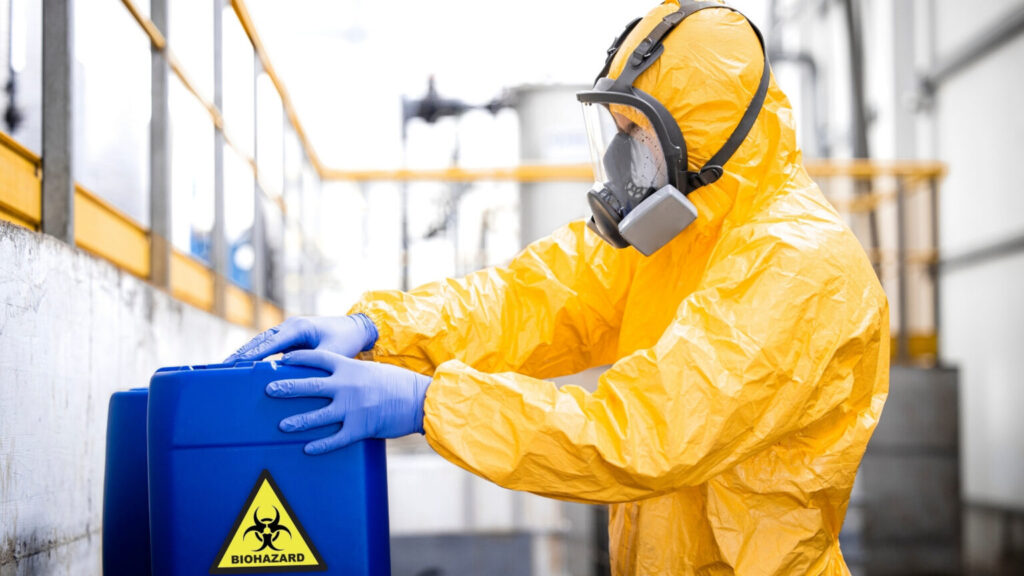
- A full-face Air-Purifying Respirator (APR) with the correct cartridge configuration
The Anatomy of a Trauma-Grade Respirator: P100 vs. Organic Vapor Cartridges
The respirator cartridge choice is one of the most under-discussed decisions in trauma cleanup PPE selection. P100 particulate cartridges filter at 99.97% efficiency for airborne biological particles — the correct choice for scenes where the primary hazard is bioaerosols from blood, decomposition, or sewage. For scenes with significant chemical off-gassing — decomposition VOCs, fentanyl contamination, or chemical spills — a combination cartridge adding organic vapor (OV) filtration to the P100 is required. Full-face respirators provide additional protection against splash to the eyes and mucous membranes on high-fluid scenes.
Under OSHA’s Respiratory Protection Standard (29 CFR 1910.134), no employee can wear a respirator on the job without a completed medical evaluation and documented fit test first. This is a separate compliance requirement from the bloodborne pathogen standard, and it’s one of the most commonly cited gaps during OSHA inspections of biohazard cleanup operations.
The most common PPE mistake experienced crews observe is treating the system as a checklist formality — wearing a coverall but skipping double-gloving, or substituting an N95 for a P100 APR because it’s more comfortable. Neither shortcut is harmless. Tyvek suits, APRs with correct cartridges, and nitrile double-gloves are available from industrial suppliers like Grainger, Uline, and Zoro, typically at $5 to $15 per suit and $25 to $45 per cartridge set.
Air Scrubbers for Decomposition Odor and Airborne Contamination
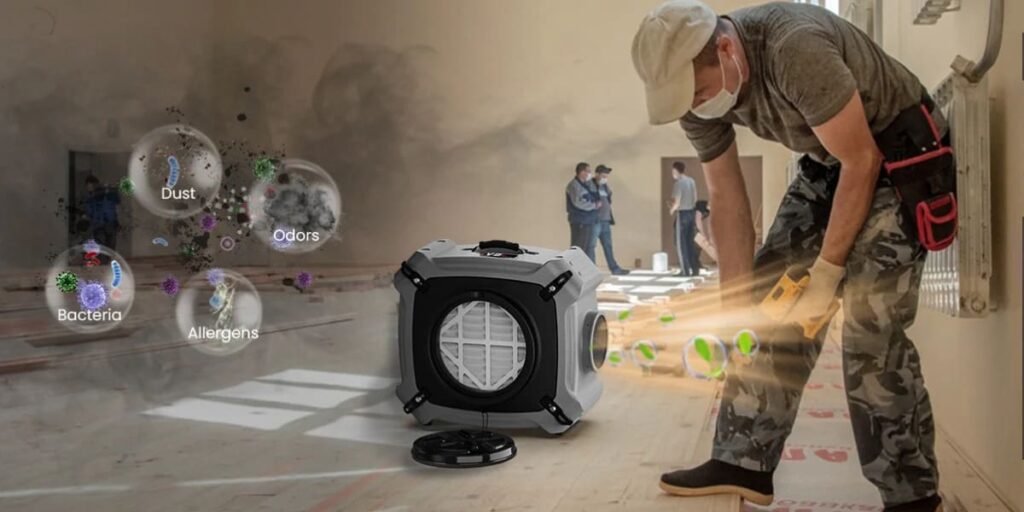
Air scrubbers run continuously throughout a biohazard job — they’re not turned on when the work is done. They capture airborne particulates, bioaerosols, and VOCs the moment technicians begin disturbing a contaminated scene, preventing those particles from settling on previously uncontaminated surfaces or recirculating through the building.
A professional-grade unit pulls room air through a pre-filter, a HEPA filter rated at 99.97% efficiency for particles 0.3 microns and larger, and in many units an activated carbon stage for chemical odor absorption. In negative-air-pressure configurations — essential for severe decomposition or contamination in occupied buildings — the scrubber is ducted to vent outside, creating a lower-pressure environment that pulls airborne contamination toward the scrubber rather than letting it migrate outward.
Portable units in the 500 to 1,000 CFM range (the Dri-Eaz HEPA 500 and BlueDri BD-AS550 are widely used) cost $700 to $1,500 and cover roughly 500 to 700 square feet of contaminated space per unit. Most professional crews run multiple portable units rather than one large commercial system, because the redundancy matters — if one unit fails mid-job, the job continues. Air scrubbers for decomposition odor are effective at capturing particulates but don’t chemically neutralize VOCs, which is where ozone generators and hydroxyl units pick up the work.
ULV Cold Foggers vs. Thermal Foggers: Structural Disinfection Chemistry
The fogging category is where the most technical confusion exists in biohazard cleanup equipment purchasing — and where the wrong choice produces genuinely different outcomes on the job.
How Each System Works
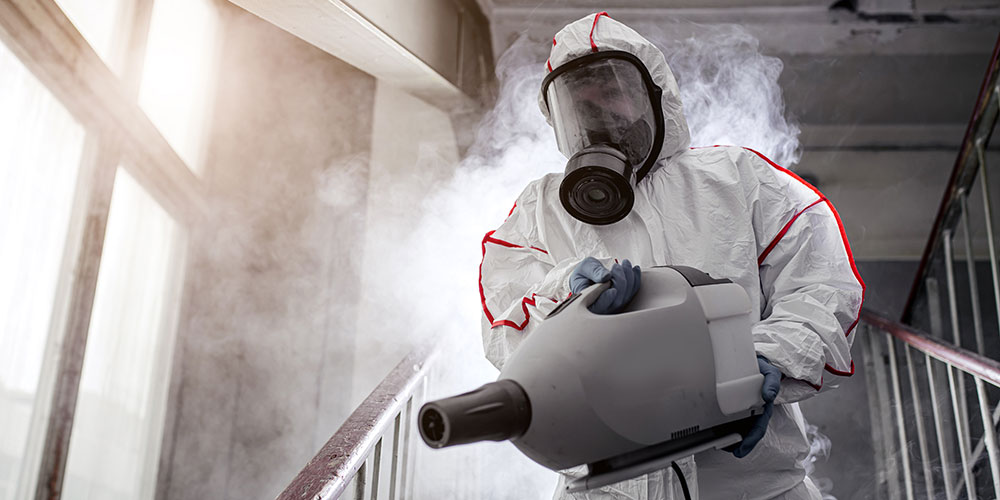
ULV (Ultra-Low Volume) Cold Foggers use high-pressure air streams to produce droplets in the 5 to 30 micron range. This particle size is ideal for evenly distributing a liquid disinfectant across hard, non-porous structural surfaces — floors, walls, countertops, and fixtures. The droplets remain suspended briefly in the air before settling, providing consistent coverage across visible surfaces without the penetration depth of thermal fogging. Cold foggers are the right choice when surface disinfection is the primary goal, particularly with EPA-registered bloodborne pathogen disinfectants on hard surfaces.
Thermal Foggers use heat to vaporize an oil- or water-based solution into an ultra-fine smoke-like mist with particle sizes under 5 microns — smaller than what cold foggers produce, and small enough to follow the same pathways that odor and contamination molecules traveled when they penetrated porous materials. This is what makes thermal fogging essential for decomposition odor embedded in subflooring, wall cavities, and wooden framing: the fog physically reaches places that surface spraying and cold fogging can’t access.
The practical sequencing used by experienced crews: cold fogging with a disinfectant to address surfaces during the active cleanup phase, followed by thermal fogging with an encapsulant or deodorizer after source material has been removed, to address residual compounds in porous materials.
Disinfectant Selection: EPA Registration Is Non-Negotiable
The disinfectant used in either system must carry an EPA Registration Number proving efficacy against the specific pathogens being targeted. For biohazard scenes involving blood and bodily fluids, the correct reference points are EPA List D (products registered against HIV-1 and Hepatitis B), EPA List N (for viral pathogens including SARS-CoV-2), and EPA List Q for emerging enveloped viruses. Using a general-purpose commercial cleaner in a fogging system on a trauma scene is not just ineffective — it means the scene wasn’t disinfected to any verifiable standard, which creates liability if contamination is found later.
Deep Purifying: The Safe Deployment of Industrial Ozone Machines
Ozone generators are among the most misused pieces of equipment in this industry — and among the most effective when deployed correctly within their specific operational envelope.
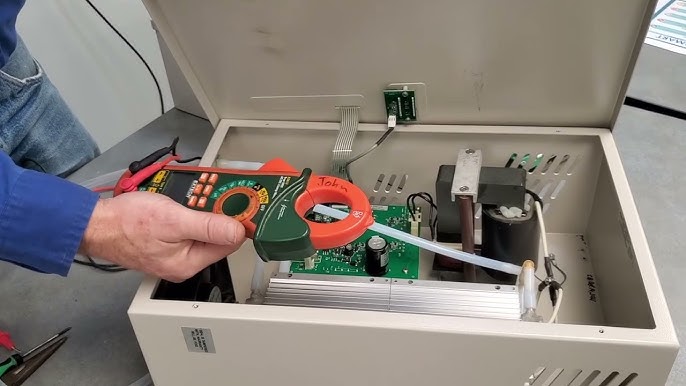
Ozone (O₃) destroys odor-causing compounds through oxidation, chemically altering their molecular structure so they no longer produce a detectable smell. This makes ozone machines for odor removal particularly effective for severe decomposition scenarios where VOCs have saturated porous materials over extended periods. Output is measured in milligrams per hour: consumer-grade units sold at hardware stores produce 400 to 800 mg/hr. Professional units used in biohazard remediation generate 5,000 to 20,000+ mg/hr — which explains why a rental unit produces categorically different results than professional equipment.
Ozone Machine Off-Gassing Safety Protocol
This is the section that most generic equipment guides gloss over, and where the most serious safety risks live. Ozone is classified by both OSHA and the EPA as a respiratory irritant with regulated permissible exposure limits. At high concentrations — exactly what professional units produce — it causes airway irritation, coughing, chest tightness, and pulmonary damage with sufficient exposure duration. This is not incidental: it’s why strict protocols exist.
The mandatory operational framework for professional ozone use is:
- Complete evacuation of all humans, pets, and plants from the treatment space before the unit starts
- HVAC systems sealed off or shut down to prevent ozone from migrating to unaffected areas of the structure
- Treatment duration matched to room volume and contamination severity (4 to 24 hours for most residential scenes)
- Mandatory ventilation after treatment — minimum of one to two hours of active air exchange before re-entry — regardless of how little ozone smell remains, since the absence of an ozone odor doesn’t confirm safe O₃ levels
- Post-treatment air scrubber operation to capture any residual particulate VOC byproducts
A failure to run post-treatment ventilation and follow-up air scrubbing is one of the most dangerous shortcuts in biohazard remediation — and one of the most common in operations that haven’t been properly trained on ozone machine off-gassing safety protocol.
Verification Tools: Moving Beyond Cosmetic Clean to ATP Monitoring
ATP testing is the step that separates a professional biohazard cleanup from one that merely appears complete — and it’s the most commonly skipped verification step in under-resourced operations.
ATP (adenosine triphosphate) meters use bioluminescence to detect biological residue invisible to the naked eye, generating a Relative Light Unit (RLU) reading within seconds of swabbing a surface. Systems like the 3M Clean-Trace, Hygiena SystemSURE Plus, and Bio-reveal are widely used in professional biohazard work. ATP testing equipment typically costs $1,500 to $4,000 for the luminometer, with swab costs running $3 to $8 per test. The data log these systems generate — timestamped, location-coded, and objective — is exactly what separates a verifiable decontamination result from a technician’s assertion that a space is clean.
This documentation is what insurance companies use to validate claims, what property owners use to demonstrate safe re-occupancy, and what professional operations like Bio Recovery Pro use to issue a defensible certificate of decontamination. Skipping ATP testing because a scene “looks clean” leaves no objective evidence that biological contamination was actually resolved.
The Professional Biohazard Gear Deployment Checklist
To confirm your remediation setup meets the OSHA Bloodborne Pathogens Standard (29 CFR 1910.1030), verify your gear cache includes the following before any scene entry:
- Level C PPE stack — Category III Tyvek or Saranex coverall, double nitrile gloves, chemical-resistant boot covers, full-face APR with P100/OV cartridges, face shield
- Puncture-resistant sharps enclosures — rigid, leakproof containers with non-reverse locking lids for needles, glass shards, and jagged fragments, preventing direct contact during disposal
- OSHA-compliant hazardous waste bags — mil-spec red biohazard bags bearing the universal biohazard symbol, sealed with a gooseneck knot or zip tie, rated for saturated biological waste
- ATP hygiene verification system — an ATP luminometer with swabs for pre- and post-remediation baseline testing, producing a timestamped digital data log verifying cellular decontamination
- Chain-of-custody manifest documentation — a field logbook recording biohazardous waste tracking numbers from scene to licensed incinerator, compliant with RCRA transport requirements
What Experienced Crews Actually Use: A Practical Summary
Across these equipment categories, the pattern in well-equipped professional operations is consistent: multiple portable HEPA air scrubbers run from scene entry through completion, not just during active cleaning. Trauma cleanup PPE is treated as a classified system — Level C as the baseline, with Level B protocols ready for unknown chemical environments. ULV cold foggers handle surface disinfection with EPA-registered bloodborne pathogen disinfectants during the cleanup phase; thermal foggers address residual odor in porous materials afterward. Ozone treatment is sequenced after thorough source removal, with strict off-gassing protocol before re-entry. And ATP testing closes the loop with objective, documented evidence before any clearance certificate is issued.
The full equipment investment for a properly outfitted single-crew operation typically runs $25,000 to $50,000. It’s significant upfront — but it’s also exactly what determines whether a company can back up its work with documentation that holds up under scrutiny from an insurance adjuster, a property manager, or a future occupant who needs to know the space is genuinely safe.
Final Thoughts
Biohazard remediation tools in 2026 are more capable and better understood than at any previous point in the industry’s history — but the gap between operators who deploy them correctly and those who don’t remains consequential. Equipment doesn’t remediate a scene on its own. It has to be selected correctly for the hazard type, deployed in the right sequence by OSHA-trained technicians, and verified with ATP testing before anything is declared complete.
That combination of professional-grade tools, regulatory compliance, and objective documentation is what separates a company whose work holds up from one that leaves contamination behind along with a receipt.