Finding out a property was once used to manufacture methamphetamine is disorienting in a way that’s hard to explain until it happens to you. Maybe it’s a house you just bought. Maybe it’s a rental where a tenant quietly turned the garage into something you never imagined. Either way, the discovery comes with an immediate, gut-level question: is it actually dangerous, or are people overreacting?
The honest answer is that it’s more dangerous than most people assume, and the danger isn’t always visible. Meth lab cleanup isn’t like cleaning up after a kitchen fire or a flood, where the damage is obvious and the boundaries are clear. The chemicals soak into walls, settle into HVAC systems, and linger in places no one thinks to check — long after the lab itself is gone. This guide walks through what actually happens during professional meth house decontamination, why DIY meth contamination removal doesn’t work, and what the science and state regulations say about when a property is genuinely safe to live in again.
Why Meth Contamination Is Distinct From Ordinary Property Damage
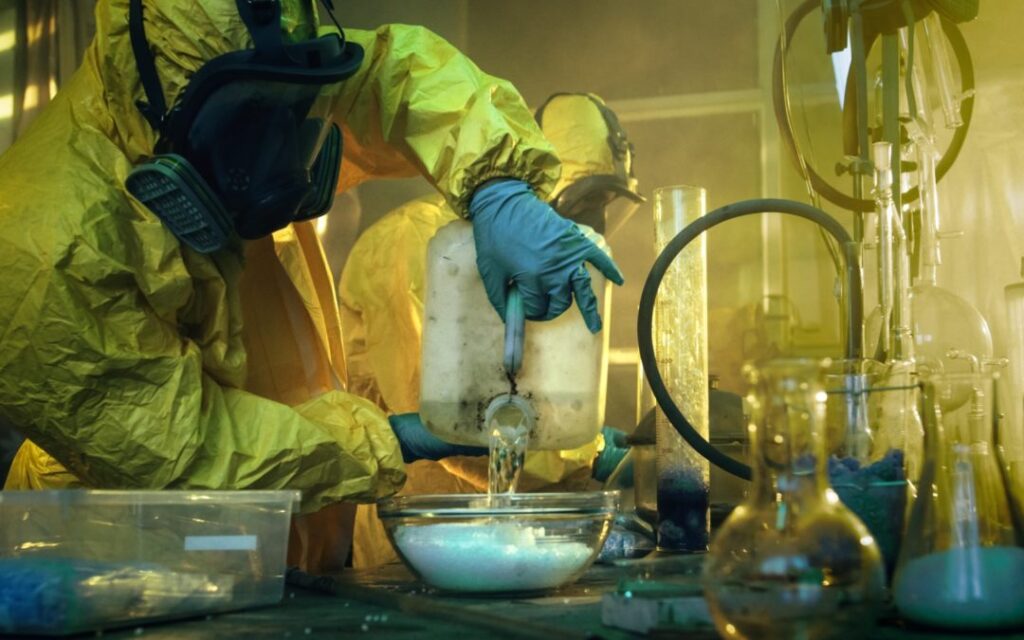
Traditional manufacturing involves cooking a combination of volatile, corrosive, and toxic chemicals — solvents like toluene and acetone, acids, lithium, anhydrous ammonia, and red phosphorus. But the market has shifted significantly in recent years, and most contamination cases a contractor encounters today don’t look like the classic “cook house” anymore.
The Toxic Vapor Trail: How Liquid Meth Conversion Labs Saturate Properties
A growing share of domestic contamination now comes from conversion labs rather than full synthesis operations. Cartel-trafficked liquid methamphetamine is smuggled across the border in solution form specifically to evade detection, then converted back into sellable crystal at a U.S. property — federal prosecutors have documented cases from California to North Carolina where liquid meth was dried and recrystallized using acetone in ordinary apartments, garages, and even backyard tents. Conversion doesn’t always leave the telltale red phosphorus staining people associate with old-style cook sites. It does, however, release a massive, highly concentrated wave of airborne solvent vapor in a short window of time, which can saturate a structure’s porous materials even faster than a slower, traditional cook.
This is the part most people don’t expect. Meth contamination removal isn’t primarily about visible mess. A property can look completely normal — no stains, no chemical smell, no obvious sign that anything happened — and still carry contamination levels well above what any state considers safe for occupancy. The residue is often invisible to the naked eye, which is exactly why meth residue testing, not visual inspection, has to drive every decision about what gets removed and what doesn’t.
The health effects from prolonged exposure to meth residue include respiratory irritation, headaches, skin and eye irritation, and in more severe or prolonged exposure cases, neurological and organ effects — particularly concerning for children, who breathe more air relative to body weight and spend more time in close contact with floors and surfaces. Symptoms of living in a former meth house exposure are frequently dismissed by occupants as unrelated allergies or fatigue, which is part of why testing matters more than gut instinct.
The Federal EPA Framework vs. Local State Police Powers
There is no single federal law mandating meth lab cleanup procedures nationwide. Instead, the Methamphetamine Remediation Research Act of 2007 directed the EPA to develop voluntary technical guidelines, based on the best available science, that states could adopt, adapt, or build their own standards around. The guidelines — recently updated to also address fentanyl remediation given overlapping hazards at mixed-drug sites — cover general cleanup procedures, material-specific best practices, sampling protocols, and post-remediation verification.
Because the federal guidance is voluntary, the actual enforceable authority sits with individual states, exercising what’s typically called police power over public health and housing conditions. This is the part of the meth cleanup process that surprises most property owners: the same level of contamination that requires full remediation in one state might not trigger any legal requirement at all in another.
Decoding the Microgram: Why State Remediation Standards Vary So Enormously
Roughly half the states have established numerical contamination thresholds — measured in micrograms of methamphetamine per 100 square centimeters of surface area (µg/100 cm²) — that a property must test below before it can legally be reoccupied or sold without disclosure. The rest either have process-based guidance without hard numbers, or no formal standard at all.
| Regulation severity | Metric threshold | Example states | Structural reality / cost impact |
|---|---|---|---|
| Hyper-strict | 0.05–0.1 µg/100 cm² | Arkansas, Washington, Arizona, Idaho | Requires aggressive drywall strip-outs, full insulation removal, multiple chemical washing passes |
| Moderate | 0.5 µg/100 cm² | Colorado, Utah | Standard remediation path; structural items can often be saved via advanced encapsulation |
| Health-calculated | 1.5 µg/100 cm² | California, Minnesota, Kansas | Focuses heavily on high-touch surfaces and HVAC decontamination |
This patchwork matters enormously if you’re buying, selling, or renting out a property. A house that would require tens of thousands of dollars in meth contamination removal under a hyper-strict standard might pass with no action required in a state with a looser threshold, or no standard whatsoever. If your state has no numerical standard, that doesn’t mean the property is safe — it just means there’s no enforceable legal trigger. Always confirm current numbers directly with your state’s environmental or public health department, since thresholds are revised periodically.
Meth Residue Testing Protocol: The Science of Surface Wipe Sampling
Before any cleanup begins, a certified inspector conducts meth residue testing using standardized wipe sampling — a swab rubbed across a fixed surface area (typically 100 cm²) on walls, countertops, HVAC components, and other surfaces throughout the property. Samples go to a laboratory for quantitative analysis, ideally returning a full gas chromatography-mass spectrometry (GC-MS) numerical report rather than a vague pass/fail note. A simple pass/fail summary from a contractor isn’t sufficient documentation if a dispute, sale, or insurance claim arises later — the underlying lab data is what actually holds up.
The Conflict of Interest Rule: Separating Testers From Decontamination Crews
Several states legally require, and industry best practice strongly recommends everywhere else, a firewall between the company that performs pre- and post-cleanup testing and the company that physically performs the decontamination. If the same business both cleans a property and certifies its own work as clean, there’s an obvious incentive problem — and property owners have been left holding contaminated houses certified as safe by the very contractor who did the (incomplete) work. When you’re researching how to clear a house from a clandestine lab registry, this separation of duties should be one of the first questions you ask any contractor or inspector.
It’s also worth knowing what independent certified industrial hygienist meth testing costs before you commit to a contractor’s bundled “test and clean” package — bundled pricing is often exactly where the conflict of interest hides.
This two-stage testing process — pre-cleanup mapping and post-cleanup clearance — is the backbone of legitimate meth house decontamination. A contractor who skips either step is asking you to take their word for something a lab result should confirm.
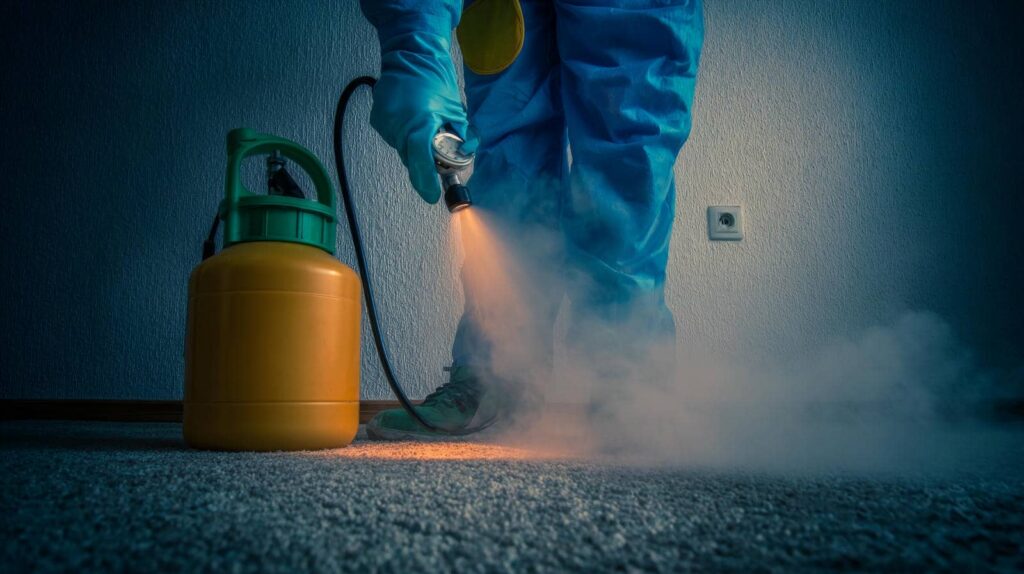
The 8-Step Professional Meth Cleanup and Encapsulation Process
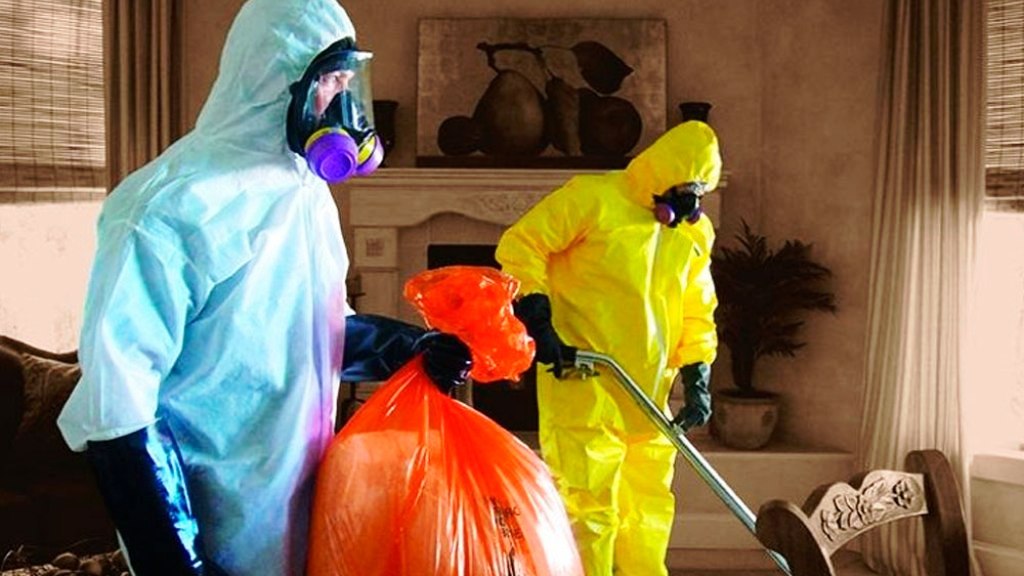
A professional meth cleanup process generally follows a consistent structure, regardless of which state’s standard applies:
- Securing the property. The structure is sealed to prevent entry and further contamination spread.
- Pre-cleanup assessment and meth residue testing. Wipe sampling identifies where contamination exists and at what concentration, mapping the scope of work.
- Ventilation. The property is ventilated to reduce airborne VOC concentrations using mechanical air exchange, not just opened windows.
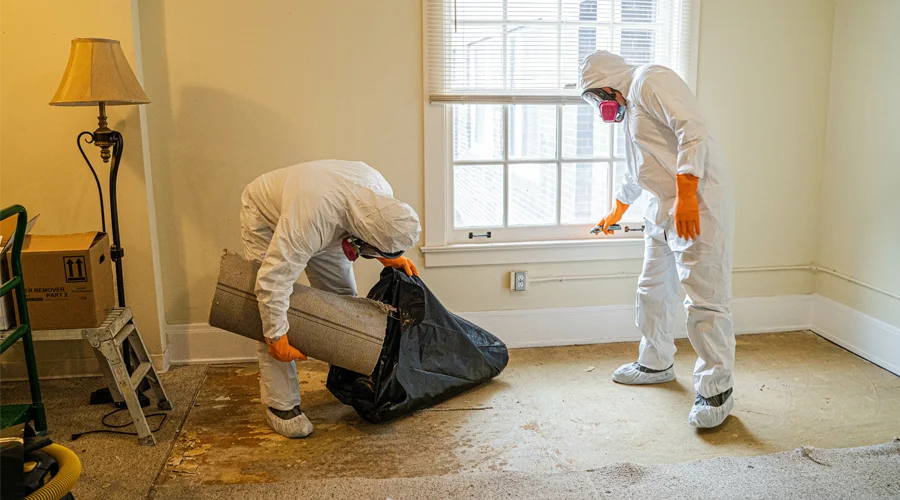
- Removal of porous materials. Carpet, padding, drywall, and insulation absorb chemical residue in a way cleaning can’t fully reverse — they’re physically removed and disposed of as hazardous waste.
- Chemical decontamination of hard surfaces. This is more technical than a basic wipe-down. Industry-grade decontamination typically uses binary chemical formulations — commonly a hydrogen peroxide solution paired with a quaternary ammonium compound — that chemically oxidize and break down the methamphetamine molecule on contact, rendering it inert rather than simply relocating it.
- HVAC system cleaning. Ductwork, air handlers, and filters are cleaned or replaced, since HVAC contamination is one of the most overlooked ways residue keeps circulating through a structure.
- Post-cleanup clearance testing. Wipe sampling is repeated at the same locations — ideally by the independent testing party — to confirm contamination is reduced below the applicable state standard.
- Encapsulation. Cleaned surfaces are sealed with a certified industrial elastomeric or epoxy-based encapsulating primer. Standard retail latex paint is not a substitute — it can allow residual vapor to bleed back through drywall over time, defeating the point of the entire process.
For rural properties, there’s a step that conventional home inspectors routinely miss: where the lab’s liquid waste went. Rural cook and conversion sites frequently dump spent chemical waste into a backyard septic system rather than a municipal line. If you’re evaluating a rural property with any lab history, testing septic sludge and surrounding soil for VOCs deserves its own line item in the inspection, separate from the structural testing inside the house.
Depending on size and severity, the full process typically takes one to four weeks and can range from a few thousand dollars for a single contaminated room to well over $25,000 for a property where conversion or cooking activity occurred throughout the structure.
The HVAC Trap: How Clandestine Lab Residues Circulate Through Ductwork
If there’s one part of meth house decontamination that gets skipped or underestimated more than any other, it’s the HVAC system. Vapor-phase chemicals get pulled directly into return air vents and circulated through ductwork into every room the system serves — including rooms where no manufacturing activity ever took place. Running the fan while you’re simply investigating a suspected property — before any containment is in place — actively pumps invisible residue into clean rooms and deep into insulation jackets.
A thorough inspection always includes control samples from unexpected, high-airflow locations: the inside of the cold-air return duct and the top blades of ceiling fans are two spots ordinary visual inspections consistently miss. If a contractor’s scope of work doesn’t explicitly include ductwork and air handler sampling, that’s a gap worth asking about directly.
The Property Owner’s Meth Contamination Emergency Checklist
If you suspect a newly acquired or recently vacated property was used as a clandestine lab, take these steps immediately:
[ ] Kill the HVAC system. Turn off heating, ventilation, and air conditioning completely before doing anything else.
[ ] Audit the cross-contamination pathway. When hiring an inspector, confirm they’re pulling control samples from the cold-air return duct and ceiling fan blades, not just the obvious rooms.
[ ] Validate the encapsulation primer. Confirm the contractor is using a certified industrial-grade sealer, not standard latex paint, on any washed surfaces.
[ ] Request the full lab printout. Never accept a simple pass/fail note — demand the GC-MS numerical report directly from the independent laboratory.
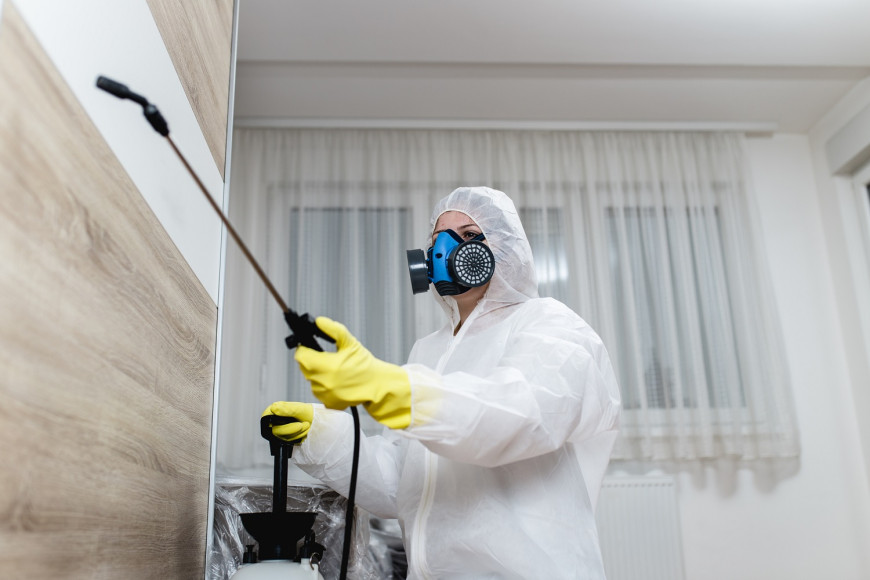
Legal and Real Estate Realities: What “Cleared for Occupancy” Actually Means
A property that has passed post-cleanup clearance testing is one where documented contamination is at or below your state’s legal standard — not necessarily one where every trace of every chemical compound has been completely eliminated. This distinction is the basis on which courts, lenders, insurers, and future buyers evaluate whether a property is safe.
If you’re buying a house with a history of meth production, ask specifically for the clearance certificate and the underlying lab results, not a verbal assurance that “it’s been cleaned.” Many states require this disclosure by law once a property has been formally listed on a clandestine lab registry, and an independent industrial hygienist’s clearance report is the document that actually carries legal weight if a dispute surfaces later.
BioRecoveryPro works with certified remediation professionals experienced in meth house decontamination and clandestine lab cleanup, including the testing, chemical decontamination, and clearance documentation steps outlined here — if you’re facing this situation, that’s a place to start the conversation.
Final Thoughts
Meth lab cleanup is one of the few remediation categories where doing it yourself isn’t just inadvisable; it’s often illegal — many states require licensed contractors and independent certified testing for any property formally identified as a former lab site. Understanding the full meth cleanup process matters because the chemical exposure risks are real, the regulatory requirements vary enormously by state, and the only way to know whether a property is genuinely safe is through documented, lab-verified testing performed by someone other than the company that did the cleaning.
If you suspect a property has a meth contamination history, the right first step is to contact your state’s environmental or public health department to check the clandestine lab registry, followed by an independent pre-cleanup assessment. Skipping the testing — or trusting a property because it looks and smells fine — is how people end up living in a space that quietly fails every standard meant to protect them.