A toilet that won’t stop overflowing is unpleasant. A sewage backup that’s pushed raw waste into your living room is a different category of problem entirely, and the water sitting on your floor right now is legally and medically classified as one of the most hazardous substances a home can contain. Sewage backup cleanup isn’t a bigger version of mopping up a leak. It’s a regulated biohazard response with its own standards, its own equipment, and its own reasons why doing it yourself usually makes things worse.
Here’s what’s actually happening in your home, what the cleanup process really involves, and why the timeline matters more than almost anything else in this situation.
Why Sewage Is Automatically the Worst Category of Water Damage
The restoration industry works from a standard called IICRC S500, and under that standard, water damage falls into three categories based on contamination level. Category 1 is clean water from a supply line. Category 2 is “gray water” — a washing machine overflow, something mildly dirty but not sewage. Category 3 is black water, and any water that has touched raw sewage lands here automatically, regardless of how much water there is or what it looks like.
That last part surprises people. A small amount of backup that looks mostly clear still gets classified the same way as an obvious flood of waste, because the classification is about what’s in the water, not how it appears. Sewage that’s passed through a toilet trap or comes up through a floor drain has already picked up everything a sewer line carries.
And what a sewer line carries is genuinely dangerous. E. coli, Salmonella, hepatitis A virus, norovirus, and parasites like Giardia and Cryptosporidium are all routinely present in raw sewage, and none of them die simply because the water dries up. They settle into carpet fibers, drywall paper, and dust, staying viable for days or weeks after the visible mess is gone. This is the core reason category 3 water damage cleanup can’t be treated like ordinary water restoration — the danger isn’t the moisture; it’s what the moisture carried in.
Sewage backups happen for reasons that have nothing to do with anything a homeowner did wrong. Aging municipal sewer lines, tree roots infiltrating pipes, heavy rain overwhelming a municipal system, or a failing septic tank can all send waste back into a home through the lowest drain or toilet in the house. Older homes and areas with combined storm-and-sewer systems see this more often, particularly during periods of heavy rainfall when the system simply has nowhere else for the water to go.
How People Actually Get Exposed
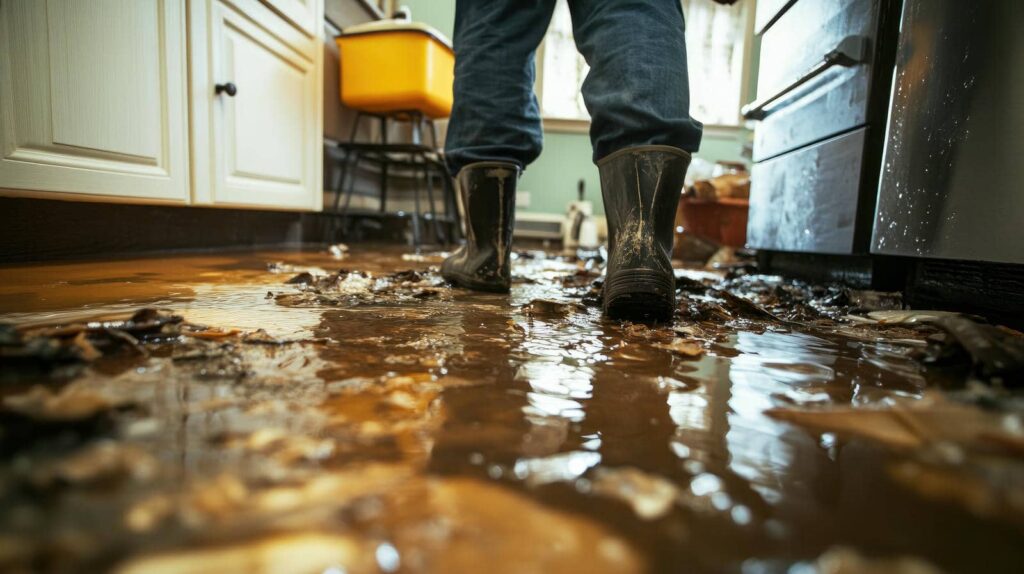
Contact isn’t the only way sewage backup health risks reach someone in the house. Walking through contaminated water, running a wet vac, or even just disturbing the area kicks fine droplets into the air, and those droplets carry the same pathogens the standing water does. Breathing them in is a real exposure route, not a theoretical one.
Skin contact matters too, particularly through any cut or irritation, and accidental hand-to-mouth contact after touching a contaminated surface is one of the more common ways people get sick without realizing what happened. Anyone with a compromised immune system, small children, and older adults face a higher risk from all three of these exposure paths.
There’s a fourth exposure route people rarely think about: sewer gas. A backup often brings a strong smell along with the water itself, and that odor isn’t just unpleasant — it can indicate the presence of hydrogen sulfide and other gases that carry their own separate respiratory risk, distinct from the biological contamination in the standing water. If the smell is strong enough to notice from another room, ventilating the area (without disturbing the contaminated water itself) while you wait for professional help is a reasonable precaution.
The Actual Sewage Remediation Steps
A legitimate sewage backup cleanup process follows a specific sequence, and skipping or rushing any stage is where amateur attempts fail.
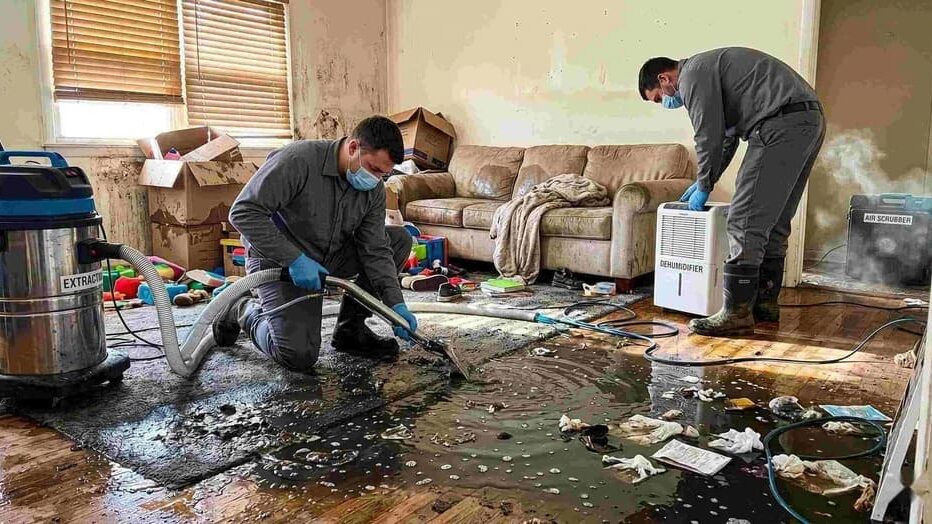
- Extraction comes first. Standing water and waste have to be physically removed before anything else happens — pumps and industrial wet vacuums pull out the bulk liquid, since no disinfectant works properly while contaminated water is still sitting on the floor.
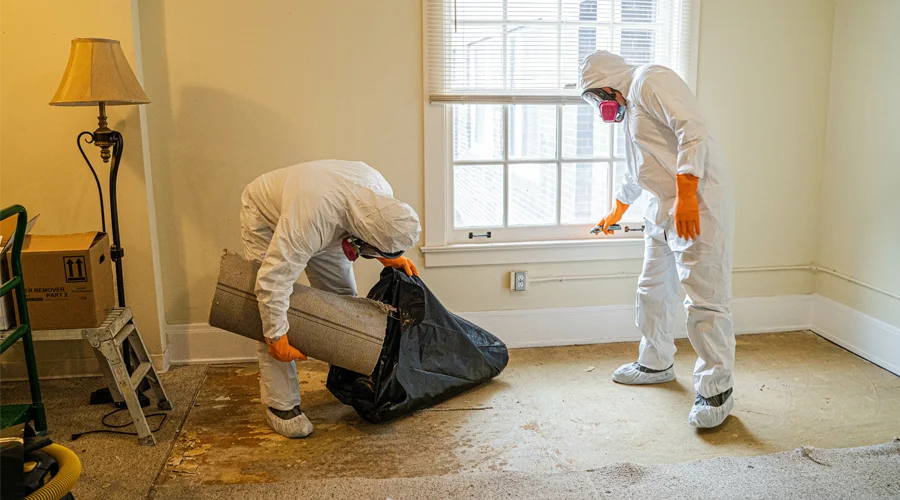
- Contaminated porous materials come out next. Carpet, carpet padding, and often drywall that’s absorbed sewage can’t be cleaned back to safe — they have to be cut out and disposed of as contaminated waste. This is usually the step homeowners resist most, since it means removing materials that don’t look ruined, but porous materials hold onto pathogens in a way hard surfaces don’t.
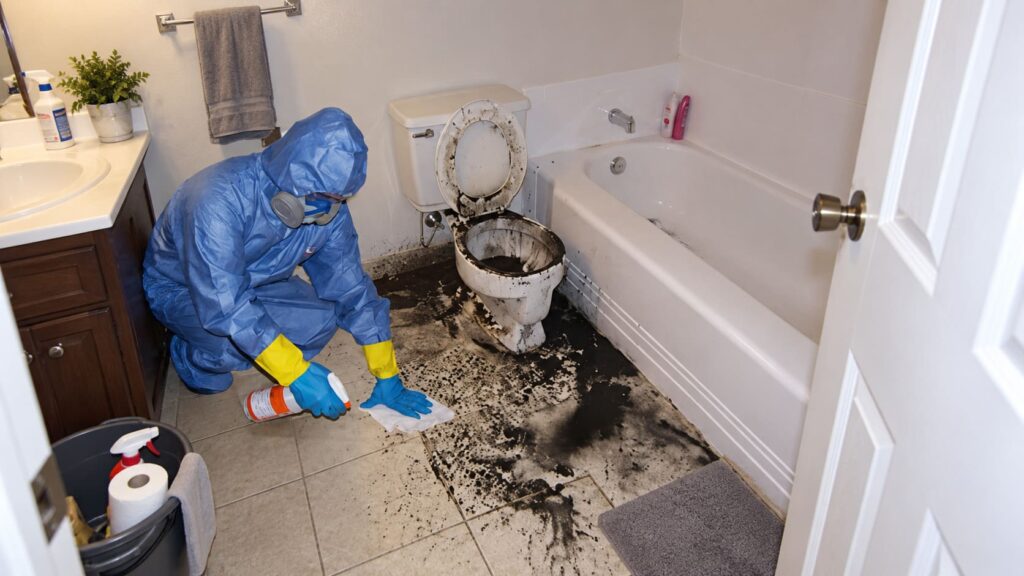
- Disinfection follows, applied to every surface the water touched, not just the visibly stained areas. This includes an EPA-registered antimicrobial treatment matched to the specific contamination level, applied with the correct dwell time so it actually has a chance to work rather than just being sprayed and wiped.
- Drying and dehumidification bring the space back to a normal moisture level, using industrial air movers and dehumidifiers rather than opening a window and hoping. This stage typically runs several days, since materials like subfloor and framing dry much slower than they appear to from the surface.
- Clearance verification is the final step, confirming moisture levels have returned to normal and that no residual contamination remains before the space is considered safe to fully re-occupy and rebuild.
Skip any one of these, and you’re left with a space that looks fine but isn’t. This is exactly why DIY attempts so often end with mold showing up weeks later, or a lingering smell nobody can explain.
Why DIY Cleanup Fails More Than People Expect
The instinct to just handle it yourself is understandable, especially with a smaller backup. It’s also how a contained problem turns into a much bigger one.
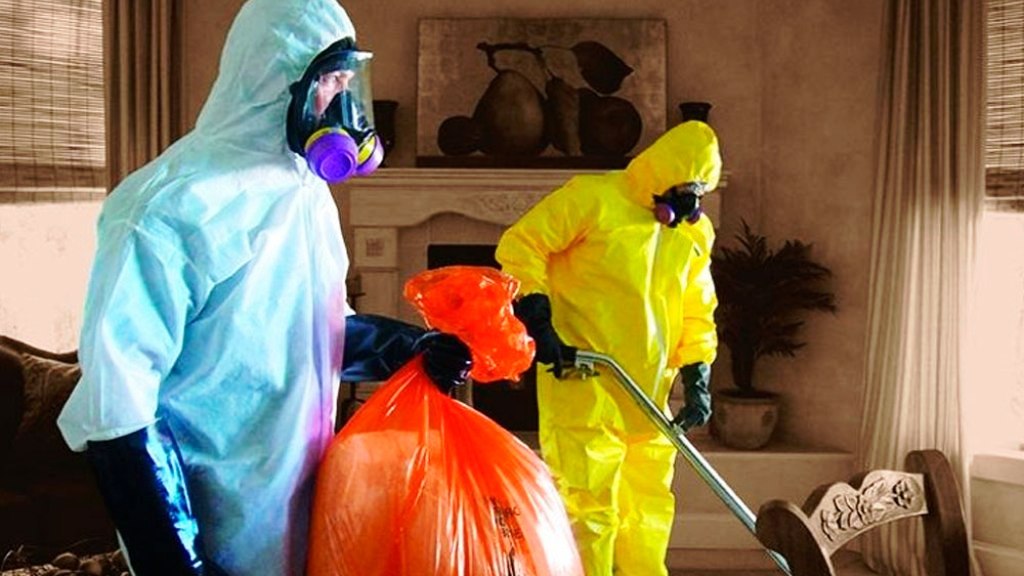
Without the right PPE, anyone cleaning sewage is directly exposed to the pathogens described above, and standard household gloves and a mask don’t provide the protection this work actually requires. Without proper extraction equipment, moisture gets pushed further into subfloor and wall cavities instead of removed, which is often worse than leaving it alone. And without professional-grade antimicrobial treatment and drying, mold has everything it needs — mold can begin colonizing wet materials within 24 to 48 hours, which means a homeowner spending a weekend trying to dry things out with fans is frequently already too late by the time they finish.
There’s also a documentation problem. Insurance carriers evaluate a black water contamination cleanup claim based on the scope of professional remediation performed, and a DIY job with no professional assessment, no moisture readings, and no disposal records gives an adjuster very little to work with if mold or structural damage surfaces later and you need coverage for it.
What This Actually Costs, and How Long It Takes
Pricing varies with severity, but current industry data puts sewage backup cleanup somewhere between $2,000 and $10,000 for most residential jobs, with severe cases running higher, generally in the range of $7 to $15 per square foot depending on the extent of material removal required.
| Severity Tier | Typical Scope | Estimated Timeline |
|---|---|---|
| Minor (small area, hard surfaces only) | Extraction, disinfection, drying | 2–3 days |
| Moderate (some carpet/drywall affected) | Extraction, material removal, disinfection, drying | 4–6 days |
| Severe (multiple rooms, deep saturation) | Full removal, structural drying, extended monitoring | 1–2+ weeks |
Timelines stretch further if the backup went unnoticed for a while before discovery, since longer exposure means deeper saturation into subfloor and framing.
When Sewage Cleanup Turns Into a Mold Problem
This is worth calling out directly, because it happens often enough to be the norm rather than the exception. Any moisture left behind after a Category 3 event — even moisture that seems minor — creates ideal mold conditions in materials that are already contaminated with organic waste. A sewage job that isn’t dried completely and verified properly doesn’t just risk a lingering odor; it frequently escalates into a full mold remediation project within a matter of weeks.
This is also why sewage backup cleanup and mold remediation are handled by the same type of specialist rather than two separate contractors. Addressing both from the start, rather than waiting to see if mold shows up later, is generally the faster and less expensive path.
Getting Help Fast Matters More Than Almost Anything Else
Every hour a sewage backup sits untreated, contamination spreads further into materials that become harder and more expensive to remediate. This is a genuine emergency-response situation, not something to schedule around a convenient weekend.
BioRecoveryPro connects homeowners with certified sewage and Category 3 water damage specialists who can respond quickly, handle the full remediation process correctly the first time, and document the job properly for insurance — available 24/7 across all 50 states.
The Bottom Line
Sewage backup cleanup is a biohazard event, not a plumbing inconvenience, and treating it that way from the first phone call is what actually protects your health, your home, and your insurance claim. Extraction, removal of contaminated porous materials, real disinfection, thorough drying, and verified clearance — done in that order, by someone equipped for it — is what separates a property that’s genuinely safe again from one that just looks that way.