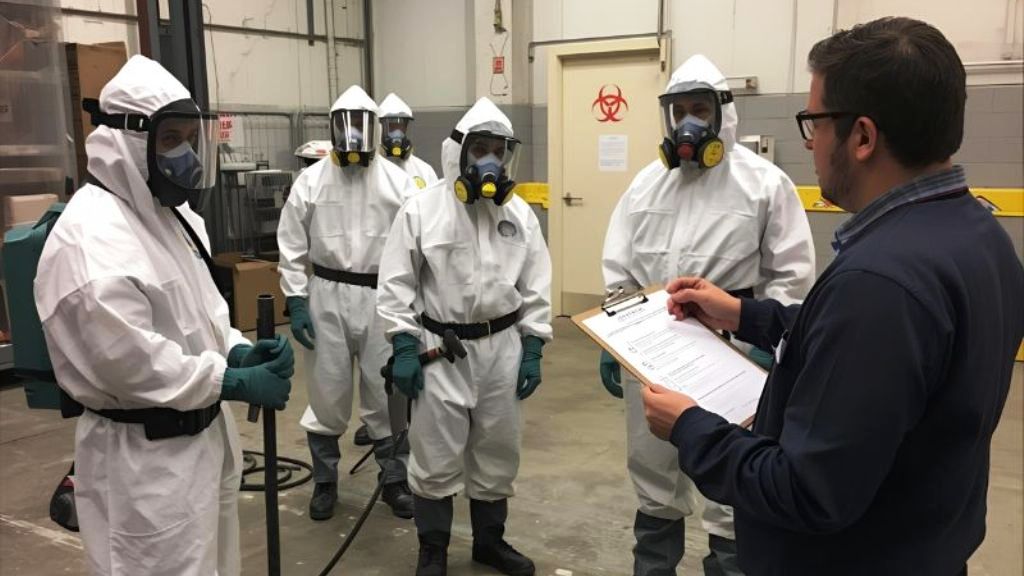
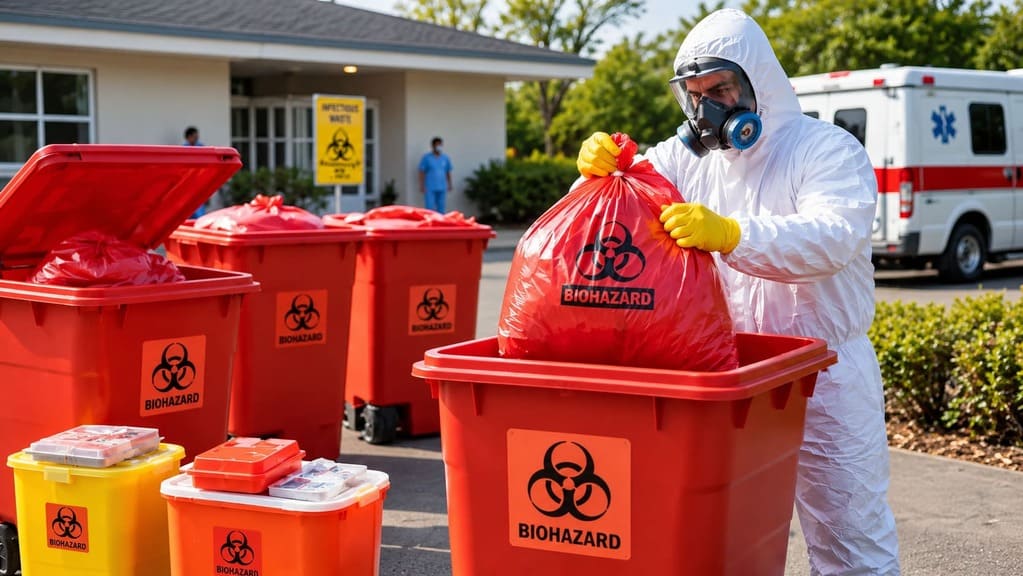
You hired a cleanup crew; they finished the job, and the property looks fine again. It’s tempting to consider the matter closed at that point, but a biohazard waste manifest chain-of-custody question doesn’t end when the technicians pack up their truck. If that waste later turns up dumped in a ravine or mishandled at an unlicensed facility, your name as the generator can still be attached to the problem, sometimes months after the invoice was paid.
That’s not a hypothetical scare tactic. It’s how medical and biohazardous waste law is actually structured in most states, and it’s worth understanding before you sign a cleanup contract, not after something goes wrong.
What a Waste Manifest Actually Is
A waste manifest is a paper or digital tracking document that follows a load of regulated waste from the property where it was generated to the facility where it’s finally treated, usually by incineration, autoclaving, or chemical disinfection. Every party who touches the waste along the way signs it: the generator (you, or the cleanup company acting on your behalf), the transporter who hauls it, and the treatment facility that receives it.
Industry compliance resources describe this as a chain-of-custody document in the truest sense, similar in concept to evidence handling in a criminal case. Each signature confirms the waste was accounted for at that stage, and a missing signature is a red flag that something in the chain broke down.
Why You’re Still On the Hook After the Truck Drives Away
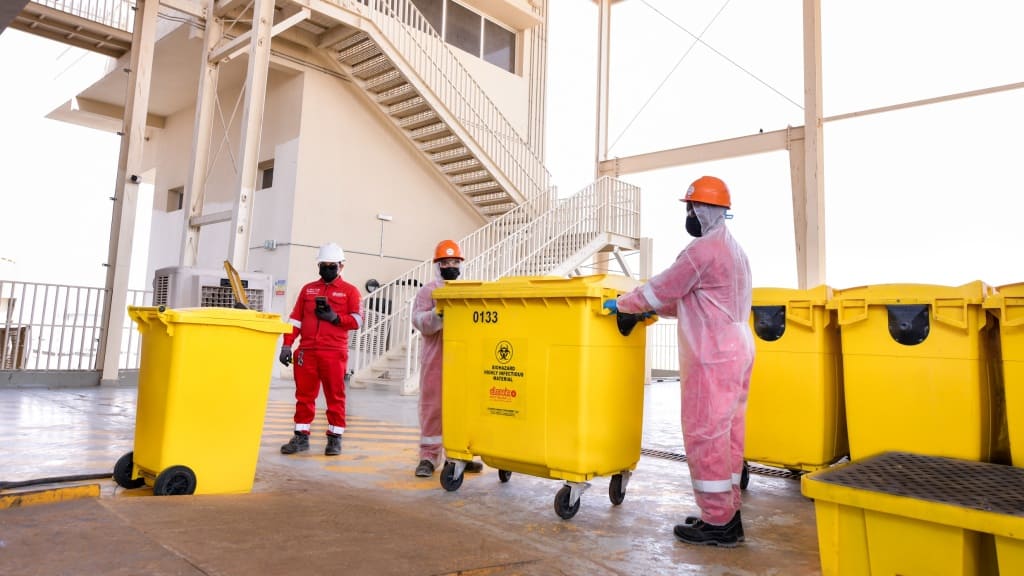
This is the part most property owners don’t expect. The waste manifest system exists precisely because the person or business that generated the waste, not just the company hired to remove it, carries what’s commonly called cradle-to-grave responsibility. If a hauler mishandles the load, dumps it illegally, or fails to deliver it to a licensed facility, liability can trace back to the original property.
That principle shows up across state medical and biohazardous waste statutes, and it’s part of why choosing a cleanup company shouldn’t come down to price alone. A property owner who hires an unlicensed hauler to save money can end up facing the fines meant for that hauler.
What’s Actually Inside a Complete Manifest
A properly filled-out manifest generally includes:
- The generator’s name, address, and any required registration or ID number
- The transporter’s name, vehicle information, and permit number
- The treatment or disposal facility’s name and permit
- A description of the waste, including type and quantity
- A signature and date at every point the waste changes hands
If any of those fields are blank, or if you never receive a completed copy back from the treatment facility, that’s not a paperwork formality to shrug off. Most state programs give a window, often somewhere around 35 to 45 days, before an unreturned manifest is supposed to trigger an exception report to the regulating agency. If your cleanup contractor doesn’t mention manifests at all, that’s worth asking about directly before the job starts, not after.
Why “Just Bag It and Take It to the Dump” Doesn’t Work
A general junk removal company or a standard residential cleaning service is not equipped, licensed, or legally permitted to take blood, bodily fluids, or other regulated biohazardous material to a normal landfill or dumpster. Multiple state and municipal codes explicitly prohibit disposing of biohazardous waste in ordinary trash, and the property owner, not just the company that did the hauling, can be held liable if it happens on their property.
This is why a legitimate crime scene cleanup process looks noticeably different from a general cleaning crew once you ask the right questions: separate containment for regulated waste, a licensed transporter, and a manifest trail that ends at an actual permitted treatment facility, not a guess about where the bags went.
The Real Rulebook: Mostly State Law, With a Few Federal Layers
Here’s where a lot of blog content gets this wrong, so it’s worth being precise. There is no single, unified federal law that governs medical and biohazardous waste disposal the way HIPAA governs patient privacy. A federal tracking program did exist briefly under the Medical Waste Tracking Act of 1988, but it was a demonstration program limited to a handful of states and expired in 1991. Since then, regulation has been handled almost entirely at the state level, which is exactly why requirements differ so much depending on where the property sits.
That said, a few federal layers still apply:
- OSHA’s Bloodborne Pathogens Standard (29 CFR 1910.1030) governs how employers and workers must handle, label, and contain regulated waste on the job, though it isn’t primarily a disposal-tracking program.
- The Department of Transportation regulates how infectious substances and regulated medical waste must be packaged and labeled once they’re on the road, under federal hazardous materials transport rules.
- The EPA, through the Resource Conservation and Recovery Act, oversees waste that also qualifies as hazardous chemical waste, which becomes directly relevant in situations like clandestine drug lab remediation, where chemical residue and biological waste can both be present on the same property.
Outside of those specific layers, the actual manifest system, permitting, and generator liability rules you’ll deal with as a property owner come from your state’s environmental or health department, not a single federal rulebook. A contractor who talks only about “EPA compliance” without mentioning your specific state agency may not fully understand the system they’re operating in.
A Few State Examples, Since “It Depends” Isn’t Very Useful
Because there’s no single national system, it helps to see how different states actually structure this. California requires the CDPH 8596 tracking document under the state’s Medical Waste Management Act, and generators must retain copies for at least three years. Texas routes regulated medical waste, including waste from trauma and crime scene cleanups, through requirements enforced by the Texas Department of State Health Services rather than a dedicated crime-scene statute. New York requires haulers to register with the Department of Environmental Conservation and provide full tracking documentation, with some of the strictest categorical waste-separation rules in the country.
The pattern across all three, and most other states, is the same even though the specific forms and agencies differ: a tracking document, a licensed transporter, a permitted treatment facility, and a generator who remains responsible until that chain is complete. If you operate property in more than one state, don’t assume a contractor licensed in one is automatically compliant in another.
How to Verify a Contractor’s Permits Before You Sign
Before hiring anyone for biohazard or trauma scene cleanup, it’s reasonable to ask for:
- Proof of the company’s transporter registration or permit number with your state’s environmental or health agency
- Confirmation of which licensed treatment facility they use
- A sample or explanation of the manifest you’ll receive once disposal is complete
- General liability and pollution liability insurance, not just standard business insurance
A company with nothing to show on any of those points isn’t necessarily acting in bad faith, but it does mean you’re the one absorbing the risk if their disposal practices turn out to be informal. Reputable trauma and biohazard remediation companies generally follow the ANSI/IICRC S540 Standard for Trauma and Crime Scene Cleanup, and asking whether a contractor follows it is a fair, direct way to gauge how seriously they take this part of the job.
What Happens If a Hauler Cuts Corners
If regulated waste from your property is later found dumped illegally or mishandled, the consequences aren’t limited to the hauler. Depending on the state, a property owner can face:
- Civil fines tied to the original generation of the waste
- A regulatory audit of prior disposal records
- Reputational and legal exposure if the property is commercial or a rental
This is also where documentation becomes your protection rather than a burden. A signed, complete manifest is your evidence that you handed the waste to a licensed party and did what the law required of you. Without it, you’re relying on trust alone if a question ever comes up.
Common Questions
Do I need to keep manifest copies, or is that the cleanup company’s job? Keep your own copy regardless of what the contractor tells you. Most states require the generator to retain records for at least three years, and it’s your name on the generator line, not just the contractor’s.
What if the cleanup company can’t produce a completed manifest? Follow up in writing and don’t treat silence as resolution. If you never receive a completed manifest within the window your state allows, contact your state’s environmental or health department directly rather than waiting indefinitely.
Does this apply to residential situations, or only commercial properties? It applies to both. An unattended death or trauma cleanup at a private home generates regulated waste the same way a clinical setting does, and the disposal rules don’t relax just because the property is residential.
Is a manifest the same thing as an invoice? No. An invoice documents payment. A manifest documents where the physical waste went and who handled it at each stage. A contractor should be able to provide both.
Choosing a Contractor Who Treats This Seriously
The cleanup itself is only half the job. The other half is what happens to the waste after it leaves your property, and that part is where property owners have the most to lose if they don’t ask questions upfront. A contractor who can walk you through their manifest process without hesitation, name their treatment facility, and show current permits is telling you something important about how they run the rest of the job too.