

📞 If you or someone you know is in crisis right now, please call or text 988 to reach the Suicide & Crisis Lifeline — free, confidential, available 24/7.
Knowing what to do after a suicide at home can feel impossible in the immediate aftermath. Families are suddenly faced with urgent decisions involving emergency services, law enforcement, insurance, and cleanup — often with no preparation for any of it. This guide walks through each step with clarity and care, so you don’t have to figure it out alone.
| Immediate Step | Action Needed | Who to Contact |
|---|---|---|
| 1. Secure the scene | Call emergency dispatch. Do not touch or move anything. | 911 |
| 2. Seek crisis support | Get immediate emotional guidance and de-escalation. | 988 (Call or Text) |
| 3. File initial claim | Notify your provider to open a claim file. | Homeowners / Renters Insurance |
| 4. Professional cleanup | Request certified biohazard remediation after scene release. | IICRC / ABRA-certified specialist |
Step 1 — Call Emergency Services Immediately
If the death has just been discovered, call 911 immediately. Emergency responders — police, paramedics, and the coroner or medical examiner — will arrive to secure the area, confirm the death, document the scene, and begin the official investigation. Families may be temporarily restricted from entering parts of the home while this process is underway.
During this stage, do not move items, attempt cleanup, or remove personal belongings. Disturbing the scene can interfere with the investigation and — in some jurisdictions — can be treated as tampering with evidence, even when the intent is to help.

Step 2 — Do Not Attempt Cleanup Yourself (Suicide Cleanup Safety Risks)
After a traumatic death, the instinct to do something is powerful. But attempting suicide scene cleanup without proper training creates serious health risks that most families don’t anticipate. Trauma scenes may contain bloodborne pathogens including Hepatitis B, Hepatitis C, and HIV — all of which can survive on surfaces for hours to days. Contamination also spreads invisibly into flooring, subfloor, furniture, drywall, and ventilation systems in ways that aren’t visible to the eye.
Under the OSHA Bloodborne Pathogens Standard (29 CFR 1910.1030), any company handling biohazardous material is legally required to use specialized PPE, maintain a documented exposure control plan, and dispose of contaminated material through licensed medical waste channels. A general cleaning service carries none of this — and neither does a family member, regardless of how much they want to help.
Professional suicide cleanup teams are also trained to work discreetly, with care for the family’s emotional experience. Shielding loved ones from additional exposure to the scene is itself part of what professional remediation companies do.
Step 3 — Understand the Law Enforcement and Investigation Process
After emergency responders arrive, law enforcement and the coroner or medical examiner will conduct their official investigation. During this time, authorities may document the scene, collect evidence, interview family members, and determine the cause of death.
Parts of the property may remain temporarily restricted until the investigation is complete — a timeline that varies depending on local procedures, coroner availability, and investigation complexity. Families are generally allowed to re-enter and begin cleanup only after the scene has been formally released.
When it is released, get the release in writing — specifically the date, time, and the name of the officer authorizing it. This document is required to open your insurance claim and to authorize a remediation company to begin work.
Documents to gather in the days that follow: death certificates (request multiple certified copies — they’re needed for insurance, financial accounts, funeral arrangements, and legal matters), police or coroner reports, and any incident reference numbers provided by responding officers.
Step 4 — Reach Out for Support — You Don’t Have to Do This Alone
📞 988 Suicide & Crisis Lifeline — call or text 988, available 24 hours a day. If you’re experiencing acute distress in the aftermath of this loss, please reach out.
The hours after a traumatic death are disorienting in a way that’s difficult to describe from the outside. Trauma affects concentration, memory, decision-making, and emotional regulation — which means the moment you most need to make clear decisions is the moment your capacity to do so is most compromised. Having another person present helps.
Reach out to a trusted family member, close friend, clergy member, or mental health professional as early as possible. If children or teenagers are in the home, be aware that young people often show distress differently — through withdrawal, sleep changes, irritability, or behavioral shifts — and age-appropriate support should be arranged promptly.
More complex decisions involving insurance, funeral planning, or property matters can almost always wait a few hours or days. Immediate safety, basic communication, and emotional stabilization are the priority.
Step 5 — Notify Your Insurance Company (Trauma Scene Cleanup Insurance Coverage)
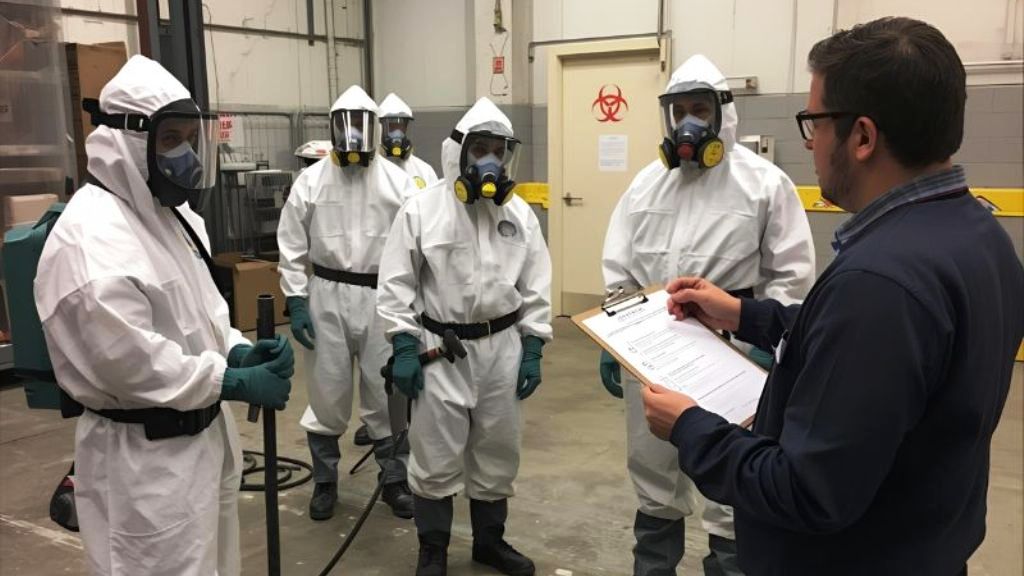
Once immediate safety concerns are addressed, contact your homeowners’ or renters’ insurance provider. Yes, standard homeowners and renters insurance policies generally cover professional biohazard remediation and structural restoration costs resulting from a suicide. Coverage falls under the “Property Damage” or “Covered Peril” sections of standard HO-3 and HO-5 policies. Most families only pay their deductible — typically $500 to $2,500 — and the insurer covers the remainder. Reputable IICRC and ABRA-certified companies document the scene, prepare itemised Xactimate invoices, and bill the insurance provider directly, so families often aren’t required to manage the adjuster relationship themselves.
Insurance Call Script
When you call your insurer, ask to speak with a claims adjuster — not just a general agent — and use this framework:
“I’m calling to open a property damage claim. There has been a traumatic death at my property at [address]. The scene has been [or: has not yet been] released by law enforcement. I need to arrange certified biohazard remediation and want to confirm my coverage before work begins. Can you open a claim file and provide a claim number? I’ll also need to know whether pre-approval is required before the remediation company begins, and what documentation your adjuster will need.”
Key questions to have answered before hanging up:
- Does my policy cover biohazard remediation for this type of event?
- Is there a specific dollar cap on cleanup reimbursement?
- Do I need pre-authorization before the remediation company starts?
- What documentation will the adjuster require (police report, photos, contractor invoice)?
- Am I free to choose my own certified contractor?
On that last point: your insurer cannot legally require you to use a specific remediation company. You have the right to select your own IICRC or ABRA-certified contractor and submit their quote directly to your adjuster.
Claims are most commonly delayed or denied for four reasons: delayed reporting, insufficient documentation, DIY cleanup attempts that spread contamination, or policies with specific exclusions for intentional acts. Note that suicide is treated differently from intentional damage by the policyholder in most standard policies — coverage is more commonly available than many families expect, but the specific language in your declarations page is what controls. If your claim is denied and the death involved a criminal act by a third party, your state’s Crime Victims Compensation program may cover some or all remaining costs.
Step 6 — Arrange Professional Trauma Scene Cleanup
After the scene is formally released, contact a certified biohazard remediation company. The two key certifications to look for are IICRC (Institute of Inspection Cleaning and Restoration Certification, specifically their S540 Standard for Trauma and Crime Scene Cleanup) and ABRA (American Bio Recovery Association). Both represent demonstrated training in the specific protocols this work requires.
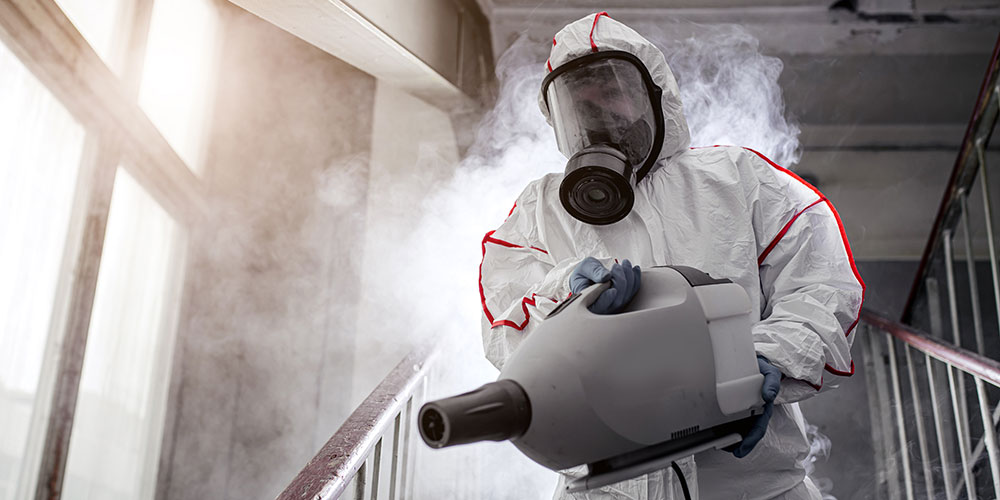
A professional suicide cleanup service typically involves: full site assessment and contamination mapping; containment using negative air pressure to prevent pathogen spread; removal of porous contaminated materials (carpet, padding, drywall cut to at least 12 inches past the saturation line); hospital-grade disinfection using EPA-registered broad-spectrum disinfectants; ATP bioluminescence verification testing to objectively confirm the space is biologically clean; and odor remediation using hydroxyl generators or ozone treatment where needed.
Cleanup timelines vary from several hours for smaller contained situations to multiple days for cases involving structural contamination or delayed discovery. A reputable company will provide a written scope of work and a line-item estimate before any work begins — not a verbal quote or a single lump-sum figure.

Step 7 — Protect Mental and Emotional Health
The emotional impact of losing someone to suicide affects every family member differently. Some people experience shock immediately; others feel numbness, confusion, or delayed grief that surfaces weeks later. Common responses include anxiety, sleep disruption, difficulty concentrating, and emotional exhaustion — all of which are normal reactions to an abnormal experience.
📞 If you or a family member are experiencing acute distress, call or text 988 — free, confidential, 24/7 support is available.
Professional emotional support options include grief counseling, trauma-informed therapy, faith-based support, and local survivor support groups. The American Foundation for Suicide Prevention maintains a searchable directory of survivor resources and support groups specifically for people who have lost someone to suicide. Early support consistently leads to healthier long-term outcomes — reaching out is not a sign of weakness, and no one is expected to process this alone.
Step 8 — Handle Practical and Legal Responsibilities Gradually
After the immediate crisis, families face a list of practical responsibilities that can feel overwhelming when tackled all at once. Prioritise rather than trying to resolve everything simultaneously.
The most time-sensitive items are funeral arrangements and obtaining certified death certificates — request at least six to ten copies, as they’re required for insurance, bank accounts, property matters, government notifications, and financial transfers. Everything else — utility updates, lease or mortgage matters, employer notifications — can typically be handled over the following days with help from trusted people.
Accept help with administrative tasks when it’s offered. You are not expected to manage every part of this process alone, and moving slowly through it is not a failure.
Final Thoughts
Knowing what to do after a suicide at home cannot prepare you for how it actually feels — but a clear sequence of steps reduces the decisions you have to make under acute stress. The immediate priorities are personal safety, official scene release, professional remediation by an IICRC or ABRA-certified team, and emotional support.
If you need a verified, certified specialist in your area, submit a request at BioRecoveryPro and we’ll match you with a certified contractor who handles insurance coordination directly — available 24/7, all 50 states.
If you or someone you know is struggling, please call or text 988 at any time.
🆘 Crisis Support — Always Available
988 Suicide & Crisis Lifeline — Call or text 988, available 24/7, free and confidential.
Crisis Text Line — Text HOME to 741741 to reach a trained crisis counselor.
American Foundation for Suicide Prevention — Survivor support resources at afsp.org
SAMHSA National Helpline — 1-800-662-4357, free mental health referrals 24/7.
You are not alone. Help is available right now.