
Discovering that someone you know has passed away alone — sometimes days or weeks before anyone noticed — is one of the most disorienting experiences a person can go through. In the shock of the moment, knowing what to do next can feel impossible. This guide walks you through every step clearly and practically, from the moment of discovery through to cleanup and beyond.
What Exactly Is an Unattended Death?
An unattended death is any death that occurs without witnesses and where the body is not discovered immediately. These situations can lead to decomposition, creating biohazards like pathogens and odours that demand professional unattended death cleanup.
In 2022, the United States experienced approximately 128,800 unattended home deaths — a figure that reflects just how common this situation is, particularly among elderly individuals living alone. The causes range from natural illness to accidents and in some cases, suicide.
Regardless of the cause, the practical steps that follow are largely the same.
Immediate Post-Discovery Priority Matrix
Families and property managers experiencing this are under severe emotional strain. Use this table to orient yourself immediately before reading the detailed steps below.
| Operational Phase | Immediate Mandated Action | Who to Contact | Critical Safety / Legal Warning |
|---|---|---|---|
| Phase 1: Discovery | Evacuate the area immediately. Do not touch the deceased, any personal items, or structural surfaces. | Call 911 | Airborne pathogens, VOCs, and potential evidence can be easily compromised |
| Phase 2: Investigation | Clear all entryways. Keep family members and pets away from the perimeter | Medical Examiner / Coroner | The property belongs entirely to the local jurisdiction until a formal Scene Release is granted |
| Phase 3: Financial Setup | Report the incident to initiate a covered peril assessment | Homeowners / Landlord Property Insurance | Request a claim number and confirm your specific biohazard remediation policy rider limits |
| Phase 4: Remediation | Schedule a structural assessment and a professional line-item quote | IICRC-Certified Biohazard Specialists | Do not use standard janitorial services — household chemicals cannot neutralise deep subfloor decomposition |
What to Do After an Unattended Death: The Immediate Emergency Protocol
Step 1 — Do Not Enter the Scene
This is the most important instruction in this entire guide.
An unattended death scene is a biohazard. Decomposition begins rapidly, and the resulting biological materials — blood, bodily fluids, tissue, and odour-causing compounds — can harbour pathogens such as bacteria, viruses, and other contaminants. Disturbing the scene can also compromise a potential investigation or spread contaminants further.
Your instinct may be to go to your loved one or to start cleaning. Resist both. Leave the scene exactly as you found it.
Legal and Medical Clearance: Navigating the Police and Coroner Investigations
Step 2 — Call 911 Immediately
The first thing you should do is call 911. Police will arrive at the scene to investigate and determine the cause of death. Even if the deceased died of natural causes, this is a critical step. The police will help you contact the local coroner’s office, who will transport the body to the morgue.
When you call, stay calm and provide:
- Your location and the address of the property
- What you observed — odours, signs of decomposition, how you discovered the situation
- Your relationship to the deceased if known
Do not attempt to move or touch anything before the authorities arrive.
What Is a Coroner’s “Scene Release” and Why Must You Wait For It?
Step 3 — Wait for Scene Release
This step is non-negotiable, and understanding why matters legally.
Under state penal codes across the country, any unattended death is automatically treated as a potential crime scene until a licensed death investigator, coroner, or medical examiner officially examines the body and signs off on the cause of death. Until that official medical examiner scene release is granted, the property is under jurisdictional control — not yours. Touching personal items, cleaning surfaces, or moving physical property before the formal scene release is not just inadvisable. In many states, it can be prosecuted as tampering with physical evidence.
Once law enforcement and the medical examiner have completed their investigation, they will formally release the scene to you. Get the release in writing — specifically the date, time, and name of the officer or investigator authorising it. That document is the legal starting point for your insurance claim and your authorisation to contact a remediation company.
During the waiting period, keep others — including children and pets — away from the property entirely.
The Hidden Health Dangers of a Decomposition Environment
Understanding OSHA 29 CFR 1910.1030 Bloodborne Pathogens Violations
Before we move to the remediation step, it’s worth understanding what you’re actually dealing with — because this is where most people underestimate the risk.
The Chemical Realities of a Decomposition Site
Within 24 to 72 hours of an unattended death, cellular breakdown accelerates dramatically. The body’s own enzymes begin digesting tissues in a process called autolysis, followed by putrefaction driven by bacteria. This releases volatile organic compounds — most notably putrescine and cadaverine — that are responsible for the extreme, penetrating odour associated with decomposition scenes.
These aren’t just smell molecules. Because they travel as airborne vapours, they bind directly to porous materials: drywall, ceiling insulation, structural wood framing, carpet backing, and subflooring. Masking the odour with consumer air fresheners or bleach-based cleaners accomplishes nothing at the molecular level. A certified technician must deploy industrial hydroxyl generators or high-output ozone machines — equipment that chemically breaks down these compound chains through oxidation at the molecular level — not simply overwhelm them with another scent.
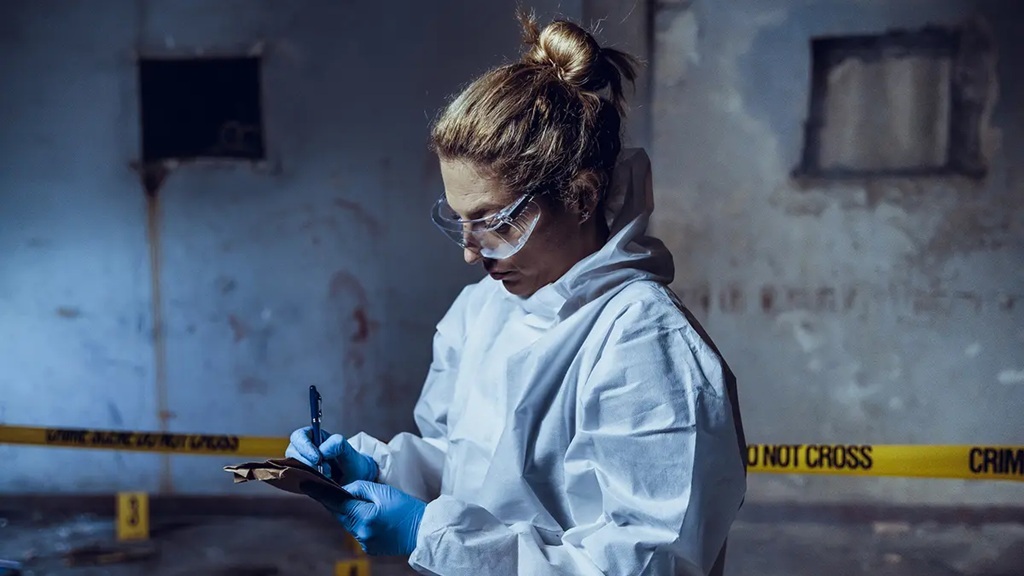
Beyond decomposition gases, blood and biological fluids that have saturated porous materials carry pathogens including HIV, Hepatitis B, and Hepatitis C, which can remain viable outside the body for days. This is why the OSHA Bloodborne Pathogens Standard (29 CFR 1910.1030) legally requires any company sending employees into a decomposition scene to maintain a documented Exposure Control Plan, provide Hepatitis B vaccinations at no cost to workers, and equip technicians with appropriate Level C personal protective equipment — sealed Tyvek suits, full-face respirators, and double-layered nitrile gloves as a minimum. A general cleaning service has none of this, and sending one into a decomposition environment creates OSHA violations for the employer and unquantifiable health risk for everyone in the building afterward.
Step 4 — Notify Family and Close Friends
Since the death was unattended, friends and family won’t know the deceased has passed. Reach out to notify family members and others in the social circle of the person’s passing.
This is emotionally difficult. If possible, have someone with you when you make these calls. Share the news as gently as you can, and expect a range of reactions.
How to File a Property Insurance Claim for Biohazard Remediation
Step 5 — Contact Your Insurance Provider
Before calling a cleanup company, call your homeowners’ or landlord insurance provider and report the incident. Many policies cover biohazard remediation for unattended death cleanup, and understanding your coverage upfront can significantly reduce what you pay out of pocket.
Navigating Covered Perils, Deductibles, and Biohazard Policy Riders
When you call, ask specifically:
- Does my policy cover unattended death cleanup?
- What documentation do I need for the claim?
- Do I need pre-approval before work begins?
Get a claim number before any unattended death cleanup starts — this protects your ability to be reimbursed. Also ask your adjuster, not just your agent, about homeowners insurance coverage for unattended death specifically, since policy riders and biohazard exclusions can vary significantly between carriers. A standard deductible typically runs $500 to $2,500, and the insurer covers the remainder of a qualifying job.
If insurance denies the claim or leaves a large deductible and the death resulted from a violent crime, ask about your state’s Crime Victims Compensation program — every state operates one, and crime scene cleanup is an explicitly eligible expense under federal VOCA funding.
Why Standard Janitorial Cleaners Cannot Treat an Unattended Death Scene
Step 6 — Contact a Certified Biohazard Cleanup Specialist
Once the authorities have released the scene, it is time to contact a professional biohazard remediation company. This is not a job for a general cleaning service. Household cleaning products are simply not strong enough to properly disinfect an area affected by body fluids or decomposition. Porous materials, including wood flooring, carpet, drywall, and subfloor, absorb biological material at depth — material that cannot be removed by surface cleaning alone.
When choosing a company, verify that they are:
- IICRC certified in biohazard remediation or trauma scene cleanup
- Licensed in your state
- Carrying a current Certificate of Insurance, including pollution liability coverage
- Available 24/7 with demonstrated experience in decomposition cleanup
As little as 4 minutes is the time it takes for the decomposition of a body to begin. Bodily fluids rapidly seep into carpets, between flooring, and through bedding, causing persistent odour and creating a space that is unlivable. Acting quickly after scene release limits how deeply contamination penetrates structural materials — and directly affects the cost and complexity of the cleanup.
The Remediation Blueprint: Subfloor Extraction, ATP Testing, and Hydroxyl Deodorisation
What the Cleanup Process Actually Involves
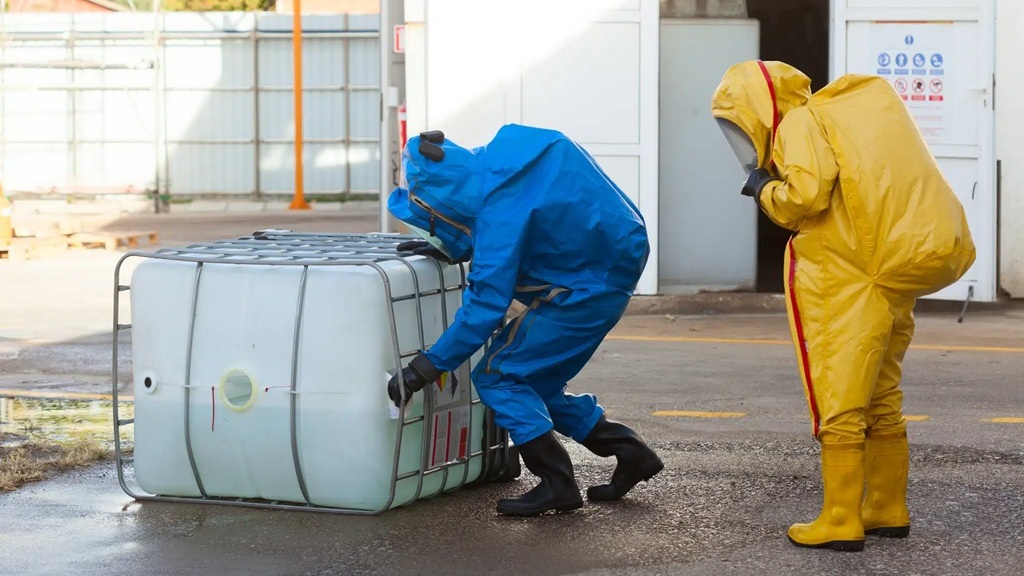
A certified unattended death cleanup typically involves:
- Full scene assessment to determine the scope and depth of contamination
- Containment using polyethylene barriers and negative air pressure to prevent cross-contamination to unaffected areas
- Removal of all biological material and contaminated porous materials — carpet, padding, drywall, subfloor, insulation — disposed of as regulated biomedical waste under DOT manifest
- Hospital-grade disinfection of all remaining surfaces using EPA-registered disinfectants and, where appropriate, binary chemical formulations that oxidise biological residue at the molecular level
- Odour elimination using industrial hydroxyl generators and ozone treatment calibrated to the severity and structure of the affected space
- ATP surface verification testing and final documentation for insurance purposes
Most cleanups take one to three days, depending on the scene’s condition and size.
ATP Surface Testing: How Technicians Scientifically Verify Decontamination
The final inspection step deserves its own explanation, because “it looks clean” is not a standard — and in a decomposition environment, what the naked eye can’t see is exactly what poses the ongoing health risk.
Legitimate IICRC-certified biohazard remediation contractors use ATP bioluminescence testing as the objective, scientific method for verifying that a surface has been decontaminated to a safe threshold. ATP — Adenosine Triphosphate — is the universal energy molecule present in all living and recently deceased biological cells, including bacteria, viruses, blood, saliva, and tissue residue. After remediation, a technician presses a calibrated swab against a fixed surface area — typically 10 cm² — then inserts it into a handheld luminometer, a device that causes any ATP present to react with the enzyme luciferase and emit light proportional to the contamination level.
The device returns a Relative Light Unit (RLU) reading within seconds. Surfaces below 100 RLU indicate hospital-grade clean; readings above 200 RLU indicate unacceptable levels of biological contamination and require additional treatment passes before re-testing. This process is repeated at multiple locations throughout the affected space — walls, flooring, ductwork surfaces, door frames — with every reading logged in the post-remediation report. Unlike a visual inspection or even a smell-based assessment, ATP data is objective, reproducible, and defensible if the property is ever subject to a future habitability dispute, insurance audit, or real estate transaction requiring proof of decontamination.
Post-Remediation Disclosures: Protecting Property Value and Landlord Liability
What About the Property Afterward?
Once the property has been professionally remediated and cleared, it is safe to re-enter. The contractor will provide a written IICRC Certification of Decontamination Report that documents what was done and confirms the property meets safety standards.
If you are a landlord or planning to sell, this documentation is not optional — it is your legal protection. Stigmatized property disclosure laws vary significantly by state, but in California, Civil Code Section 1710.2 requires landlords and sellers to proactively disclose any death that occurred on the property within the previous three years, regardless of cause. Several other states have similar three-year or twelve-month disclosure windows tied specifically to homicide or suicide. Even in states without mandatory disclosure statutes, misrepresenting the property’s condition when a buyer directly asks can create civil liability.
Having the decontamination report on file means that when a question arises, you have a professional, documented answer backed by laboratory-verified ATP test data — not just an assurance that the space was cleaned. That document protects property value, mitigates massive civil liability from future occupants, and satisfies the disclosure burden in states that require it.
Take Care of Yourself Too
The practical steps above are necessary, but don’t overlook what this experience does to you emotionally. Discovering an unattended death — particularly of someone you loved — can cause lasting trauma.
Do not underestimate the psychological toll or try to power through. Contact a counsellor or psychologist to help you navigate the experience, which can take months or years to fully process. Resources like the National Alliance on Mental Illness (NAMI) and GriefShare offer support for people dealing with sudden or traumatic loss.
Need Help Right Now?
If you’ve just been through this and need a verified specialist in your area, submit a request at BioRecoveryPro and we’ll match you with an IICRC-certified contractor within minutes — available 24/7, all 50 states.