
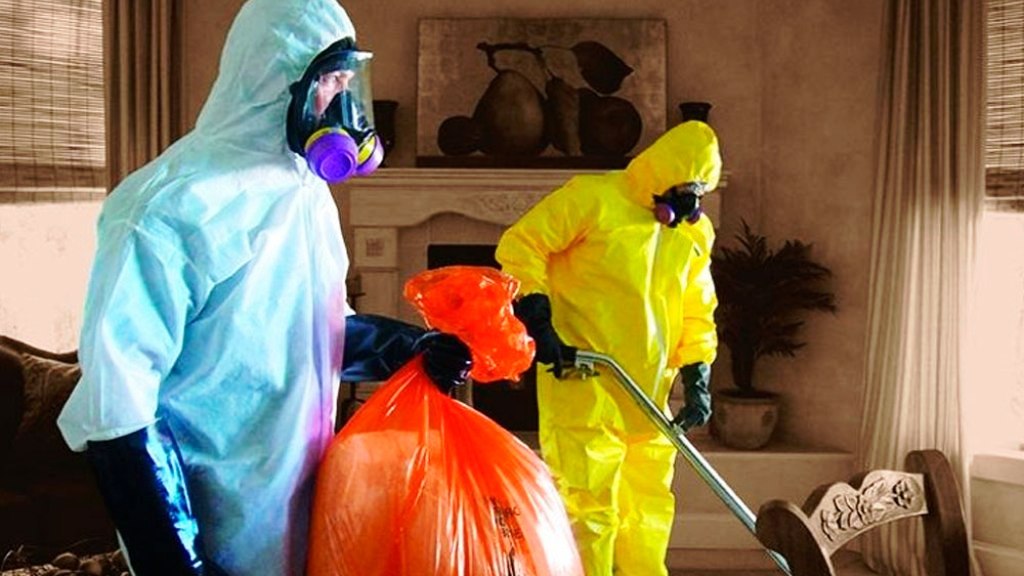
The crime scene cleanup process involves far more than removing visible blood or disinfecting surfaces. Behind every professional biohazard remediation job is a highly controlled, step-by-step procedure designed to protect health, prevent contamination, and restore the environment safely — and it’s governed by a specific set of federal and industry standards that most people never know exist until they’re standing in the middle of a traumatic situation.
After law enforcement completes its investigation, the responsibility for cleanup falls on property owners or families — not the police. Biological contamination doesn’t wait — fluids continue migrating into porous materials, VOCs build in the air, and structural damage deepens with every passing hour. Understanding what actually happens is the fastest way to evaluate whether a company is doing the job correctly. For the legal obligations that run alongside this process, see our guide on biohazard cleanup laws by state.
Two standards govern everything a legitimate crew does on-site. The OSHA Bloodborne Pathogens Standard (29 CFR 1910.1030) is the federal compliance floor. The IICRC S540 Standard for Trauma and Crime Scene Cleanup is the industry’s technical benchmark — it governs remediation of structural elements (blood pooling beneath subfloors), remediation of contents (porous versus non-porous salvageability), and environmental stabilization (preventing aerosolised pathogens escaping containment via negative air pressure). If a company can’t reference both standards by name, that tells you something.
What Is Crime Scene Cleanup?
Crime scene cleanup is a specialized form of biohazard remediation that removes hazardous biological materials after traumatic events such as:
- Violent crimes
- Suicides
- Unattended deaths
- Serious accidents
Unlike standard cleaning services, the crime scene cleanup process follows strict safety procedures to prevent exposure to bloodborne pathogens and contaminated materials.
Why Specialized Cleanup Is Necessary
During trauma cleanup steps, technicians may encounter:
- Blood contamination
- Bodily fluids
- Airborne bacteria
- Structural contamination
According to the CDC Bloodborne Infectious Diseases Guidance, improper handling of biohazard materials can create serious health risks.
Professional forensic cleanup process procedures are designed to:
- Prevent cross-contamination
- Disinfect affected areas
- Remove hazardous waste safely
- Restore the environment to a safe condition
Why Police Do Not Handle Cleanup
Law enforcement investigates and secures the scene, but professional crime scene decontamination teams typically perform the cleanup itself.
This often requires:
- Specialized PPE
- Industrial disinfectants
- Hazardous waste disposal
- ATP testing
- Odor remediation equipment
In many cases, contamination spreads beyond visible surfaces into flooring, drywall, furniture, and ventilation systems.
Step 1: Initial Site Assessment and Cross-Contamination Mapping
Tracing Sub-Floor Seepage and HVAC Bio-Burden Risks
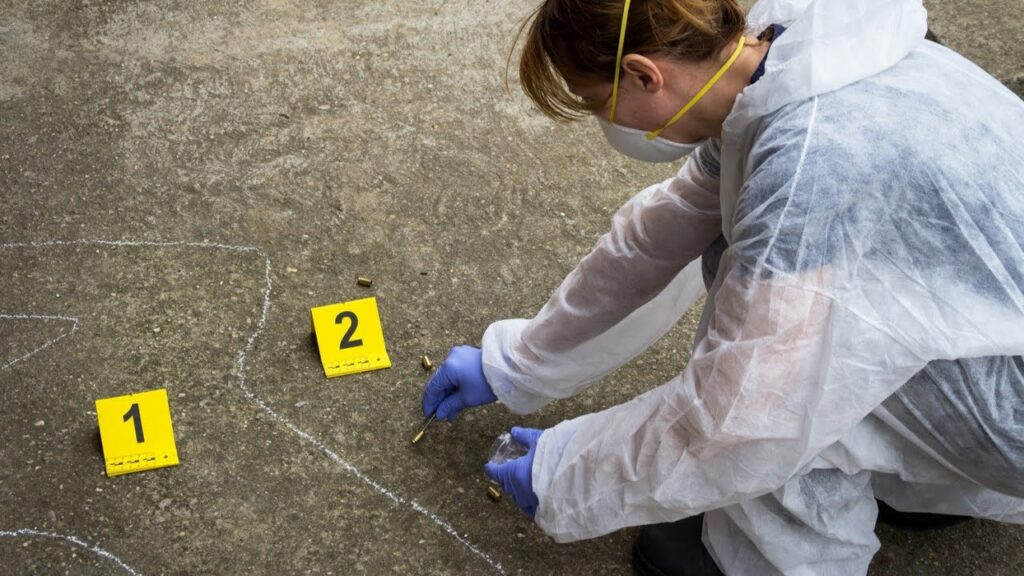
The first stage of the crime scene cleanup process is a detailed site assessment — and it goes well beyond a visual scan. Technicians map contamination pathways, which means actively investigating areas that aren’t visibly affected: beneath carpet and flooring where biological fluids travel by capillary action, inside wall cavities adjacent to the primary event site, and critically, the HVAC system. In an enclosed space, the return air vents draw aerosolised pathogens and VOCs directly into ductwork within hours of an event. Any assessment that doesn’t include the HVAC and subfloor is incomplete by definition.
Technicians document every contaminated zone with photographs and written notes at this stage — not just for their own scoping purposes, but because this pre-remediation documentation becomes the foundation of any homeowners’ insurance claim filed afterward.
Step 2: IICRC S540-Compliant PPE Setup and Safety Zoning
Deploying Level C Biohazard Suits and PAPR Respirators
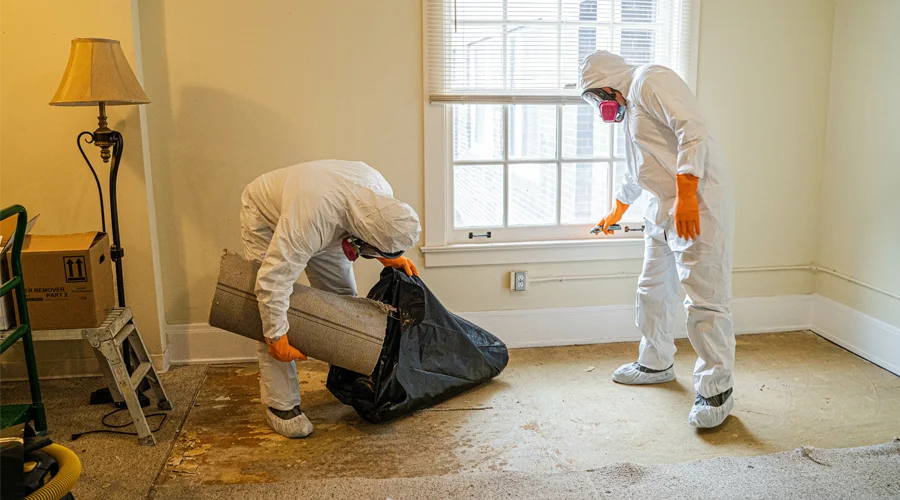
Before a single contaminated surface is touched, the crew establishes the correct PPE protocol for the exposure level the scene presents. Under OSHA 29 CFR 1910.1030, this means full-body sealed Tyvek suits, double-layered nitrile gloves, and — for decomposition environments — Powered Air-Purifying Respirators (PAPRs) rather than basic dust masks. PAPR units deliver a continuous flow of filtered air inside a sealed hood, making them the appropriate choice for high-pathogen environments. Clean, contaminated, and transition safety zones are simultaneously established to prevent tracking contamination into unaffected areas during the work itself.
Step 3: Mechanical Containment and Establishing Negative Air Pressure
After PPE setup, the contaminated area is physically isolated using polyethylene sheeting sealed across doorways and vents, with access restricted to authorised crew only. The critical technical step — and the one most often skipped by under-equipped operators — is establishing negative air pressure within the containment zone via industrial HEPA-filtered air scrubbers. This keeps the zone at slightly lower atmospheric pressure than the surrounding spaces, so airflow always moves inward toward the contamination. Any aerosolised pathogens, VOCs, or decomposition compounds released during material removal are captured by filtration rather than drifting into the rest of the structure. Without this, the forensic cleanup process actively spreads what it’s meant to contain.
Step 4: Removing Porous Biohazard Materials — What Can vs. Cannot Be Saved
Managing Medical Waste: Red Bag Procedures and Legal Disposal
The IICRC S540 Standard requires technicians to make specific, defensible decisions about every contaminated material based on porosity classification — not on appearance. Here is how that decision matrix actually works in the field:
| Material Type | Porosity | IICRC S540 Action Protocol | Hidden Risk |
|---|---|---|---|
| Unsealed concrete / mortar | Porous | Deep enzyme cleaning, physical grinding or encapsulation if pooling occurred | Fluids travel vertically into the material; surface stains removed ≠ biological hazard eliminated |
| Hardwood flooring | Semi-porous | Surface disinfection if immediate discovery; complete removal if fluids penetrated tongue-and-groove joints | Capillary action draws blood beneath planks — subfloor removal often required to pass ATP verification |
| Drywall / sheetrock | Highly porous | Cut and remove at minimum 12 inches past the visible saturation line | Cannot be disinfected; standard primers like Kilz will not safely seal active bio-contaminants |
| Ceramic tile (face) / grout | Non-porous (tile) / Porous (grout) | Disinfect tile faces; remove or grind affected grout lines | Tile is salvageable; cementitious grout absorbs biological matter deeply and requires re-grouting |
| Carpet and padding | Highly porous | Remove entirely in virtually all contamination events | Padding retains saturated material even after surface extraction — no cleaning protocol recovers it |
| Upholstered furniture | Highly porous | Remove and dispose as regulated waste if fluid contact confirmed | Internal padding and framing absorb contamination that surface cleaning cannot reach |
All removed materials are sealed in DOT-approved red biohazard bags inside rigid bio-boxes, tracked through a chain-of-custody waste manifest, and transported by a licensed medical waste carrier to a permitted incineration or autoclave facility. This isn’t optional protocol — it’s a federal regulatory requirement under 49 CFR Parts 171–180 for regulated medical waste classification.
Step 5: Advanced Decontamination Using EPA List N Broad-Spectrum Disinfectants
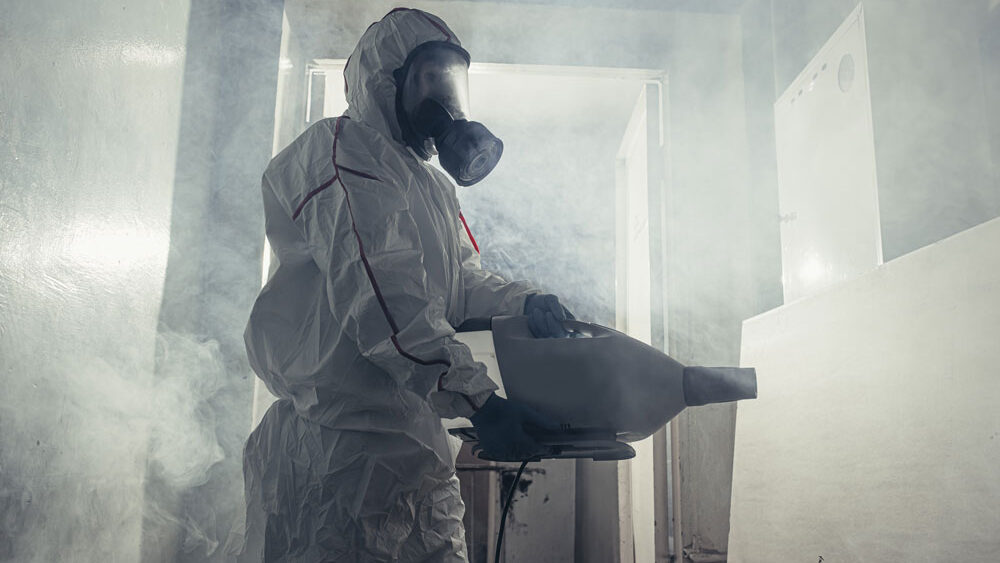
Once porous materials are removed, the exposed structural substrate — concrete, framing, subfloor — is treated using disinfectants from the EPA’s List N: Disinfectants for Use Against SARS-CoV-2 and Emerging Viral Pathogens, which also covers the bloodborne pathogen family. Standard household bleach and retail disinfectant sprays are not on this list for a reason — they lack the contact time, concentration, and validated efficacy against the pathogen spectrum present at a trauma scene. Professional-grade formulations are applied at specific dilutions with mandated dwell times, then followed where appropriate by binary enzyme-based cleaning agents that break down residual protein structures at the molecular level.
Step 6: Objectively Quantifying Cleanliness via ATP Swab Testing
Visual inspection after a cleanup confirms nothing about biological safety. The professional standard for post-remediation verification is ATP (Adenosine Triphosphate) bioluminescence testing. A calibrated swab is rubbed across a defined surface area, inserted into a luminometer, and the device measures any ATP present — the universal energy molecule found in all biological cells — by triggering a light-emitting reaction with the enzyme luciferase. The result is expressed in Relative Light Units (RLU): readings below 100 RLU indicate hospital-grade cleanliness; readings above 200 RLU require additional treatment and re-testing before the space is cleared. Every test location, reading, and pass/fail determination is logged in the post-remediation report — this data is what makes a clearance certificate legally defensible in an insurance claim, a real estate transaction, or a habitability dispute.
Step 7: Multi-Phase Odor Remediation — Hydroxyl vs. Ozone Air Purification
Decomposition odor isn’t cosmetic — it’s the detectable signature of volatile organic compounds, including putrescine and cadaverine, that have penetrated structural materials. Two technologies address this at the molecular level. Hydroxyl generators produce hydroxyl radicals (OH·) that oxidise VOC molecules and are safe to run continuously in partially occupied spaces — the preferred first-pass method. Ozone machines produce O₃ at concentrations that effectively destroy complex odor compounds but require full evacuation during treatment. Ozone is the secondary tool for severe decomposition where hydroxyl generation alone is insufficient, particularly when compounds have migrated into wall insulation or HVAC ductwork.
Step 8: Final Sanitation Clearance, Documentation, and Legal Certificate of Safety
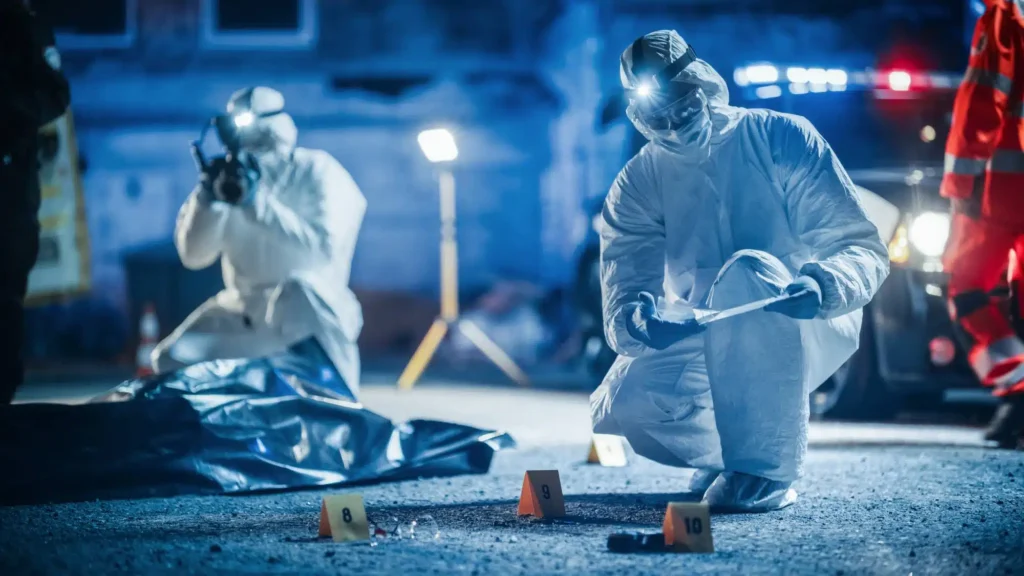
The final stage of the crime scene cleanup process confirms the property is safe for re-entry and produces the documentation that protects you long after the crew has left. This includes: a written IICRC Certificate of Decontamination stating the work performed and confirming the space meets the applicable safety standard; the complete ATP test log with all pre- and post-treatment RLU readings; the medical waste disposal manifest confirming chain-of-custody from your property to the licensed treatment facility; and all pre-remediation photographic documentation.
These documents collectively serve three purposes: they satisfy your insurance carrier’s claim documentation requirements, they protect your legal position if a future occupant raises a habitability question, and in states like California with three-year death disclosure requirements, they establish a documented paper trail of professionally verified decontamination that supports your real estate disclosure obligations.
Insurance & Homeowners Coverage: Getting Your Policy to Pay in 2026
Most standard HO-3 and HO-5 homeowners’ policies cover the crime scene cleanup process when the event qualifies as a “sudden and accidental” covered peril — violent crimes, suicides, and accidental deaths typically meet this threshold; long-term hoarding or gradual decomposition frequently does not.
Call your insurance adjuster — not your agent — before cleanup begins and request a claim number in writing. Require your contractor to use Xactimate line-item billing: itemised codes for PPE surcharges, hazardous waste disposal, structural demo, and ATP testing give the adjuster exactly what they need to process the claim. A lump-sum invoice gives them nothing to validate. Your insurer cannot legally direct you to a specific company — you have the right to choose your own IICRC-certified contractor. If the claim is denied after a violent crime, the Crime Victims Compensation program in your state covers biohazard remediation costs under the federal Victims of Crime Act.
If you need a verified, IICRC-certified biohazard specialist in your area who handles insurance coordination directly, submit a request and we’ll match you within minutes — 24/7, all 50 states.
Pingback: Biohazard Waste Manifests: Why Your Liability Doesn't End When the Cleanup Crew Leaves - BioRecoveryPro