There’s a reason people describe decomposition odor as unlike anything else. It isn’t just unpleasant — it’s chemically complex, it penetrates materials at a molecular level, and it has an almost uncanny ability to come back weeks after a space appears visually clean. If you’ve ever walked into a room where a body went undiscovered for any length of time, you understand immediately why ordinary cleaning products aren’t part of the conversation.
Biohazard odor removal is a genuine scientific process, not a matter of scrubbing harder or opening more windows. This guide breaks down exactly how it works — what the smell actually is, why it’s so persistent, and the specific techniques professionals use to eliminate it permanently rather than mask it temporarily.
What Decomposition Odor Actually Is
Before you can understand how to remove the death smell, it helps to understand what you’re actually dealing with chemically.
When a body decomposes, it undergoes two overlapping biological processes: autolysis, where the body’s own enzymes begin breaking down cells, and putrefaction, where bacteria accelerate that breakdown and release gases as a byproduct. Those gases are what create the odor — and they’re not simple compounds that dissipate easily.
The primary culprits are cadaverine and putrescine, two diamines produced as bacteria break down amino acids in the body’s tissues. Both have extremely low odor thresholds, meaning a very small concentration is enough to be overwhelmingly detectable. They’re joined by hydrogen sulfide and dimethyl disulfide (which smell like rotten eggs), ammonia and trimethylamine (sharp and pungent), and skatole and indole (fecal and musty). In total, decomposition releases over 800 distinct volatile organic compounds — each one capable of bonding to porous surfaces and embedding deep into materials.
This chemistry is why trauma odor remediation isn’t just about surface cleaning. The odor molecules don’t sit on top of a floor or wall — they absorb into them. Carpet fibers, subflooring, drywall, insulation, upholstered furniture, wooden framing — all of it becomes a reservoir of compounds that continue off-gassing long after the visible scene has been addressed.
Step One: Source Removal Is Non-Negotiable
Every professional decomposition odor removal process begins the same way, regardless of what deodorization equipment comes next — total removal of the source material.
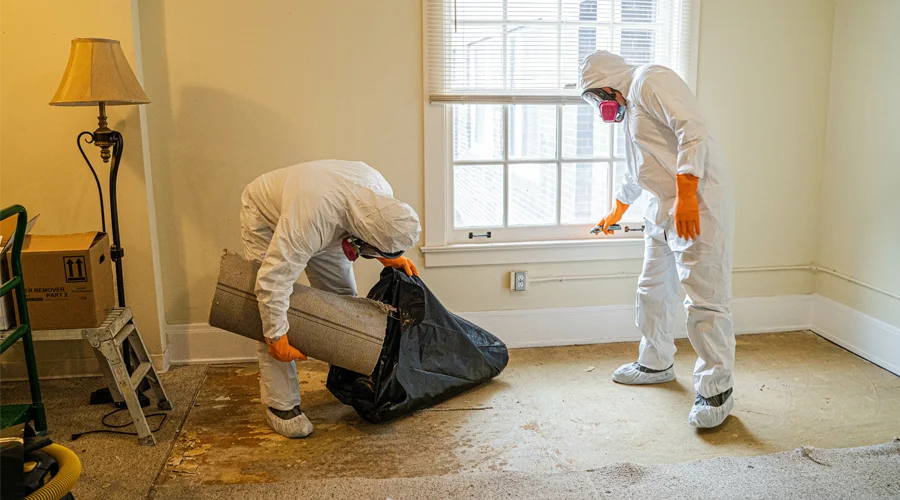
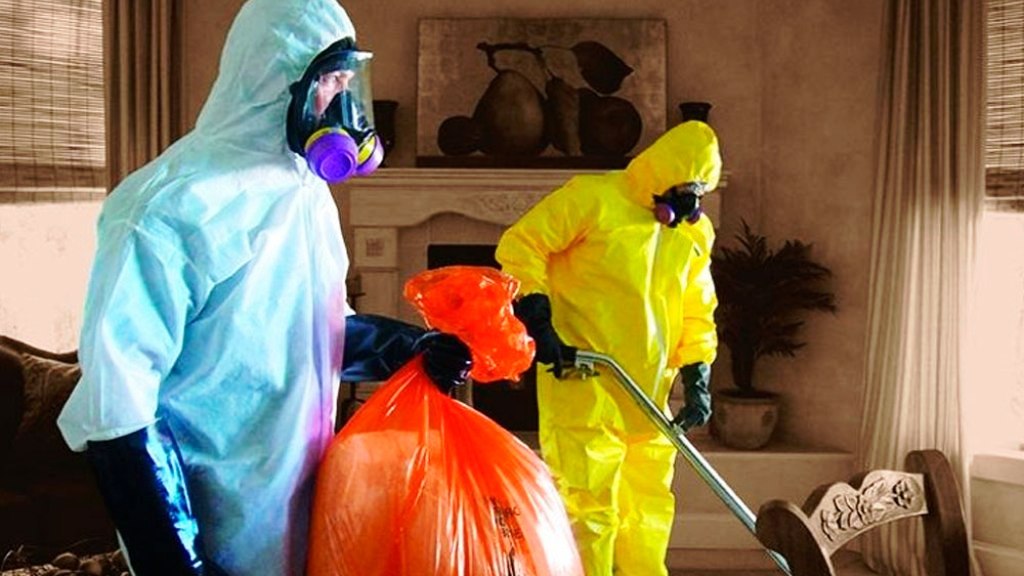
No deodorization technique in existence can permanently neutralize biohazard odor if the material generating it is still present. This sounds obvious, but it’s the step that separates a lasting result from one that fails within days. Bodily fluids that have soaked into subflooring need to be physically removed — the flooring cut out and replaced. Saturated drywall sections need to come down. Soft materials like carpet, mattresses, and upholstery that have absorbed decomposition matter are almost never salvageable and must be disposed of as biohazardous waste.
This is also the stage where the true extent of contamination becomes clear. What looks like a contained area on the surface often reveals fluid migration that has traveled several feet in every direction — under baseboards, through subfloor seams, into wall cavities. A trained biohazard cleanup technician uses moisture meters, ATP testing equipment, and UV lighting to identify contamination that isn’t visible to the naked eye before any materials are removed.
Skipping or shortcutting source removal is the single most common reason biohazard odor cleanup fails and odors return.
Ozone Treatment: Powerful, Fast, and Requires Caution
Once source materials have been removed and surfaces treated, professional teams move to active deodorization. Ozone treatment is one of the most commonly used methods for death smell removal — and one of the most misunderstood.
Ozone (O₃) is an unstable molecule with three oxygen atoms. The third atom readily breaks away and attaches to odor-causing compounds, chemically altering their structure so they no longer produce a smell. It doesn’t mask the odor — it destroys it at the molecular level. This oxidation reaction is aggressive and fast, which is why ozone is particularly effective for severe decomposition odor where saturation is deep and widespread.
The speed and effectiveness come with important constraints, though. Ozone is a known respiratory irritant. Both the EPA and OSHA have strict exposure limits for occupied spaces because at high concentrations, it damages lung tissue and aggravates respiratory conditions. Ozone treatment must be conducted in completely unoccupied spaces, with all humans, pets, and plants removed. HVAC systems are typically shut off or isolated during treatment to prevent ozone from circulating into other areas of a building.
After treatment, the space must be thoroughly ventilated before re-entry. Ozone has a half-life of roughly 30 minutes under normal conditions, breaking back down into regular oxygen — but flushing the space with fresh air before allowing occupancy is standard protocol and non-negotiable.
In short: ozone works extremely well for decomposition odor removal in the hands of a trained professional. The same equipment used incorrectly by an untrained operator creates a different kind of hazard.
Hydroxyl Generators: The Safer Alternative for Occupied or Sensitive Spaces
Hydroxyl generators have become increasingly common in professional biohazard odor cleanup — and for good reason. They offer a chemical approach to odor destruction that is safe for occupied spaces, making them particularly valuable in situations where a property can’t be fully vacated.
Hydroxyl radicals (OH) occur naturally in the atmosphere when ultraviolet rays from sunlight react with water vapor. They’re sometimes called “nature’s broom” for their role in breaking down atmospheric pollutants. Hydroxyl generators replicate this process using high-intensity UV lamps, producing OH radicals that react with and destroy volatile organic compounds — including all of the gases released during decomposition.
The key difference from ozone is safety profile. Hydroxyl radicals are actually more chemically reactive than ozone, but they have an extremely short lifespan — they react and dissipate almost immediately rather than accumulating in the air. This means they can be used safely in occupied spaces, around sensitive electronics, and in environments where complete vacating isn’t practical.
The tradeoff is time. Where ozone can achieve significant results in hours, hydroxyl treatment for severe decomposition odors typically requires five to seven days of continuous operation. For heavily contaminated spaces, the two methods are often used in sequence — ozone treatment first to knock down the bulk of the odor, followed by hydroxyl generators to complete the process safely once the space needs to be re-entered.
Thermal Fogging: Reaching Where Nothing Else Can
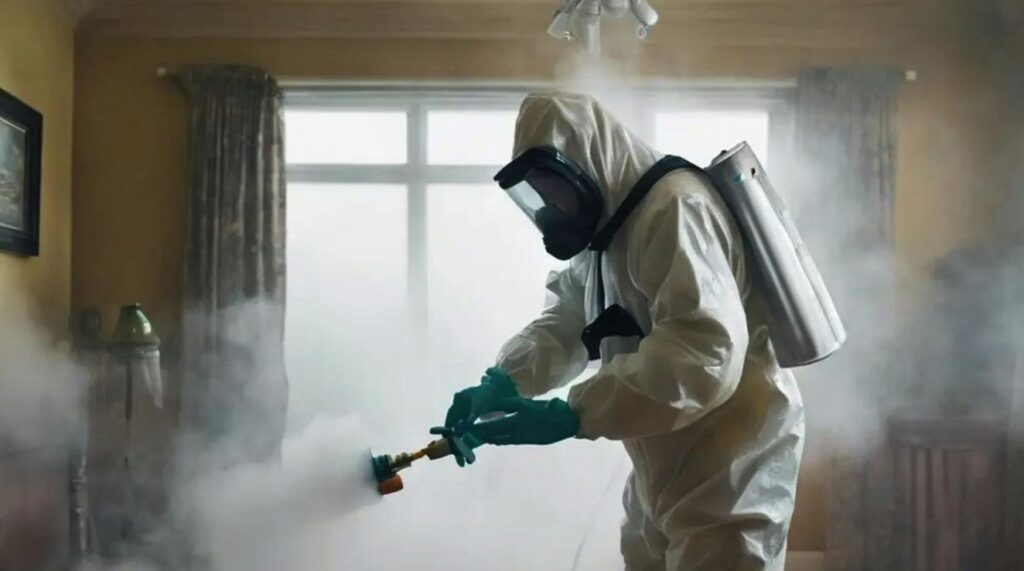
Thermal fogging is the technique that most directly addresses one of the central challenges in trauma odor remediation — the fact that odor molecules travel deep into materials and can’t always be reached by surface treatment or airborne gas.
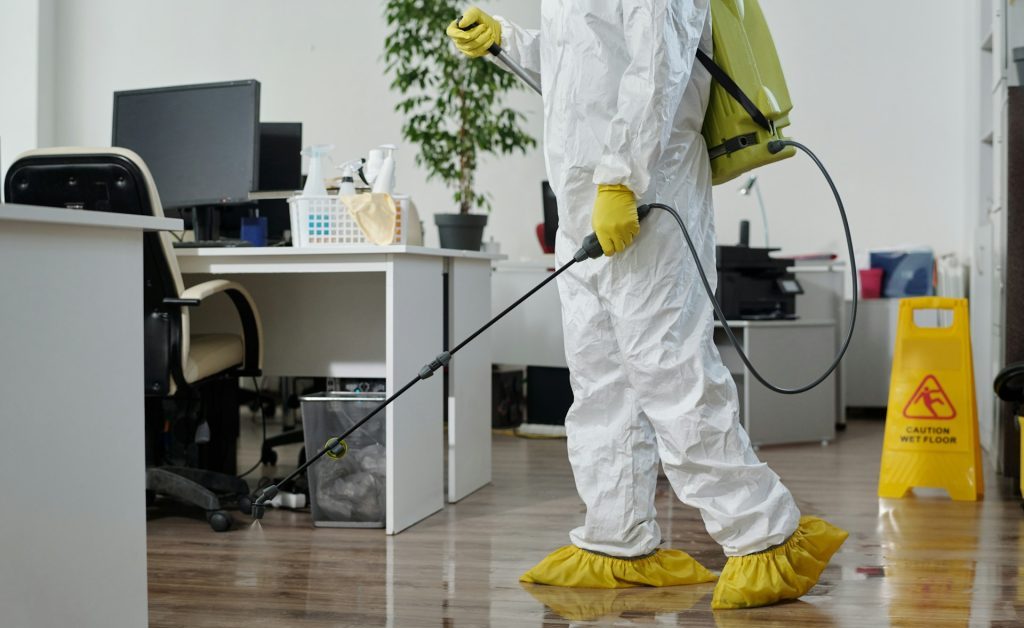
The principle behind thermal fogging is elegant: use the same physics that allowed the odor to penetrate a material to drive the deodorizer into the same spaces. A thermal fogger heats a deodorizing solution to create a dense fog with particle sizes between 0.5 and 2 microns — roughly the same size as the gas molecules that carry decomposition odor. Because the fog is hot, it follows the same pathways those original molecules traveled, pushing deep into porous materials like wood grain, drywall, and insulation. Once inside, the deodorizing compound bonds with the odor molecules and neutralizes them.
This penetration capability is what makes thermal fogging essential for situations where odor has migrated into wall cavities, under flooring, or into other areas that can’t be reached through surface cleaning alone. It’s also why homes that were “cleaned and painted” after a death often develop odor problems again when temperatures rise — the paint sealed the surface but nothing neutralized the compounds embedded underneath.
Thermal fogging requires a vacated space, proper ventilation during application, and a technician who understands which deodorizing solutions are appropriate for a given surface type. It’s typically used as part of a multi-step approach rather than a standalone treatment.
HVAC Contamination: The Problem Nobody Warns You About
Of all the aspects of biohazard odor removal that property owners and managers consistently underestimate, HVAC contamination sits at the top of the list.
When a decomposition event occurs in a home or building with an active HVAC system, the volatile organic compounds released — all 800-plus of them — get drawn into the return air flow and distributed through the ductwork. This happens whether the thermostat is set to heat, cool, or simply fan mode. By the time the scene is discovered, those compounds may have been circulating for days, coating the interior surfaces of ducts, depositing on the coils and air handler, and redistributing throughout every room connected to the system.
The result is that treating only the room where the death occurred fails — because the contamination has already spread building-wide through the ventilation system. When the HVAC runs again after cleanup, it reintroduces those compounds into the living space and the odor returns, often in rooms far from the original scene.
Proper HVAC remediation after a decomposition event involves:
- Replacing the air filter immediately — a contaminated filter actively re-contaminates the air every time the system runs
- Professional duct cleaning using HEPA-filtered extraction equipment
- Decontamination of the air handler, coils, and drain pan, which trap organic matter and harbor bacterial growth
- In some cases, encapsulation of duct interiors with antimicrobial sealant if contamination is severe
This step is often quoted as optional or deferred to save cost. In properties where decomposition odors have gone undiscovered for an extended period, it isn’t optional — it’s the reason odors persist despite everything else being done correctly.
Why DIY Deodorizing Always Falls Short
Most people facing decomposition odor removal for the first time try the same sequence: bleach and commercial cleaners first, then candles or plug-in air fresheners, then enzyme cleaners from a hardware store, then an ozone machine from an equipment rental company. The smell comes back every time, or never fully goes away.
This isn’t a matter of effort or how thoroughly the cleaning was done. It’s a matter of what these products are designed to do.
What Consumer Products Actually Do
Bleach and commercial cleaners sanitize surfaces — they don’t penetrate porous materials and they don’t neutralize airborne volatile compounds. They address what’s visible, not what’s embedded. Masking agents like air fresheners introduce a competing smell on top of the existing one. The decomposition odor is still there; it’s just temporarily competing with lavender or cedar. When the masking agent dissipates, the original smell resurfaces.
Consumer enzyme cleaners can break down some organic compounds when applied directly to a contaminated surface — but they work only on the surface they contact. They can’t reach compounds that have migrated into subflooring or wall cavities. And rental ozone machines, while they operate on the same principle as professional-grade units, typically lack the output capacity to treat a heavily contaminated space adequately.
The Threshold Problem
Even a small amount of residual decomposition compound registers as a strong odor to the human nose. The odor threshold for cadaverine, for example, is extraordinarily low — parts per billion are detectable. A DIY approach that eliminates 90% of the contamination still leaves behind enough residual compound to produce a noticeable smell. Professional trauma odor remediation aims for complete neutralization, not reduction.
What Professional Decomposition Odor Removal Looks Like End-to-End
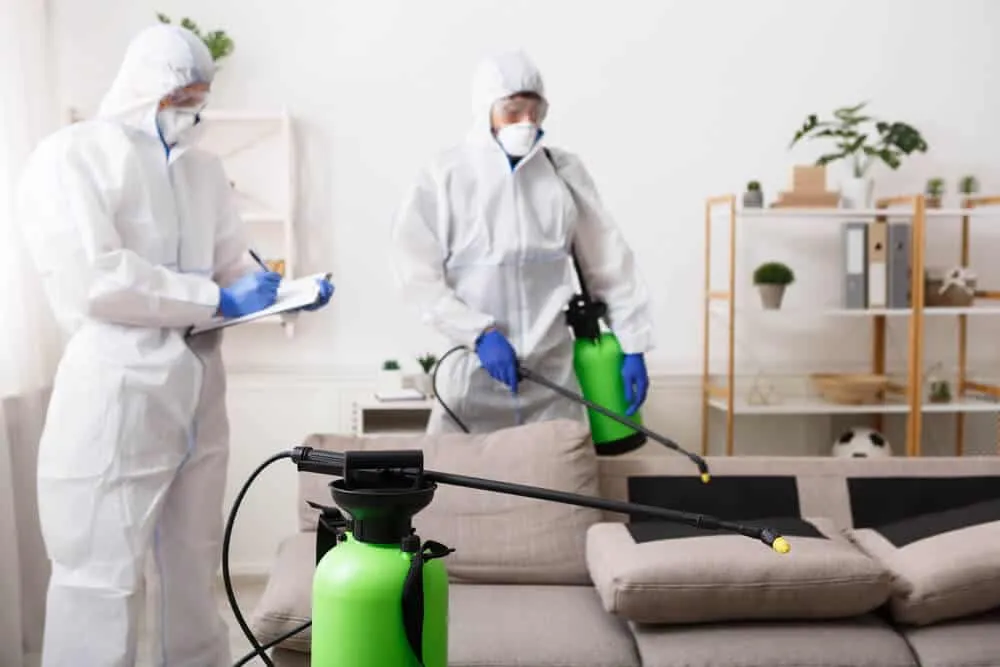
For anyone trying to understand what a professional remediation process actually involves from start to finish, the sequence typically looks like this:
- Initial assessment with moisture meters, UV detection, and air quality testing to identify the full extent of contamination — visible and hidden
- Complete removal of all contaminated porous materials — flooring, subfloor sections, drywall, soft materials — as biohazardous waste
- Surface decontamination of all remaining structural elements with EPA-registered biohazard cleaning agents
- HVAC filter replacement and duct system evaluation, with full decontamination if contamination is confirmed
- Thermal fogging of the treated space to neutralize compounds embedded in remaining materials
- Ozone treatment of the vacated space for primary odor destruction
- Hydroxyl generator deployment for follow-through deodorization, particularly in spaces that need to be re-entered
- Post-treatment air quality testing to verify results before clearance is issued
- Written certification confirming the space has been returned to safe, habitable condition
That final document — the written clearance — is not a formality. It’s what protects property owners legally, satisfies insurance requirements, and gives future occupants verifiable confidence that the space is genuinely clean.
If you need professional help with decomposition odor removal or biohazard odor cleanup, Bio Recovery Pro brings certified technicians, industrial-grade equipment, and documented remediation protocols to every job — with the experience to handle even the most difficult situations thoroughly and discreetly.
Final Thoughts
Removing decomposition odor from a property is not a cleaning problem — it’s a chemistry problem. The compounds involved are aggressive, molecularly adhesive, and extraordinarily persistent. The only approach that produces lasting results is one that addresses source removal, surface decontamination, HVAC contamination, and active deodorization in sequence, using professional-grade equipment that consumer products simply can’t replicate.
If a space smells like death, something biological is still present or still off-gassing. That’s not a metaphor — it’s a chemical reality. And the only reliable path from that reality to a genuinely clean, safe, odor-free space is a professional biohazard odor cleanup process done completely and correctly the first time.