
Most industries reward hustle and a good idea. This one rewards preparation, compliance, and a very high tolerance for the things most people can’t stomach. If you’re researching how to start a biohazard cleanup business, you’re probably already past the initial shock of what the job involves — and you’re asking the right questions: What licenses do you actually need? How much does it cost to get properly equipped? What are the regulations nobody warns you about until you’re already in trouble?
This guide covers all of it — from federal training requirements and state-by-state licensing to equipment costs, insurance, vehicle setup, and the operational blind spots that sink new operators before they find their footing.
Is This Industry Worth Entering?
Before getting into the mechanics, it’s worth understanding why this business attracts serious entrepreneurs.
Crime scene cleanup, trauma remediation, and unattended death response are recession-resistant services. They are not optional — when a scene needs professional attention, it needs it immediately, and there are no DIY alternatives for property owners or families. Demand is driven by population, not economic cycles.
The barrier to entry is also real, which limits competition. Most markets don’t have many established players, and insurance referrals, property management relationships, and law enforcement contacts create durable pipelines once you’ve built credibility. Companies like Bio Recovery Pro represent what a well-run operation in this space looks like — professional, certified, and built on trust.
That said, getting there requires doing the groundwork correctly. Shortcuts in this industry don’t just cost money — they carry legal and health consequences.
Licensing Requirements: Federal Baseline and State Variations
There is no single national license for biohazard cleanup, but that doesn’t mean you can operate without proper credentials. Multiple regulatory frameworks apply simultaneously, and understanding the layered compliance picture is the first real task of starting this business.
Federal Requirements That Apply to Every Operator
Regardless of which state you operate in, these federal standards are non-negotiable:
- OSHA Bloodborne Pathogens Standard (29 CFR 1910.1030): This is the foundational federal requirement for anyone potentially exposed to infectious materials. It mandates a written exposure control plan, documented employee training, access to personal protective equipment, and a clear protocol for handling exposure incidents. Every technician you hire must be trained under this standard before they touch a scene.
- OSHA HAZWOPER (29 CFR 1910.120): For cleanup operations involving hazardous waste, HAZWOPER certification is required. This training covers hazard recognition, respiratory protection, decontamination procedures, and emergency response. The 40-hour initial certification and annual 8-hour refresher are both required for workers in this category.
- EPA Resource Conservation and Recovery Act (RCRA): The EPA’s guidelines govern how biohazardous waste is classified, packaged, transported, and disposed of. Compliance with RCRA is ongoing — it affects how you store waste on-site between jobs and how you document its journey to a licensed disposal facility.
- DOT Medical Waste Transporter Certification: If your team transports biohazardous waste — which they will — Department of Transportation certification is required. This training covers proper packaging, labeling, manifest documentation, and emergency response procedures for waste in transit.
State-Level Licensing: What Varies and Where It’s Strictest
State requirements vary significantly, and a few states have built comprehensive regulatory frameworks specifically for this industry:
- California has some of the most stringent requirements in the country. Operators must obtain a Trauma Scene Waste Management Practitioner permit from the California Department of Public Health. This involves application fees, operational standards, and ongoing compliance monitoring. If you’re launching in California, budget extra time and resources for this process alone.
- Florida requires a Biomedical Waste Transporter Registration permit, with annual renewal and compliance inspections.
- Georgia requires registration with the state Department of Health before operating.
- Other states incorporate biohazard cleanup into general contractor licensing, environmental health codes, or hazardous waste management programs.
Before you launch, contact your state’s Department of Health and Department of Environmental Quality (or equivalent) to confirm what’s required where you plan to operate. Multi-state operators must maintain separate compliance programs for each state — what applies in Texas doesn’t automatically transfer to Nevada.
OSHA Training: What You and Your Team Actually Need
New operators often underestimate how involved the training requirement actually is — not just for the business owner, but for every employee on the payroll.
Core Training Certifications
- Bloodborne Pathogens (BBP) training is required initially and annually for all staff who may be exposed. Training must cover hazard recognition, proper use of PPE, decontamination procedures, emergency response protocols, and medical waste handling. Records must be maintained.
- HAZWOPER 40-hour certification for anyone working cleanup operations involving hazardous waste. This is a multi-day commitment and must be followed by an 8-hour annual refresher.
- Respirator fit testing is legally required before any employee wears a respirator on the job. This is often overlooked until an OSHA inspection brings it to light.
Industry Certifications That Build Credibility
Beyond the mandatory OSHA requirements, these voluntary certifications meaningfully differentiate your company in a competitive market:
- Certified Bio Recovery Technician (CBRT) — issued by the American Bio-Recovery Association (ABRA), this is one of the most recognized credentials in the industry.
- Certified Biohazard Specialist (CBS) — a professional designation that signals advanced competency to insurance providers and referring agencies.
- IICRC certifications — the Institute of Inspection, Cleaning and Restoration Certification offers courses relevant to remediation work that insurance adjusters recognize.
These credentials aren’t just resume padding. Insurance companies and property managers who generate referrals actively vet for them.
Initial Equipment Costs: What You’re Actually Looking At
This is where a lot of aspiring operators experience sticker shock. Properly equipped, a single-unit operation requires significant upfront capital. Cutting corners on equipment isn’t just a quality issue — it’s a safety and compliance issue.
Essential Equipment and Estimated Costs
| Equipment Category | Estimated Cost Range |
|---|---|
| Full PPE (suits, respirators, gloves, eye protection) — initial stock | $2,000 – $5,000 |
| HEPA air scrubbers and filtration units | $3,000 – $8,000 |
| ATP testing and UV detection equipment | $1,500 – $4,000 |
| Industrial disinfectants and EPA-registered cleaners | $1,000 – $3,000 |
| Biohazard containment bags, bins, and sharps containers | $500 – $1,500 |
| Moisture meters and thermal imaging cameras | $1,500 – $3,500 |
| Odor neutralization equipment (vapor-phase units) | $2,000 – $5,000 |
| Wet/dry vacuum with HEPA filtration | $800 – $2,500 |
For a lean, single-van startup, total equipment investment typically falls in the $15,000 to $30,000 range before the vehicle is factored in. A fully equipped independent operation — with redundant equipment, sufficient PPE supply for a team, and professional-grade tools across the board — more commonly lands in the $75,000 to $120,000 range when vehicle costs are included.
Vehicle Setup: More Than Just a Van
Your vehicle is your mobile operations center. It’s where equipment is stored, where waste is contained before disposal, and often the first impression a client has of your professionalism. Getting the vehicle right matters on every level.
What a Properly Outfitted Response Vehicle Needs
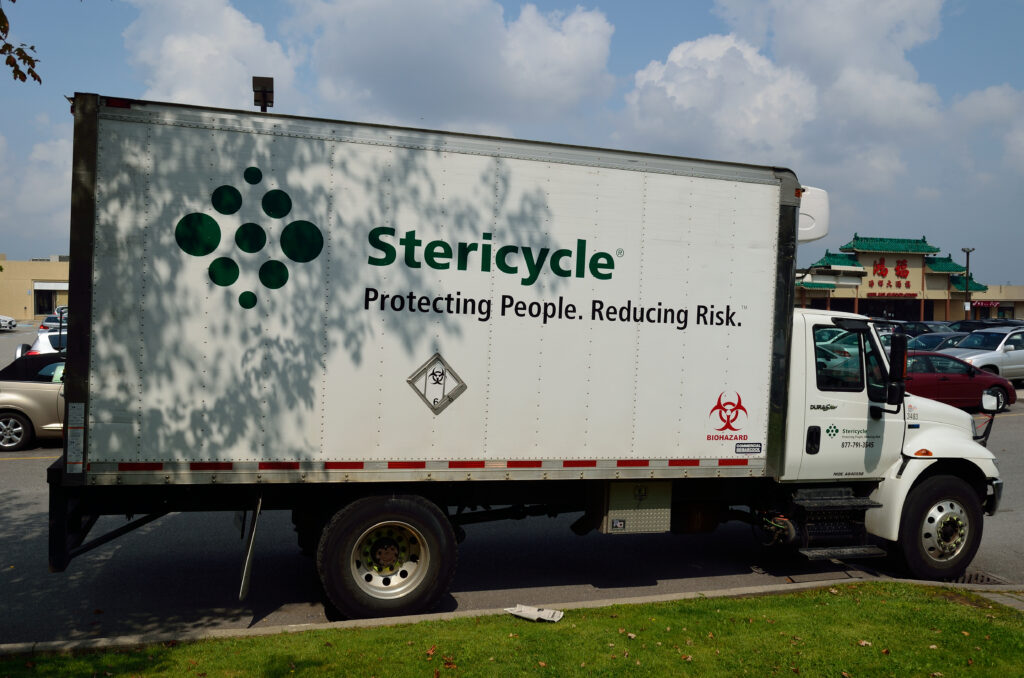
- Closed, lockable compartments for biohazardous waste containers that minimize movement and risk of spillage during transit
- Proper hazard markings and DOT-required labeling for medical waste transport
- Organized shelving for PPE, cleaning supplies, and equipment — not a disorganized cargo hold
- Emergency spill response equipment stored accessibly
- Discreet exterior where possible — many clients prefer unmarked or subtly branded vehicles out of sensitivity to neighbors and surrounding businesses
New cargo vans suitable for this purpose run between $45,000 and $65,000. Fitting one out properly with interior shelving, containment storage, and compliance-ready features adds another $5,000 to $15,000 on top of the vehicle cost. Used vehicles can reduce upfront cost but require careful mechanical inspection — a breakdown on the way to a job or a leaking waste compartment creates problems far beyond an inconvenience.
Insurance Requirements: Don’t Underestimate This Line Item
Insurance in the biohazard cleanup industry is not something to shop for based on the lowest premium. The liability exposure is real — a contamination that wasn’t properly remediated, an employee exposure incident, a waste disposal violation — any of these can generate claims that end an underfunded business.
Coverage Types You Need
- General liability insurance — covers property damage and third-party bodily injury claims. For a startup in this industry, expect premiums in the range of $5,000 to $15,000 annually depending on coverage limits and location.
- Professional liability (errors and omissions) — covers claims that your work failed to achieve the agreed standard of care. Particularly relevant in remediation, where clients may later claim contamination wasn’t fully addressed.
- Pollution liability insurance — specifically designed for businesses handling hazardous materials. Standard general liability policies typically exclude pollution-related claims, which biohazard situations can trigger.
- Workers’ compensation — legally required in most states the moment you hire an employee. Given the occupational hazard level in this work, coverage is both legally mandatory and genuinely necessary.
- Commercial auto insurance — required for your vehicle fleet, with additional riders for medical waste transport if your carrier requires it.
Budget $8,000 to $20,000 annually for a comprehensive insurance package when you’re starting out, and revisit coverage limits as your revenue grows.
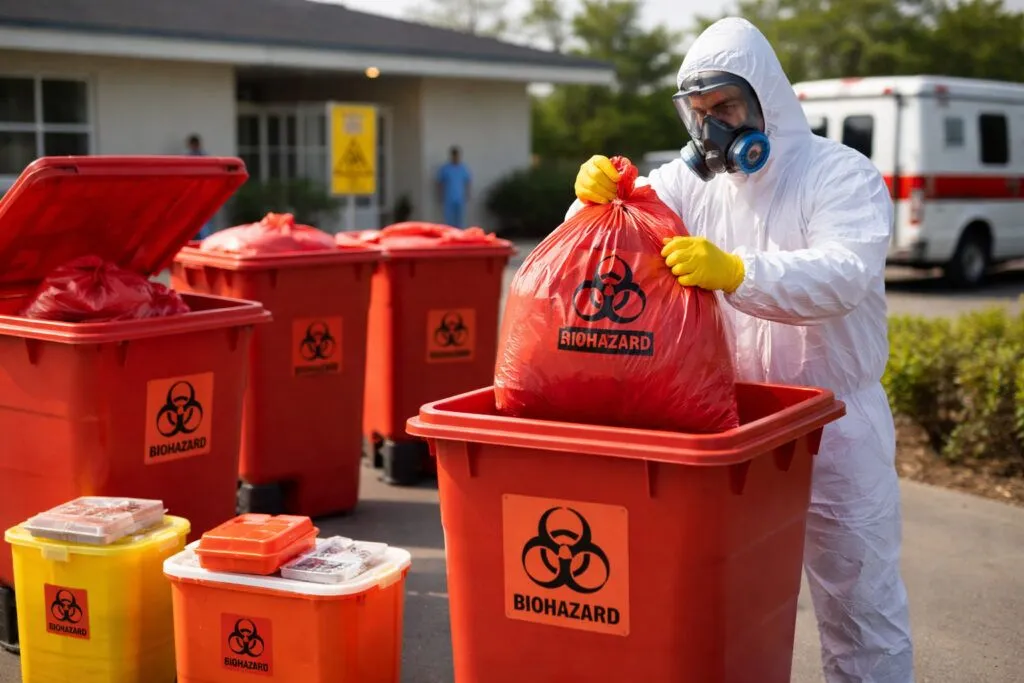
Waste Disposal Compliance: The Part That Trips Up New Operators Most
Removing biohazardous material from a scene is only half the job. What happens to that waste afterward is equally regulated — and it’s where new operators most frequently make costly mistakes.
How the Chain of Custody Works
Every piece of biohazardous waste you generate must follow a documented path from the scene to an approved treatment or disposal facility. This isn’t optional and it isn’t informal:
- Waste must be segregated into red biohazard bags or appropriately labeled containers at the scene
- Each waste shipment requires a manifest document tracking the waste from its point of generation through transport to final disposal
- Manifests must record waste classification, quantity, generator information, transporter details, and the receiving facility
- Documentation must be retained for a minimum of three years and may need to be available for regulatory inspection at any time
You cannot simply hand waste to a standard garbage hauler. Biohazardous waste must be transported by a licensed medical waste carrier to an EPA-approved treatment facility. Most operators contract with a dedicated medical waste disposal company for this step. Build that cost into every job estimate from day one — it adds up quickly and is non-negotiable.
What New Operators Consistently Underestimate
After reviewing the requirements, first-time operators often feel like they’ve got a complete picture. They rarely do. Here are the areas where new businesses most commonly hit avoidable walls:
- The emotional and psychological toll on employees. This is a field with high staff turnover if you don’t actively support your team. Trauma exposure over repeated jobs affects people, and operators who don’t address it lose good technicians. Budget for employee assistance programs and take mental health seriously as part of your operational model.
- Waste disposal costs at scale. The per-job cost of compliant waste disposal is higher than most estimates account for. On large scenes with significant material volume, disposal alone can represent 15–20% of job cost. Underpricing early jobs because disposal costs weren’t factored in is one of the fastest ways to lose money.
- State-specific licensing timelines. In states like California, the permitting process takes time — sometimes months. New operators who assume they can begin work while permits are pending face legal exposure and potential fines. Apply early and plan your launch date around the permit approval timeline, not the other way around.
- Insurance gaps around pollution liability. Many new operators purchase general liability insurance and assume they’re covered. Most standard GL policies explicitly exclude pollution-related claims — and biohazard situations can trigger those exclusions. Discovering this after a claim is filed is an expensive lesson.
- Marketing to the right referral sources. Biohazard cleanup businesses don’t grow primarily through advertising. They grow through relationships with law enforcement, medical examiners, property managers, insurance adjusters, and estate attorneys. Building those relationships takes time, intentionality, and consistent professionalism. Companies like Bio Recovery Pro understand that reputation in this industry is everything — and that it’s built job by job.
Building Your Business Entity and Getting Started
Before you take a single job, your business structure needs to be properly established. An LLC is the most common entity type for operators in this space — it limits personal liability, which matters given the exposure risks in this industry. Legal fees for entity formation and foundational contracts typically run $1,000 to $3,000.
You’ll also need:
- A federal EIN (Employer Identification Number) from the IRS
- A business bank account separate from personal finances
- A written exposure control plan filed before your first employee starts
- Contracts with a licensed medical waste disposal partner
- A documented training program with records kept for every employee
Once the legal and compliance foundation is in place, many operators begin building referral relationships before their launch date — reaching out to local property management companies, insurance agencies, and law enforcement contacts to introduce their services and credentials.
Final Thoughts
Starting a crime scene cleanup business is not the kind of venture you can bootstrap casually. The regulatory framework is real, the equipment costs are significant, and the compliance requirements don’t bend for operators who aren’t ready. But for those who approach it correctly — with proper certification, the right insurance, documented processes, and genuine commitment to the work — it’s a business that provides essential services, generates strong margins, and builds durable value over time.
The key is doing the groundwork before you take your first call. Get licensed, get trained, get properly insured, and build your waste disposal chain before you need it. The operators who last in this industry are the ones who never cut a corner they couldn’t defend in front of a regulator — or a grieving family.
If you’re looking for a benchmark of what a professional, fully compliant operation looks like in practice, Bio Recovery Pro is a strong example of the standard serious operators hold themselves to.
This was exactly what I was looking for. The information was laid out nicely and is easy to understand. Thank you.