

Quick question for anyone running a remediation crew: when was the last time your exposure control plan was actually reviewed, not just dated and filed? If you’re not sure, you’re not alone — and you’re also sitting on the exact gap that turns a routine OSHA inspection into a five-figure fine.
OSHA bloodborne pathogens training contractor requirements aren’t complicated in theory, but they’re the single most commonly botched compliance category in this industry, largely because crews assume “we wear gloves and suits” is the same thing as being compliant. It isn’t. Compliance lives in the paperwork behind the PPE, and that’s exactly where most inspections either pass cleanly or unravel fast.
This guide walks through exactly what OSHA actually requires, how to build a defensible Exposure Control Plan from scratch, what the Hepatitis B vaccination rule really demands, and where the fines actually come from — because they rarely come from the obvious mistakes owners picture ahead of time.
What the Bloodborne Pathogens Standard Actually Covers
The OSHA Bloodborne Pathogens Standard, 29 CFR 1910.1030, applies to any employee with occupational exposure — meaning contact with blood or other potentially infectious material that’s reasonably anticipated given their job duties. That determination has to be made as though the employee were wearing no PPE at all, which matters more than most crews realize: you can’t argue your way out of coverage by pointing to the suit and gloves you provide, because the standard is asking whether exposure is foreseeable in the first place, not whether it’s mitigated after the fact.
For a biohazard remediation business, this covers essentially every field technician without exception. There’s no small-business carve-out here either — a two-person operation and a fifty-truck franchise face the exact same obligations under the standard, and OSHA has been explicit on this point in multiple standard interpretation letters over the years. The size of your crew doesn’t change the size of your exposure control obligations.
Universal precautions apply throughout: every technician is required to treat all human blood and certain body fluids as though known to be infectious for HIV, HBV, and other bloodborne pathogens, regardless of what’s actually known about the source at a given scene.

Building an Exposure Control Plan Step by Step
Every other requirement in this standard flows from one document: the written Exposure Control Plan, or ECP. Nothing else — training, vaccination, recordkeeping — is legally triggered until this plan exists and names the employees it covers. A properly built exposure control plan remediation business owners can actually defend during an inspection isn’t a template downloaded once and forgotten; it’s a working document that gets revisited every time your service lines or crew structure change.
Step 1: Identify Every Exposed Job Classification
Start by listing every role in your company where occupational exposure is reasonably anticipated. For most remediation businesses this means field technicians, but don’t stop there — supervisors who inspect active scenes and anyone handling contaminated waste for transport belong on this list too.
Step 2: Document the Schedule for Implementing Each Requirement
Your ECP needs to spell out, in writing, how and when you’re complying with each section of the standard — engineering controls, work practice controls, PPE provision, housekeeping, and waste handling. This doesn’t need to be complicated; an annotated copy of the regulation stating when and how each provision is met satisfies this requirement.
Step 3: Build the Post-Exposure Evaluation Procedure
Your plan needs a documented process for what happens after an exposure incident — a needlestick, a splash to the eyes, contact with non-intact skin. This includes immediate reporting, medical evaluation at no cost to the employee, and confidential follow-up.
Step 4: Get Employee Input
The standard specifically requires soliciting input from non-managerial employees who are potentially exposed, regarding the identification, evaluation, and selection of safer engineering and work practice controls. Document who participated and when.
Step 5: Review and Update Annually — Without Exception
The plan must be reviewed and updated at least annually, and the review has to actually reflect changes: new tasks, new job classifications, new technology that could reduce exposure. An annual review date stamped on a document that hasn’t substantively changed in years is, as one compliance firm bluntly put it, a red flag during inspections. Reviewers can and do check whether the plan matches current operations.

The Hepatitis B Vaccination Requirement, Explained Correctly
This is where crime scene cleaner OSHA requirements trip up otherwise well-run operations, because the rule has more moving parts than most owners expect.
Employers must offer the Hepatitis B vaccine at no cost to every employee with occupational exposure, and that offer has to happen within 10 working days of initial assignment — not at the employee’s convenience, and not after they’ve already worked a job. The only exceptions are employees who’ve already completed the vaccination series, whose antibody testing shows immunity, or for whom the vaccine is medically contraindicated.
If an employee declines, they must sign the exact declination statement found in Appendix A of the standard — not a paraphrased version, not a generic waiver, the specific mandated language. And critically, that decision isn’t permanent: if the employee changes their mind later while still covered under the standard, the employer must make the vaccine available again at no cost.
PPE, Training, and the Documentation That Backs It Up
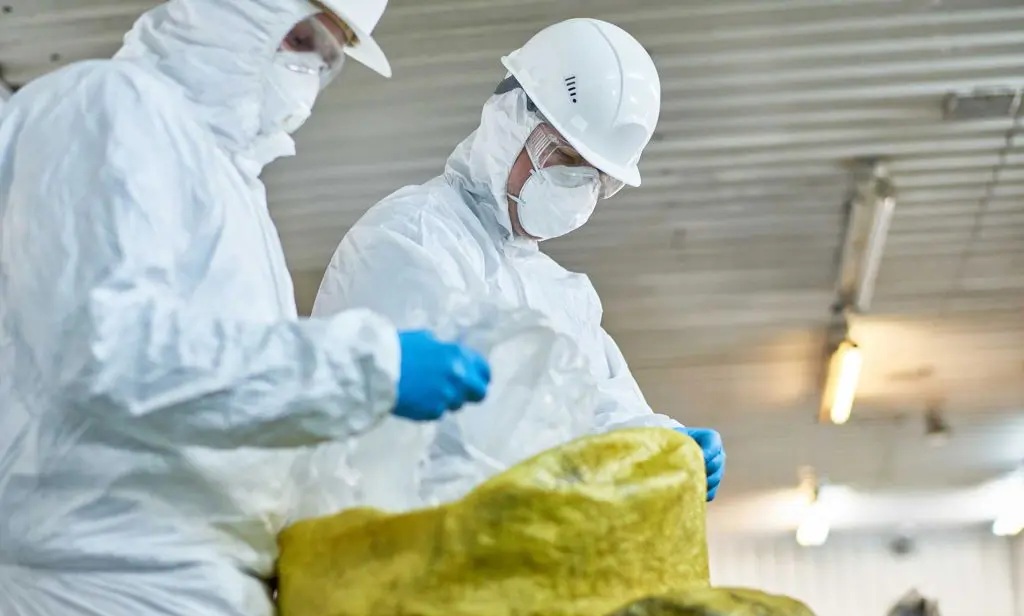
Personal protective equipment requirements under the standard aren’t a suggestion layer on top of the ECP — they’re a core enforcement section, and OSHA inspectors check for specifics, not general good intentions.
Training must be provided at no cost, during working hours, at the time of initial assignment, and then annually thereafter. It has to cover the modes of transmission, the specifics of your ECP, PPE selection and use, and the post-exposure procedure — delivered in a manner and language the employee understands, with an opportunity for interactive questions and answers, not a passive video with no instructor present to respond to questions in real time.
Recordkeeping requirements run in parallel: training records must be kept for three years, and medical records — including vaccination status and any post-exposure evaluations — must be retained for the duration of employment plus 30 years. That retention period surprises a lot of small operators who assume standard HR recordkeeping timelines apply here. They don’t, and mixing up these two very different retention schedules is itself a common finding during audits.
Where the Real Fines Come From
A biohazard cleanup compliance checklist 2026 approach means auditing your paperwork the same way an inspector would — not waiting for a citation to reveal the gap. Failures rarely come from the dramatic scenario owners picture, a technician working barehanded at a scene. They come from paperwork gaps that only surface during an inspection or after an incident triggers a review.
The most common and costly gaps:
- A missing or stale Exposure Control Plan. No written plan, or a plan that hasn’t been meaningfully updated in years, is often the first citation issued because it’s the easiest thing for an inspector to check.
- No Appendix A declination form on file for an employee who declined the Hepatitis B vaccine, or a declination form using non-standard language.
- Training documentation that can’t prove annual refreshers happened, not just initial onboarding training.
- Missing or incomplete medical waste disposal regulations OSHA compliance records — no documented relationship with a licensed medical waste transporter, no manifest trail proving regulated waste left the business through a compliant chain.
- PPE that technically exists but isn’t matched to the actual exposure level of the specific job, which becomes obvious the moment an inspector reviews a specific incident report against the PPE that was actually deployed.
OSHA can fine an employer up to roughly $16,550 for a single serious violation and up to approximately $165,514 for a willful or repeated one — and inspections frequently turn up multiple separate violations stacked from the same underlying gap, which is how a single missing declination form process becomes a five-figure penalty rather than a minor note.
Downloadable Compliance Checklist for Field Supervisors
Use this as a working reference before every job cycle, not just during an annual audit:
- Exposure Control Plan reviewed within the last 12 months, with documented changes noted
- Every field technician’s role listed in the ECP’s exposure determination
- Hepatitis B vaccine offered within 10 working days of hire for all new technicians
- Signed Appendix A declination forms on file for any employee who declined
- Annual bloodborne pathogen training completed and documented for every technician, not just new hires
- PPE inventory matched to the exposure level of current job types
- Waste transporter contract current, with manifest documentation retrievable for any job in the last 12 months
- Post-exposure evaluation procedure posted and understood by all field staff
- Training records retained for 3 years; medical records retained for duration of employment plus 30 years

Building Compliance Into Your Operation, Not Around It
The businesses that pass inspections cleanly treat this checklist as a living operational document, not a folder that gets opened once a year before a renewal deadline. Assign one person the explicit responsibility for the annual ECP review, build the Hepatitis B offer into your new-hire paperwork on day one, and audit your own waste manifest trail quarterly rather than discovering a gap when a regulator asks for it.
BioRecoveryPro works with IICRC-certified, OSHA-compliant remediation contractors across all 50 states, connecting properly documented operations with the insurance-managed and municipal contracts that require exactly this level of compliance rigor.
Final Thoughts
OSHA bloodborne pathogens compliance in 2026 isn’t about having the right suits and gloves on a job — it’s about the paper trail behind them. Any OSHA bloodborne pathogens training contractor program worth running has to produce documentation, not just a completed session. A written, actively reviewed Exposure Control Plan, a properly documented Hepatitis B vaccination process, annual training records, and a clean waste disposal chain are what actually separate a business that passes inspection from one that gets cited. The gap between those two outcomes is rarely dramatic. It’s usually just a form nobody updated.

Pingback: Biohazard Protocols for Facilities: What to Do After an Industrial Accident - BioRecoveryPro