Here’s something most property owners never think to ask: if you wipe up a blood spill and the surface looks spotless afterward, is the space actually safe? A proper biohazard blood disinfection guide would tell you the uncomfortable truth — visual cleanliness and biological safety are two completely different things, and the gap between them is exactly where DIY cleanup attempts go wrong.
The reason comes down to basic physics. Blood doesn’t just sit on top of a surface waiting to be wiped away. Depending on what that surface is made of, it can vanish into the material itself within minutes, carrying live pathogens with it into places a paper towel will never reach. Understanding that distinction is the whole reason professional bio-recovery exists as a separate discipline from ordinary cleaning.
The Porosity Problem: Why Surfaces Don’t Behave the Same Way
Every surface in a home or building falls into one of two broad categories, and which category it belongs to determines almost everything about how contamination behaves once blood or bodily fluid touches it.
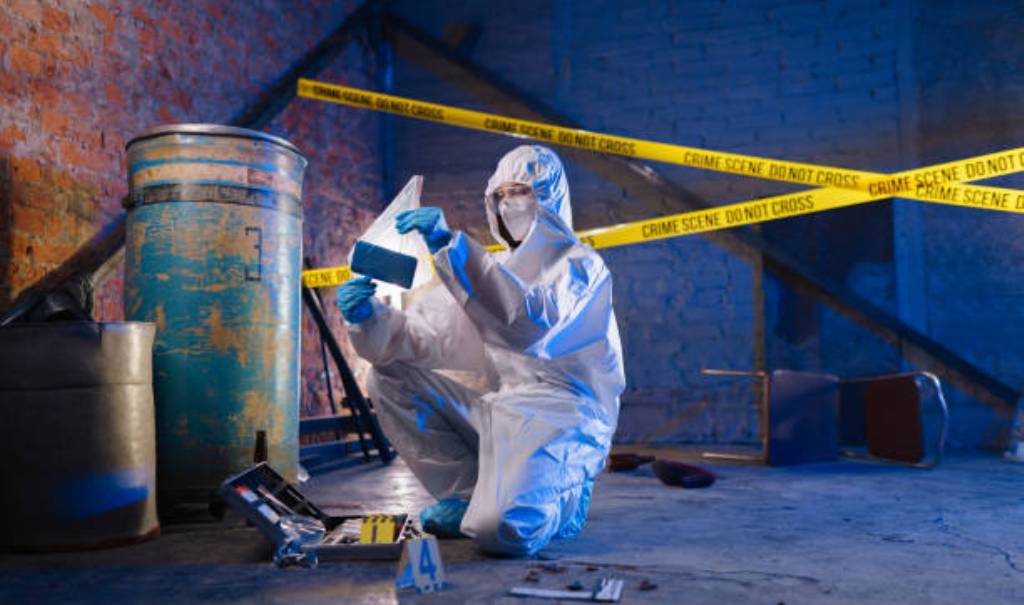
Non-porous surfaces — glass, sealed tile, stainless steel, finished countertops — have no internal structure for liquid to travel into. Blood sits on top, held together by surface tension, forming a pool with a defined edge. A forensic analysis of blood pool behavior confirms that on these smooth surfaces, the visible pool is a reasonably accurate representation of the actual volume present, since nothing is being drawn away beneath the surface.
Porous surfaces work completely differently. Concrete, untreated wood, drywall, grout, carpet, and carpet padding all contain microscopic channels that pull liquid inward through capillary action — the same physical process that lets a paper towel soak up a spill. Forensic researchers describe this effect on absorbent materials as creating an “iceberg effect,” where the blood visible to the eye represents only a fraction of what’s actually present, with the majority already drawn down into the material’s internal structure.
This distinction matters far beyond forensic reconstruction. It’s the exact reason two rooms that look equally “cleaned” after a biohazard event can carry entirely different levels of residual risk, depending on nothing more than what the floor and walls happen to be made of.
How Fast Does It Actually Happen?
This isn’t a slow process. Comparative forensic studies on blood behavior across different surface types found that concrete absorbs blood quickly, particularly under any pressure or impact, while wood absorbs more gradually but still steadily, drawing fluid into the grain over a period of minutes rather than hours. Carpet is often the fastest and deepest absorption case of all, since the fibers wick fluid downward into the padding and subfloor beneath, a process cleaning blood from concrete and subfloors specifically has to account for since the contamination frequently continues well past the visible carpet layer into the wood or concrete underneath it.
| Surface Type | Category | Typical Absorption Behavior |
|---|---|---|
| Glass, sealed tile, stainless steel | Non-porous | Blood pools on top; wiped cleanly with proper disinfectant |
| Grout, unsealed concrete | Semi-porous to porous | Gradual absorption; surface treatment often insufficient below a few millimeters |
| Untreated or unfinished wood | Porous | Steady capillary absorption into the grain within minutes |
| Carpet and carpet padding | Highly porous | Fast, deep wicking into padding and subfloor beneath |
| Drywall | Highly porous | Absorbs like a sponge; cannot be reliably decontaminated in place |
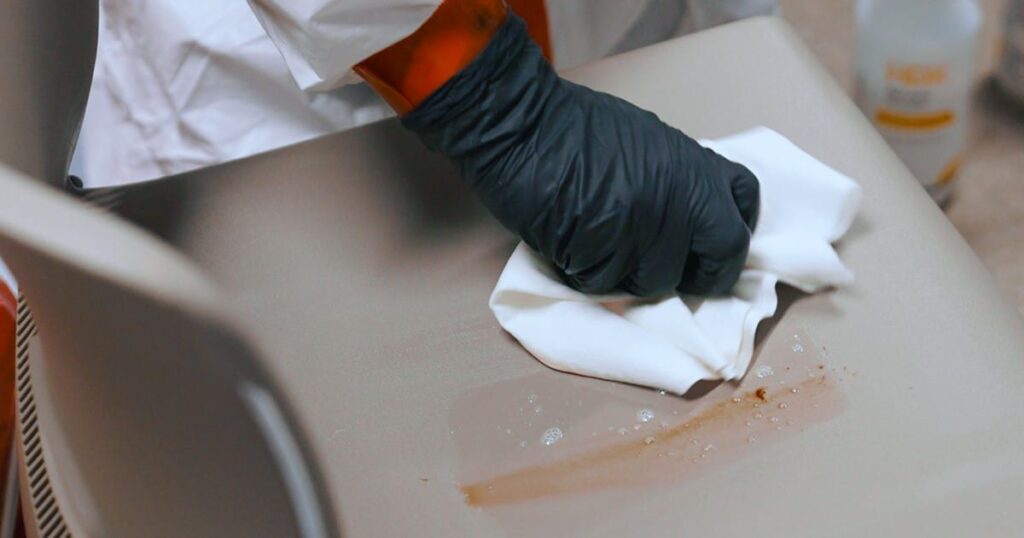
Cleaning Blood from Concrete and Subfloors: Why the Job Isn’t Finished at the Surface
This is where most DIY cleanup attempts fail without the person ever realizing it.
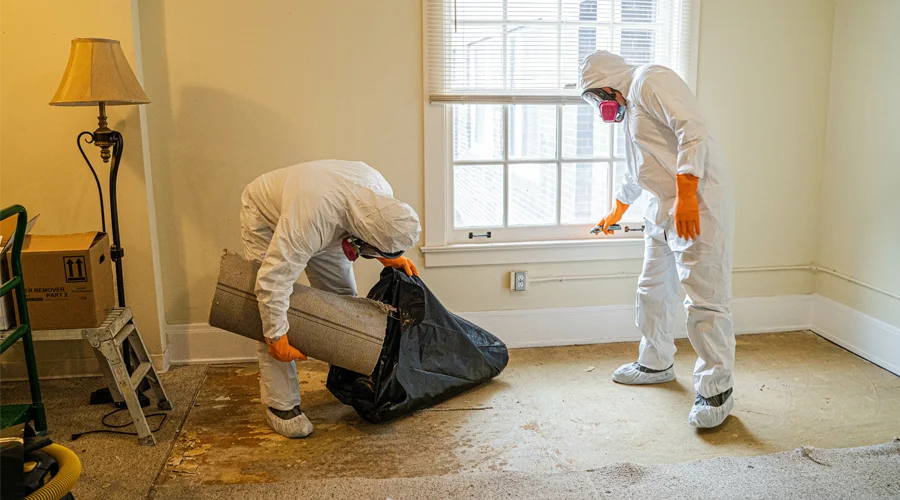
When blood soaks into concrete, it penetrates the material’s natural pore structure — the same porosity that lets concrete absorb moisture from groundwater over time. Surface scrubbing removes what’s visible on top but does nothing to address what’s already several millimeters deep in the slab. The same applies to subfloor plywood beneath carpet or hardwood: by the time a spill is discovered, cleaned, and the carpet removed, the fluid has frequently already reached the subfloor material itself.
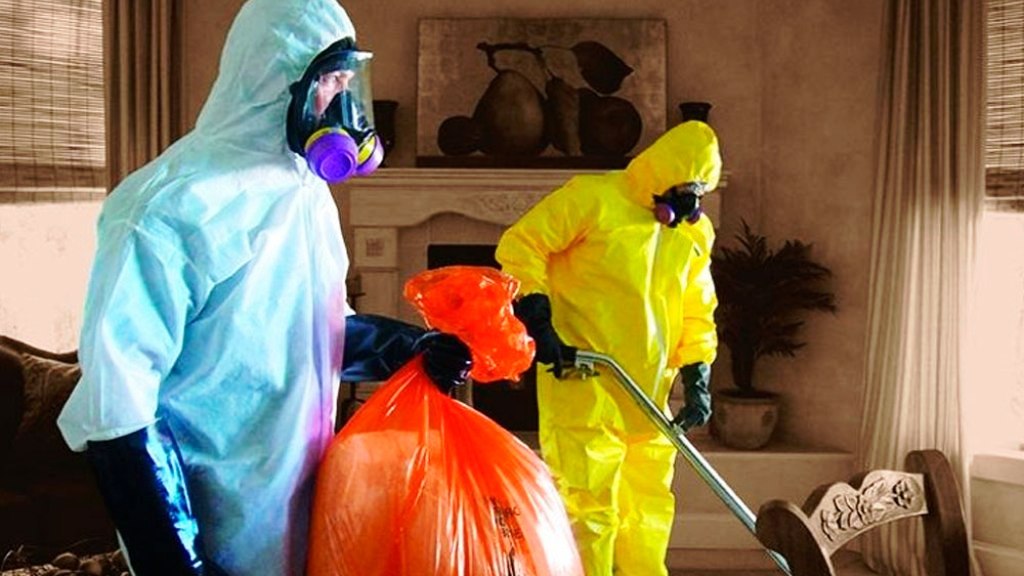
Bio recovery porous surface remediation for these deep-penetration cases typically requires physically removing the contaminated material rather than attempting to clean it in place. Contaminated carpet padding, saturated subfloor sections, and in severe cases affected concrete surface layers get cut out and disposed of as regulated biohazard waste, because no amount of surface disinfectant reaches material that’s already absorbed several millimeters below the surface. This is a genuinely different service category from wiping down a countertop, and it’s why professional invoices for porous-material jobs include structural removal as a distinct line item rather than folding it into general cleaning labor.
Why a Space Can Look Perfectly Clean and Still Be Dangerous
This is the part that surprises people the most, and it’s the entire reason professional bloodborne pathogen sanitization service exists as a category separate from janitorial cleaning.
Hepatitis B can remain infectious on a dried surface for up to seven days after exposure, according to CDC bloodborne pathogen guidance, and Hepatitis C and HIV can also persist outside the body for meaningful periods under the right conditions. None of these pathogens announce their presence visually. A surface that’s been wiped down and looks completely normal can still carry a pathogen load well above what’s considered safe, particularly if the material involved is porous and the contamination migrated below what a visual inspection or a basic wipe-down could reach.
This is precisely why the OSHA Bloodborne Pathogens Standard requires specific decontamination protocols rather than leaving cleanup to general judgment. The standard exists because “looks clean” and “is biologically safe” are not the same claim, and treating them as interchangeable is how secondary exposure happens in homes that were technically already “cleaned” once.
The Chemistry: How Professionals Actually Neutralize Contamination
Professional decontamination doesn’t rely on visual inspection or a strong-smelling cleaning product. It relies on chemistry engineered specifically to break down biological material at the molecular level.
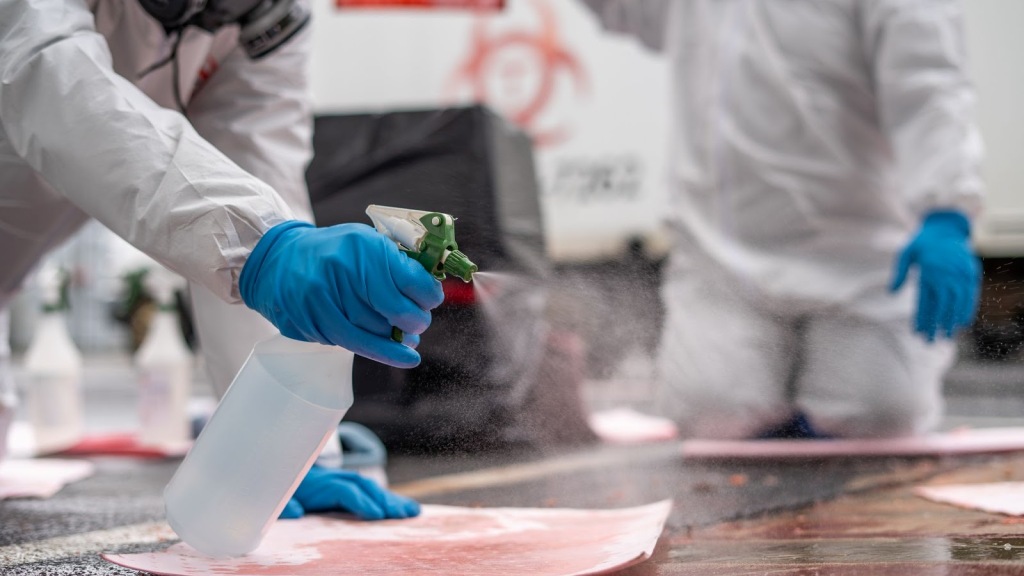
Enzyme-based cleaning solutions work by targeting the specific protein structures present in blood and bodily fluids. These formulations contain enzymes that catalyze the breakdown of organic material into smaller, non-biohazardous components, which is fundamentally different from a surfactant-based cleaner that simply lifts material off a surface without altering its chemical structure. Enzyme treatments are particularly effective on porous materials because they can continue working within the material during the required dwell time, rather than only acting on what’s visible at the surface.
This dwell time is where most rushed cleaning jobs fail. An enzyme solution applied and wiped away within seconds hasn’t had the contact time necessary to complete the breakdown reaction. Professional protocols specify exact dwell times for a reason — the chemistry needs time to actually work, not just time to be applied and removed.
For airborne and deeply embedded microscopic decomposition cleanup tech, the industry relies on two atmospheric treatment methods. Hydroxyl generators produce hydroxyl radicals that oxidize organic compounds in the air and on surfaces, breaking down odor-causing molecules and residual biological material through a chemical reaction rather than masking them. Ozone treatment works through a similar oxidative mechanism at higher concentration, though it requires the space to be fully vacated during treatment since ozone at decontamination-level concentrations isn’t safe to breathe. Both methods reach into spaces a liquid disinfectant physically cannot — deep within HVAC ductwork, wall cavities, and the microscopic pore structure of porous building materials.
ATP Testing: How Technicians Mathematically Prove a Space Is Clean
This is the step that separates a documented, verifiable decontamination from someone’s opinion that a room looks fine.
ATP — adenosine triphosphate — is the universal energy molecule present in all living cells, including bacteria, blood cells, and other biological residue. After remediation is complete, a technician swabs a defined surface area and inserts the swab into a handheld luminometer. The device measures light produced when ATP reacts with the enzyme luciferase, and the reading is expressed in Relative Light Units, or RLU.
Readings below roughly 100 RLU generally indicate a surface meets hospital-grade cleanliness standards, while readings above 200 RLU signal that biological residue remains at unacceptable levels and the area requires additional treatment before it passes. This process gets repeated across multiple locations throughout the treated space — not just the obvious contamination zone, but the surrounding areas contamination may have migrated into — with every reading logged as part of the final documentation.
What makes ATP testing valuable isn’t just the number itself. It’s that the number is objective and reproducible in a way that a visual inspection never can be. A technician’s opinion that a room “looks clean” carries no weight in an insurance dispute, a real estate transaction, or a future habitability question. A logged ATP reading at a specific location, taken with calibrated equipment, does.
When DIY Cleanup Actually Makes Things Worse
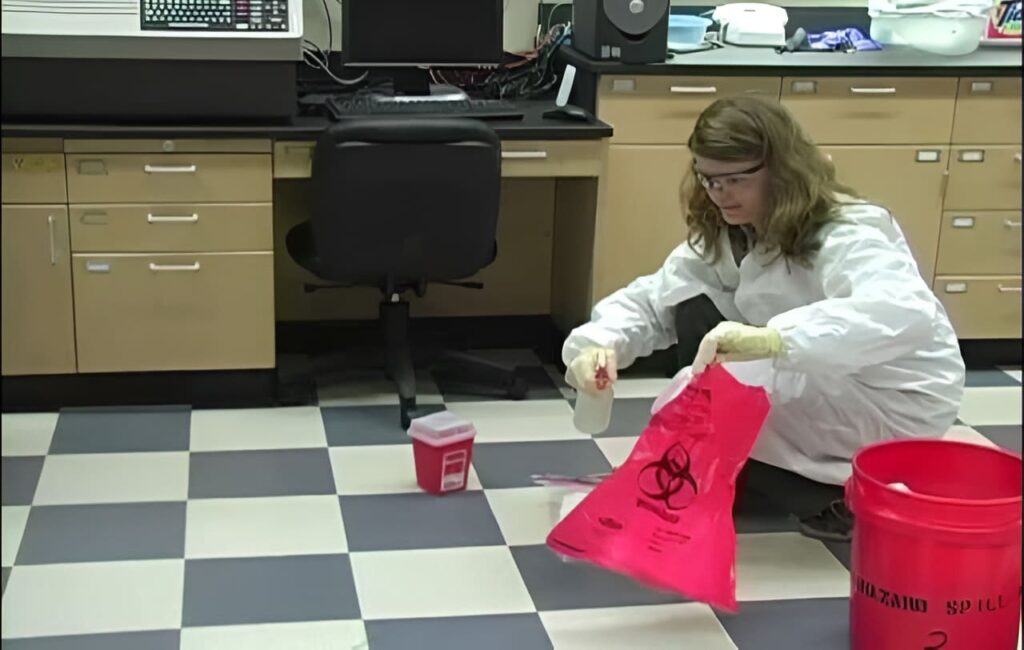
It’s worth being direct about this: attempting to clean a bloodborne pathogen situation without the right equipment and chemistry doesn’t just fail to solve the problem — it can actively spread it.
Wiping a porous surface without the correct enzymatic treatment can push contaminated material deeper into the material’s pore structure rather than removing it. Using a mop or cleaning cloth across multiple areas without proper decontamination between uses transfers pathogen load from a contaminated zone into previously unaffected space. And relying on standard household disinfectants, which aren’t formulated or tested against bloodborne pathogens at the concentrations found in a real biohazard scene, creates a false sense of resolution that can leave a family or property manager believing a space is safe when it genuinely isn’t.
BioRecoveryPro connects property owners with IICRC-certified specialists trained in porous material assessment, enzyme-based decontamination, and ATP verification testing — the full scientific process behind a genuinely safe space, not just a visually tidy one.
The Bottom Line
The physics of how blood and bodily fluid interact with different surfaces is the entire reason professional bloodborne pathogen sanitization exists as a distinct field. Porous materials absorb contamination in minutes, hide it below what’s visible, and require chemistry and structural removal that a household cleaning routine was never designed to provide. Non-porous surfaces are more forgiving but still require pathogen-specific disinfection, not just wiping.
A space that looks clean is not the same as a space that’s been verified clean. That distinction — proven with enzyme chemistry, atmospheric treatment, and objective ATP data rather than a visual check — is what actually protects the people who live and work in that space afterward.