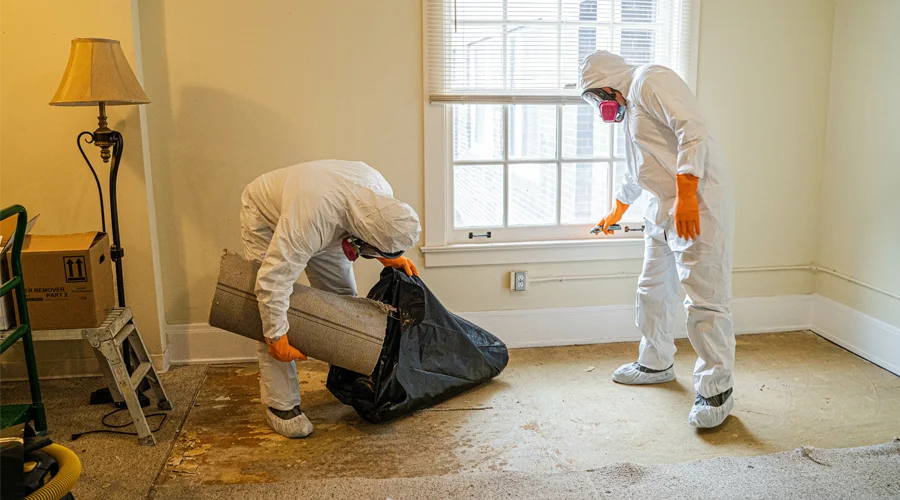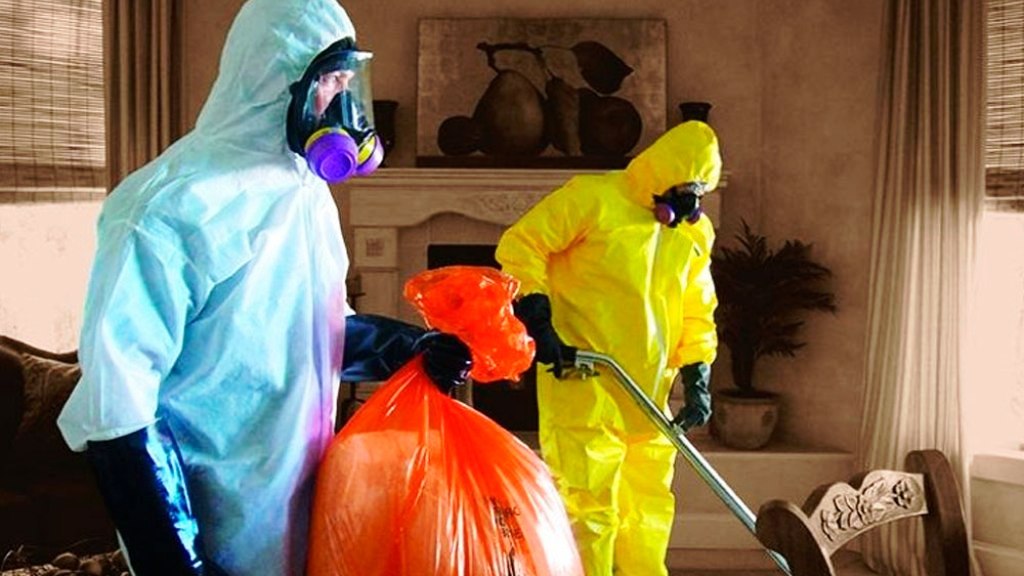
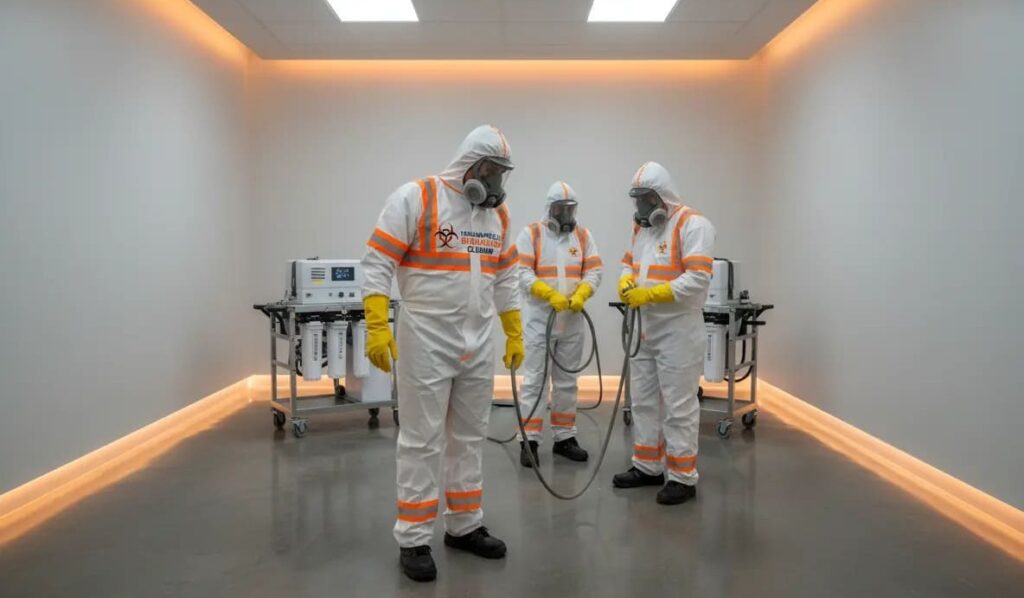
A workplace fatality, an industrial accident, or a mass casualty event on commercial property creates a category of problem that residential biohazard remediation was never designed to solve. The stakes are different. The scale is different. And the tolerance for delay is measured in lost production hours and revenue, not just discomfort.
For corporate safety directors, facility managers, and municipal risk officers, understanding what a legitimate commercial biohazard remediation guide actually requires — before an incident occurs — is the difference between a contained, professionally managed response and a compounding operational and legal crisis. This guide covers the dispatch standards, compliance boundaries, machinery-safe decontamination methods, and discretion protocols that separate industrial-grade bio-recovery from residential-scale operations working outside their depth.
Why Commercial Incidents Demand a Fundamentally Different Response Model
A residential crime scene cleanup and an industrial trauma scene cleanup process share a chemical and biological foundation — bloodborne pathogens are bloodborne pathogens regardless of where they’re found — but everything else about the operational model changes at commercial scale.
Facility downtime carries a direct revenue cost that residential clients simply don’t face. A manufacturing line halted for an unaddressed biohazard incident isn’t just inconvenient; it’s a quantifiable daily loss that stakeholders will ask about immediately. A hospitality property with an unresolved biohazard situation in a guest-facing area faces reputational exposure that compounds by the hour. A logistics or distribution facility with a contaminated zone blocking a critical pathway can cascade delays through an entire supply chain. Commercial clients aren’t asking “can you clean this” — they’re asking “how fast can you have this facility operational again, done correctly, with documentation that protects us.”
This is the foundational difference that shapes every protocol that follows.

Rapid Response Dispatch: Minimizing Revenue Loss From Facility Shutdowns
The single most important operational metric in commercial biohazard remediation is dispatch time — not because speed alone matters, but because every hour a facility sits closed or a production zone remains inaccessible has a dollar figure attached to it that executives are actively tracking.
A legitimate emergency factory floor bio-recovery specialist should be able to commit to specific, contractual response windows: typically two to four hours for initial site assessment in metro areas, with mobilization of a full remediation crew within four to eight hours of confirmed scope. This isn’t the same standard applied to a residential job, where “we’ll be there today” is often acceptable. Corporate clients — particularly those in manufacturing, logistics, and hospitality — need dispatch commitments written into a service level agreement before an incident occurs, not negotiated during the crisis itself.
The practical implication for facility managers: establish a pre-incident relationship with a commercial-capable remediation provider before you need one. Waiting until an incident occurs to begin vetting response times, PPE inventory levels, and equipment availability adds hours to an already time-sensitive situation — hours that translate directly into extended downtime and cost.
Partial facility reopening is often possible and should be part of the initial assessment. A contained incident in one section of a warehouse doesn’t necessarily require closing the entire facility; a competent commercial remediation team will establish containment boundaries that allow unaffected zones to remain operational while the affected area undergoes remediation, minimizing the revenue impact of the shutdown.
Compliance Boundaries: OSHA’s General Duty Clause and the Bloodborne Pathogens Standard
Corporate compliance officers need precise clarity here, because the regulatory framework governing corporate bloodborne pathogen response service obligations isn’t uniform across every industry — and getting this wrong creates direct liability exposure.
The OSHA Bloodborne Pathogens Standard (29 CFR 1910.1030) applies directly to employers whose employees have occupational exposure to blood or other potentially infectious materials. This covers the remediation contractor’s own workforce comprehensively — Exposure Control Plans, Hepatitis B vaccination, PPE, training, and post-exposure protocols are all mandatory.
Where it gets more nuanced is the client facility’s own obligations. The Bloodborne Pathogens Standard does not apply to certain industries — construction, agriculture, longshoring, and marine terminals are explicitly excluded from its direct requirements. For facilities in these sectors, OSHA has been explicit that the General Duty Clause (Section 5(a)(1) of the OSH Act) fills that gap: employers in excluded industries are still required to furnish a workplace “free from recognized hazards that are causing or are likely to cause death or serious physical harm” — bloodborne pathogen exposure squarely qualifies. This means a construction site or agricultural facility that experiences a traumatic incident cannot treat itself as exempt from biohazard response obligations simply because the specific numbered standard doesn’t apply; General Duty Clause liability attaches immediately upon a recognized hazard remaining unaddressed.
For facility managers, the practical takeaway is this: regardless of which regulatory mechanism technically applies to your industry, the standard of care expected is the same — trained personnel, appropriate PPE, documented decontamination procedures, and regulated waste disposal. A mass casualty cleanup protocol for businesses that doesn’t meet this bar, regardless of which specific OSHA provision is cited, creates liability exposure in a subsequent inspection, workers’ compensation claim, or civil suit.
Facilities should require documentation from any remediation contractor confirming their own Exposure Control Plan compliance, technician vaccination and training records, and waste disposal chain-of-custody — this documentation protects the facility as much as it demonstrates the contractor’s competence.
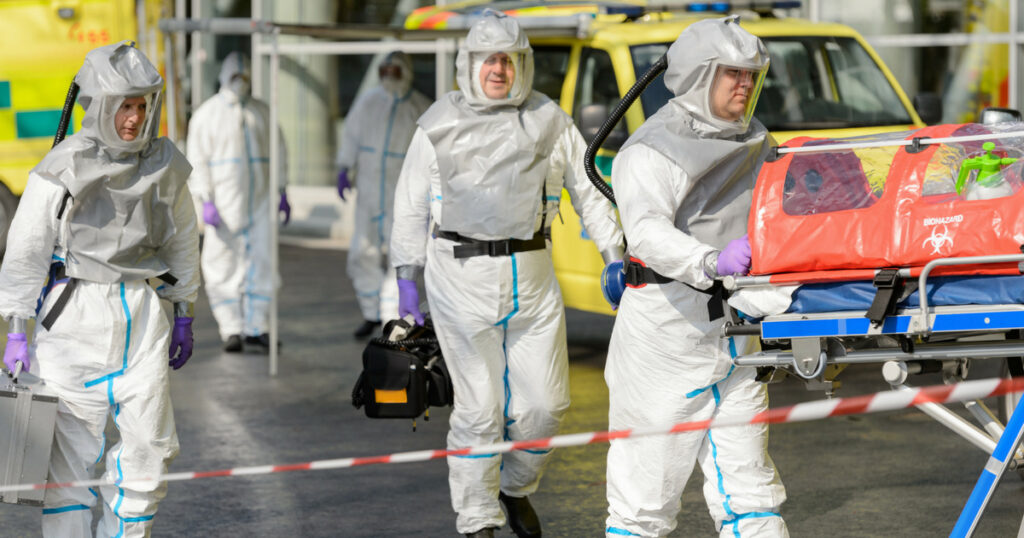
Decontaminating Heavy Machinery Without Destroying Multi-Million Dollar Assets
This is the technical challenge most residential-focused biohazard companies have never encountered, and it’s precisely where industrial trauma scene cleanup process requirements diverge most sharply from standard protocols.
Standard biohazard decontamination chemistry — the EPA List N disinfectants and oxidative agents used in residential and crime scene work — is formulated for building materials: drywall, flooring, countertops. Applying those same chemistries to CNC machining equipment, industrial conveyor systems, or precision manufacturing assemblies risks corrosion of metal components, degradation of electronic control systems, and damage to hydraulic seals and lubricated moving parts that can cost far more to replace than the original incident.
Industrial-grade biohazard remediation requires technicians trained in material-specific decontamination protocols that account for the machinery involved. This typically means: identifying and masking or removing sensitive electronic components before chemical application; using pH-neutral, non-corrosive enzymatic cleaners rather than standard oxidative disinfectants on exposed metal surfaces; applying targeted, localized treatment to contaminated zones rather than broad chemical fogging that could reach sensitive machinery components; and coordinating directly with the facility’s own maintenance engineers to understand which components can tolerate which decontamination methods before any chemical is applied.
For contamination that has penetrated machine housings, bearing assemblies, or other enclosed mechanical spaces, remediation may require partial disassembly under the supervision of the equipment manufacturer’s service protocol — a level of coordination residential biohazard work never requires, and one that separates genuinely industrial-capable remediation providers from companies attempting to scale up without the right technical partnerships.
Managing Public Relations and Privacy During High-Profile Commercial Operations
A biohazard incident at a corporate facility carries reputational exposure that residential incidents don’t. Employees talk. Local news outlets monitor emergency dispatches. Social media speculation fills information vacuums quickly, particularly for publicly recognizable brands or facilities near residential areas.
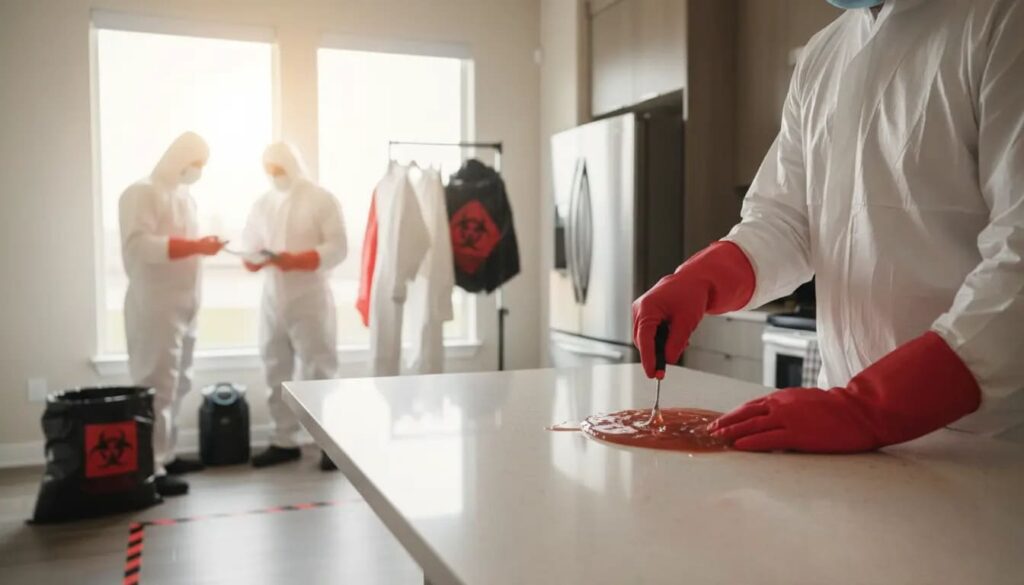
Discretion protocols for commercial biohazard remediation should be established before the remediation vehicle ever arrives on-site. This includes unmarked or subtly marked response vehicles rather than vehicles with prominent biohazard branding, coordinated arrival timing to avoid shift changes or high-visibility periods when possible, and a single point of contact between the remediation company and facility leadership to prevent conflicting information from reaching employees or media before the facility’s own communications team has issued guidance.
Remediation companies working commercial accounts should also be prepared to sign facility-specific non-disclosure agreements as a standard part of onboarding, and should have existing protocols for how their own field technicians are instructed to handle any media or public inquiry on-site — the answer should always be “no comment, please contact facility management,” with zero exceptions communicated clearly during technician briefing before the job begins.
For municipal and public-sector facilities specifically, coordination with the facility’s public information officer should happen before remediation begins, not after work has already attracted public attention. A mass casualty cleanup protocol for businesses operating in the public sector carries additional transparency obligations under public records law in many states — something a corporate account manager at the remediation company should understand and be able to advise on.
Building the Commercial Account Relationship
The facilities that manage biohazard incidents most effectively are the ones that treat remediation readiness as part of standard emergency preparedness — alongside fire response, active threat protocols, and business continuity planning — rather than something addressed reactively after an incident occurs.
This means establishing a vetted commercial biohazard remediation guide relationship in advance: confirming dispatch time commitments in writing, understanding the provider’s experience with your specific industry’s machinery and compliance requirements, and clarifying discretion and communication protocols before they’re tested under real conditions.
BioRecoveryPro works with corporate safety directors, facility managers, and municipal risk officers to establish pre-incident commercial remediation relationships across all 50 states — connecting organizations with specialists experienced in industrial-scale bio-recovery, machinery-safe decontamination, and the compliance documentation corporate accounts require.
Final Thoughts
Mass trauma and industrial biohazard response isn’t a scaled-up version of residential cleanup — it’s a distinct discipline with its own dispatch standards, compliance framework, technical requirements, and communication protocols. Facilities that establish these relationships and protocols before an incident occurs consistently manage the aftermath with less downtime, less liability exposure, and significantly less operational chaos than those scrambling to find a qualified provider mid-crisis.
The businesses that get this right treat it the same way they treat any other critical infrastructure risk: prepared for, documented, and tested — not discovered for the first time on the worst day of the year.