
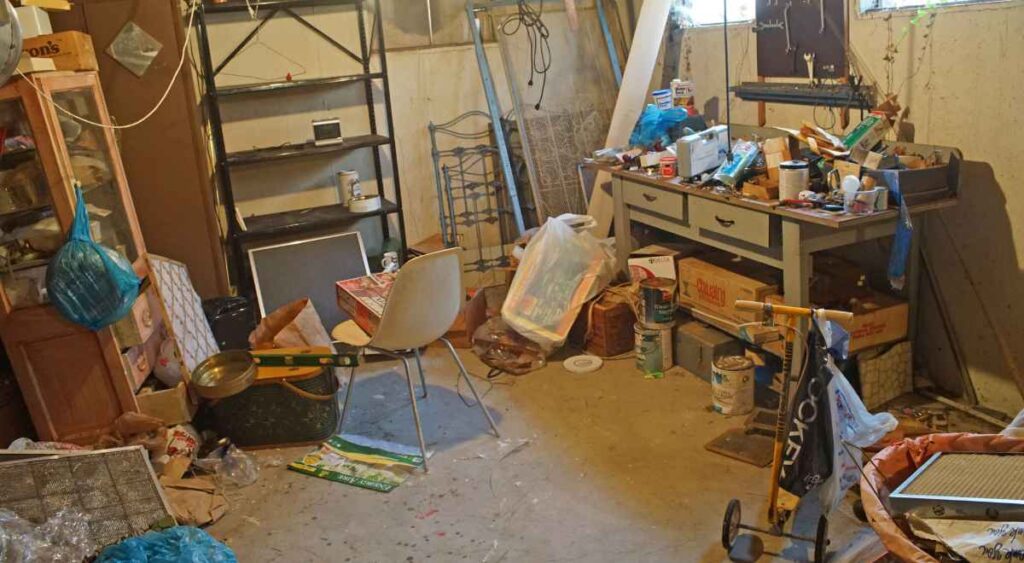
Inheriting a house is supposed to be, at minimum, a manageable administrative process layered on top of grief. Inheriting a hoarder’s house is something else entirely. You’re not just settling an estate — you’re walking into rooms that may not have had a functional floor in years, navigating pathways between towering stacks of belongings, and trying to figure out what’s actually valuable amid what your instincts are telling you is genuinely dangerous to touch.
If you’re dealing with a deceased parent’s hoarded house right now, the emotional weight is only part of the problem. There are real biohazard risks, real municipal deadlines, and real decisions about what gets saved versus what requires professional hazardous disposal — and most of that has to happen before you can even think about selling, renting, or simply closing the door and walking away. This guide walks through it calmly and in order.
First: Understand What You’re Actually Walking Into
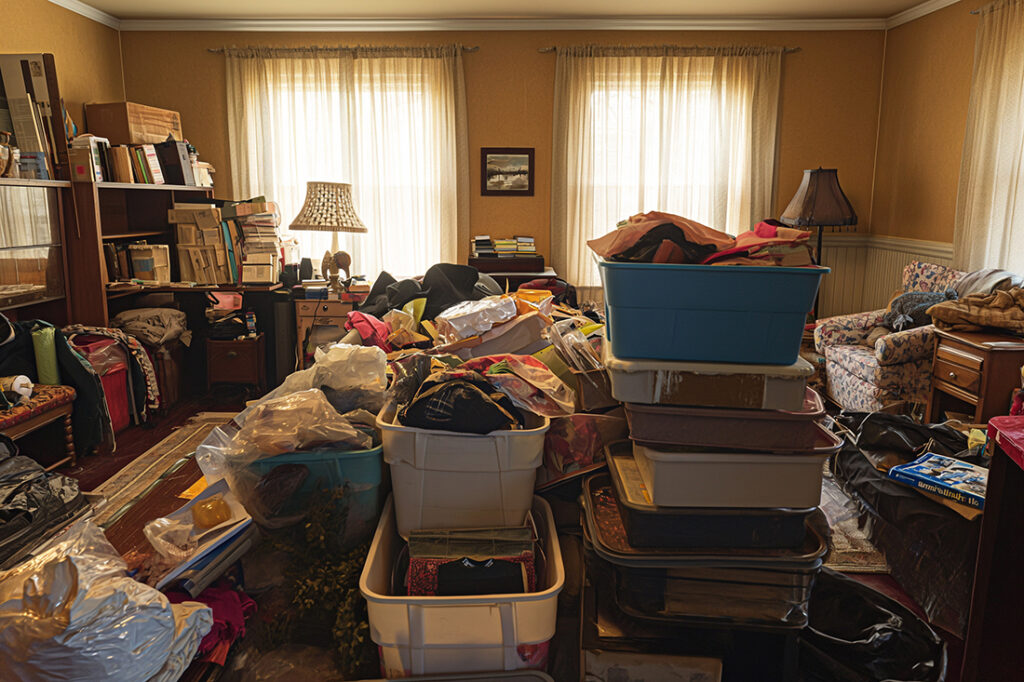
Before anything else, recognize that severe hoarding accumulation is not simply “a lot of clutter.” Clinical hoarding disorder, when left unaddressed for years, frequently coexists with genuine structural and biological hazards that aren’t visible from a casual walkthrough. Knowing what to do when inheriting a hoarder house starts with treating the initial assessment as a safety inspection, not a sorting task.
Do not enter the property alone, and do not enter without basic protective equipment — closed-toe shoes, gloves, and a respirator mask at minimum — until you have a general sense of the conditions inside. Structural hazards in extreme hoarding cases include floor joists weakened by the cumulative weight of stacked materials, blocked emergency exits, and in severe cases, walking paths that have been “tunneled” between floor-to-ceiling piles, leaving no safe secondary route out of a room. If the stacks are unstable or if you can smell anything unusual before entering, wait for a professional assessment before proceeding further.
Identifying Hidden Biohazards Before You Touch Anything
This is the part most families are unprepared for. Extreme hoarding properties frequently contain biohazards that require the same category of remediation used in crime scene or unattended death cleanup — not because a crime occurred, but because the accumulated organic material creates genuinely comparable health risks.
Animal waste and remains. Hoarding disorder co-occurs with animal hoarding at a documented rate, and even in cases without live animals present, dried animal waste, urine-saturated flooring, and in some cases animal remains are common findings. Ammonia concentrations from accumulated urine can reach hazardous airborne levels in enclosed rooms, and the material itself can harbor bacteria and parasites.
Expired biological and food materials. Years of accumulated food waste, expired perishables, and in severe cases, rodent or insect infestation feeding on that waste, create a biological hazard profile that standard cleaning products cannot address. Decomposing organic material in an enclosed space is a legitimate biohazard requiring specialized disinfection protocols, not a garbage bag and a strong stomach.
Mold colonization. Hoarding conditions — blocked ventilation, moisture trapped beneath stacked materials, water damage from years of deferred maintenance — create ideal mold growth conditions. Extensive mold contamination, particularly black mold (Stachybotrys), requires professional remediation under its own protocol, separate from general decluttering, and can pose serious respiratory risk to anyone entering without protection.
Pest infestations. Cockroach, rodent, and in some cases bed bug infestations are common in long-term hoarding situations. Beyond the disease vectors these pests carry, cockroach infestation specifically is linked to allergen accumulation that can trigger serious respiratory reactions in anyone spending extended time in the space without protection.
If any of these conditions are present — and in an extreme hoarding case, it’s reasonable to assume at least one will be — this is now a biohazard hoarding cleanup situation, not a standard estate cleanout. That distinction changes everything about how you proceed, including who is legally and safely equipped to do the physical work.

Building Your Triage System: What to Save vs. What Requires Disposal
Once you have a general sense of conditions, the next step in how to clear out an extreme hoarding property is establishing a clear, simple triage system before a single item gets moved. Without one, families get overwhelmed within the first hour and either give up or start making emotional decisions about items that should have gone straight to disposal.
Category 1: Immediate priority — legal and financial documents. Wills, deeds, insurance policies, financial account statements, tax records, and identification documents should be the very first items located, if it’s safe to do so. These are often small and easily overlooked in bulk clutter, and losing them creates significant downstream complications for estate administration.
Category 2: Sentimental and heirloom items. Photographs, jewelry, family heirlooms, and items with clear sentimental or appraisable value. These require careful, unhurried sorting — this is not a category to rush, and it’s often the category that benefits most from having a second family member present for support.
Category 3: Salvageable general items. Furniture, electronics, and household goods in usable condition that were not in contact with contaminated areas of the home. These can typically be assessed with standard caution — gloves, basic hygiene — without requiring biohazard protocols.
Category 4: Biohazardous disposal. Anything with visible mold growth, anything saturated with animal waste, anything in an area with confirmed pest infestation, and any porous material (mattresses, upholstered furniture, carpet) that has been in prolonged contact with organic contamination. This category does not get sorted by family members. It requires bagging and disposal under biohazard protocols, and in many cases, requires professional handling entirely.
A practical rule that professional hoarding remediation crews use: if an item requires more than a few seconds of hesitation to categorize, it almost always belongs in Category 4. Sentimentality clouds judgment in exactly the situations where judgment matters most, and prolonged exposure while deliberating over marginal items increases health risk for no meaningful benefit.
How to Assess Whether the Property Needs Structural Odor Remediation
Odor is often the most reliable indicator of how deep the contamination actually goes, and it’s a key signal for whether gross filth cleanup remediation steps need to include structural work, not just decluttering.
If odor is noticeable from outside the property or immediately upon opening the front door, that’s a strong indicator that organic material has penetrated beyond surface-level clutter — into flooring, subfloor, or wall cavities. Standard air fresheners and ventilation will not resolve this; the compounds causing the odor are embedded in porous structural materials and require the same treatment approach used in decomposition cleanup: physical removal of affected materials followed by industrial-grade odor neutralization using hydroxyl generators or ozone treatment.
A practical assessment test: after the visible clutter is cleared from a room, does the odor persist? If yes, the source is structural, not just accumulated items, and the property needs professional odor remediation before it’s habitable or marketable. This is common in hoarding cases involving animal waste, prolonged food decomposition, or water damage that went unaddressed for years. Don’t assume the smell will simply fade once the house is empty — embedded odor compounds in flooring and drywall persist indefinitely without proper treatment.
Navigating Municipal Code Enforcement Deadlines on Inherited Properties
This is the piece that catches heirs and executors off guard most often, because code enforcement doesn’t pause for probate.
If neighbors have complained, or if the property was already under scrutiny before the previous owner’s death, you may inherit an active code enforcement case along with the property itself. Municipal nuisance ordinances typically require that a property owner correct a cited violation within a specific window — commonly seven to thirty days from the date of formal notice, depending on the jurisdiction — before the city has the authority to intervene directly, place a lien on the property, or in more severe cases pursue misdemeanor charges against the responsible party.
As the new owner or executor, you generally inherit this obligation and this timeline the moment legal title or authority transfers to you, even if you had no knowledge of prior violations.
The practical steps if you’ve received or discovered a code enforcement notice: read the notice carefully and identify the exact code sections cited and the specific compliance deadline. Contact the code enforcement officer listed on the notice directly — proactive communication from an heir or executor explaining the estate situation is generally viewed favorably, and many municipalities will work with families who are visibly taking action rather than ignoring the notice.
Get a professional assessment and written cleanup timeline from a certified hoarding remediation company, and submit that plan to the code enforcement officer as evidence of good-faith progress. Begin visible remediation of the most serious safety hazards first — this demonstrates compliance intent even before the full cleanout is complete.
Ignoring a code enforcement notice on an inherited property doesn’t make the estate’s liability disappear — it typically escalates the situation, adding daily fines that can accumulate significantly before the estate is settled, and in the most severe cases resulting in the municipality performing the cleanup itself and placing a lien on the property for the cost, which then has to be resolved before the property can be sold or transferred cleanly.
When to Call a Professional Hoarding Remediation Company
Given everything above, most families reach the same conclusion: dealing with a deceased parent’s hoarded house at the scale required for biohazard-level contamination is not a DIY weekend project, regardless of how motivated the family is to handle it personally.
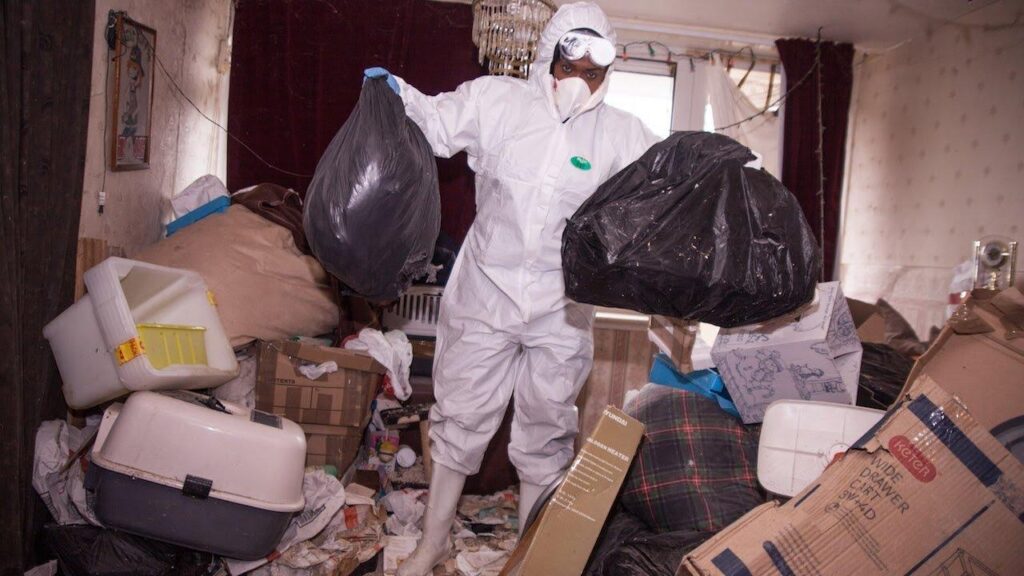
A professional biohazard hoarding cleanup company brings several things a family cleanout cannot: OSHA-compliant PPE and containment protocols for biohazard-classified material, proper hazardous waste disposal channels for contaminated porous materials, structural odor remediation equipment, and — critically — the documentation and professional assessment that satisfies municipal code enforcement requirements. Many companies will also work directly with the estate’s attorney or executor to align the cleanup timeline with code enforcement deadlines and any real estate transaction timeline.
BioRecoveryPro connects families and estate executors with certified hoarding and biohazard remediation specialists across all 50 states, including support for code enforcement documentation and structural odor assessment — available 24/7 for situations that need to move quickly.
Final Thoughts
Inheriting a hoarding house puts you at the intersection of grief, logistics, and genuine health risk, often with municipal deadlines running in the background whether you’re ready or not. The path through it is calmer than it feels at the outset: assess before you enter, identify biohazards before you touch anything, triage ruthlessly, get a professional read on odor and structural contamination, and address any code enforcement notice proactively rather than letting it sit.
You don’t have to sort through this alone, and in the cases involving real biohazard contamination, you genuinely shouldn’t. Getting the right professional support early is what turns an overwhelming inheritance into a property you can actually move forward with.