
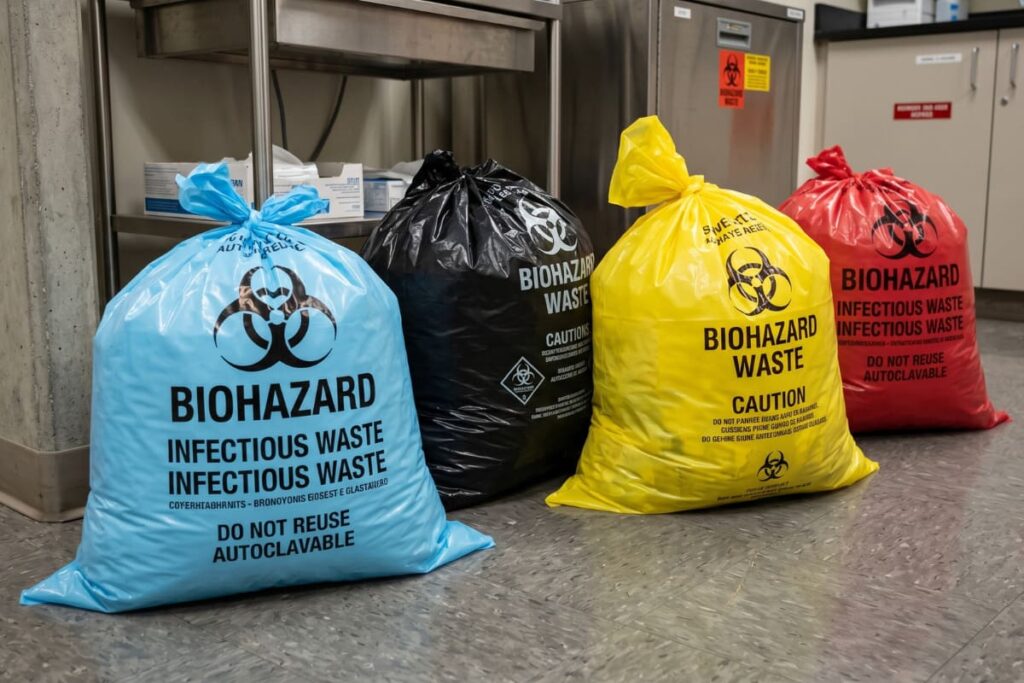
Most commercial property owners carry a Commercial General Liability policy and assume, reasonably enough, that it covers whatever happens on their premises. That assumption holds up right until a biohazard incident occurs — a workplace fatality, a violent crime, a bloodborne pathogen exposure — and the policy’s pollution or biological exclusion language surfaces for the first time, usually in a denial letter.
Standard commercial property insurance biohazard coverage is far more limited than most business owners, property managers, and REIT risk officers realize. This guide breaks down exactly how CGL policies treat biological contamination, why the exclusions exist, what specific coverage actually protects a commercial property, and the workers’ compensation and business interruption angles that most standard policy reviews miss entirely.
How Standard CGL Policies Treat Biological Contamination
A Commercial General Liability policy, in its standard ISO form, protects a business against third-party bodily injury and property damage claims arising from its operations and premises. What it does not do, in most cases, is cover cleanup and remediation costs tied to pollutants, bacteria, or biological agents — because the industry-standard policy language was never built with biohazard incidents in mind.
The general liability biohazard exclusion clause traces back to the “absolute pollution exclusion” that ISO incorporated into the standard CGL form in 1986 and has carried forward, essentially unchanged, through every subsequent policy revision. This exclusion was originally written to address traditional environmental contamination — chemical spills, groundwater contamination, industrial waste. But the language defining a “pollutant” as any solid, liquid, gaseous, or thermal irritant or contaminant has been interpreted broadly enough by insurers and courts that biological material frequently falls within its scope.
On top of the pollution exclusion, many CGL policies carry a separate Fungi or Bacteria Exclusion Endorsement (ISO form CG 21 27), which expressly excludes cleanup, remediation costs, and personal injury claims tied to fungi or bacteria — language that some carriers apply to bloodborne pathogen contamination as well, depending on how the endorsement is drafted and how the claim is characterized. Some policies instead attach a modified version, such as CG 24 25, which doesn’t exclude bacteria entirely but caps it under a separate, lower “Fungi and Bacteria Liability Aggregate Limit” — meaning coverage technically exists, but at a fraction of the policy’s standard limits.
The practical effect: a business that experiences a bloodborne pathogen incident — an employee injury, a workplace fatality, a violent crime on the premises — may find that the remediation costs, and potentially the underlying injury claim itself, fall into a coverage gap between what the CGL policy pays for and what actually happened.
Does Business Insurance Cover Blood Cleanup? The Honest Answer
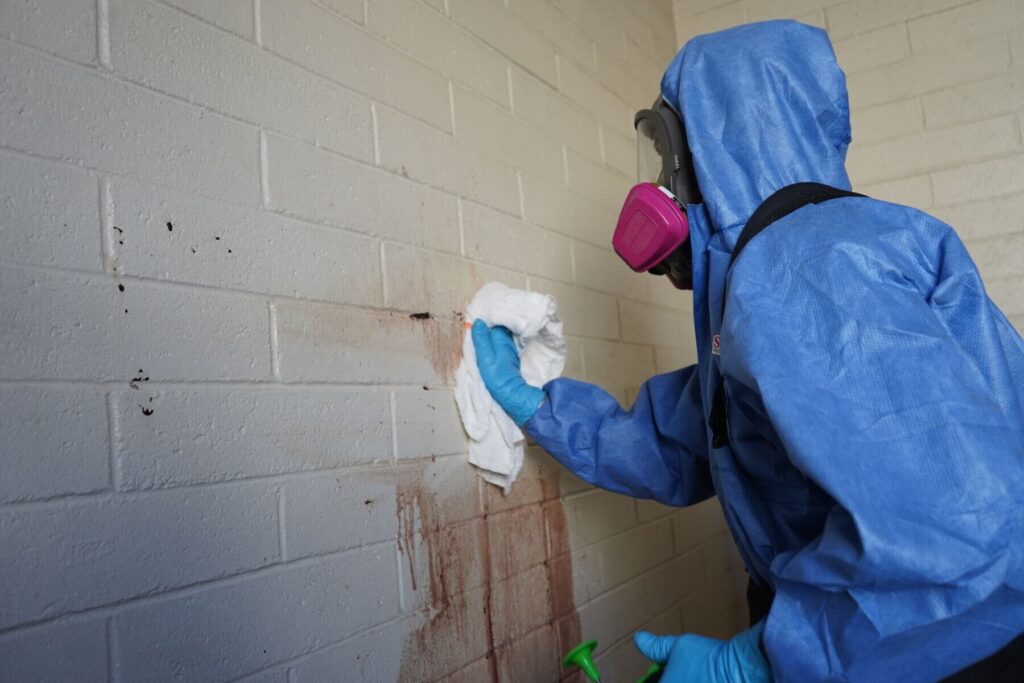
This is the question every commercial property manager eventually asks, usually at the worst possible moment. The honest answer is: it depends entirely on the specific exclusion language in your policy, and in many standard CGL forms, the answer trends toward no — or toward coverage capped so low it doesn’t meaningfully offset the actual cost of professional biohazard remediation.
Does business insurance cover blood cleanup under a standard, unendorsed CGL policy? Generally not for the remediation cost itself. The CGL policy may still respond to a third-party bodily injury claim connected to the incident — if a customer or visitor was harmed and sues the business — but the biohazard cleanup expense, the structural decontamination, the odor remediation, and the ATP verification testing that a legitimate remediation job requires typically fall outside standard CGL coverage entirely.
This is precisely the gap that a dedicated pollution liability rider for property managers is designed to close.
Why Commercial Properties Need Absolute Pollution Liability Riders
Given the exclusions built into standard CGL forms, the only reliable way to secure corporate trauma cleanup liability laws-compliant coverage for biohazard remediation is through a dedicated Commercial Pollution Liability policy, sometimes called Contractors Pollution Liability or Premises Pollution Liability depending on the carrier and the business type.
A pollution liability rider for property managers typically covers: the cost of professional biohazard remediation and cleanup following a covered incident; third-party bodily injury or property damage claims arising from pollution or biological contamination; business interruption losses directly tied to the contamination event; and in many policies, legal defense costs if the business faces litigation connected to the incident. Unlike the CGL’s absolute pollution exclusion, a dedicated pollution liability policy is written specifically to respond to exactly these scenarios — it’s not fighting against exclusionary language designed for a different risk category.
For real estate investment trusts, industrial park managers, and multi-property portfolios, pollution liability coverage is increasingly treated as a baseline requirement rather than an optional add-on, particularly for properties with public foot traffic, industrial operations, or any history of workplace incidents. The cost of the rider is consistently a fraction of what a single uncovered biohazard remediation and associated liability claim would cost the business directly.
When evaluating a policy, ask specifically whether the pollution liability coverage responds to bloodborne pathogen incidents by name, not just generalized “pollution” language — carriers vary significantly in how explicitly they define covered biological events, and vague policy language creates the same coverage disputes that plague standard CGL claims.
Workers’ Compensation Implications: What Happens When Employees Are Ordered to Clean Biohazards
This is the risk category most commercial property managers haven’t considered until it’s too late, and it sits at the intersection of employment law, OSHA compliance, and workers’ compensation exclusive remedy doctrine.
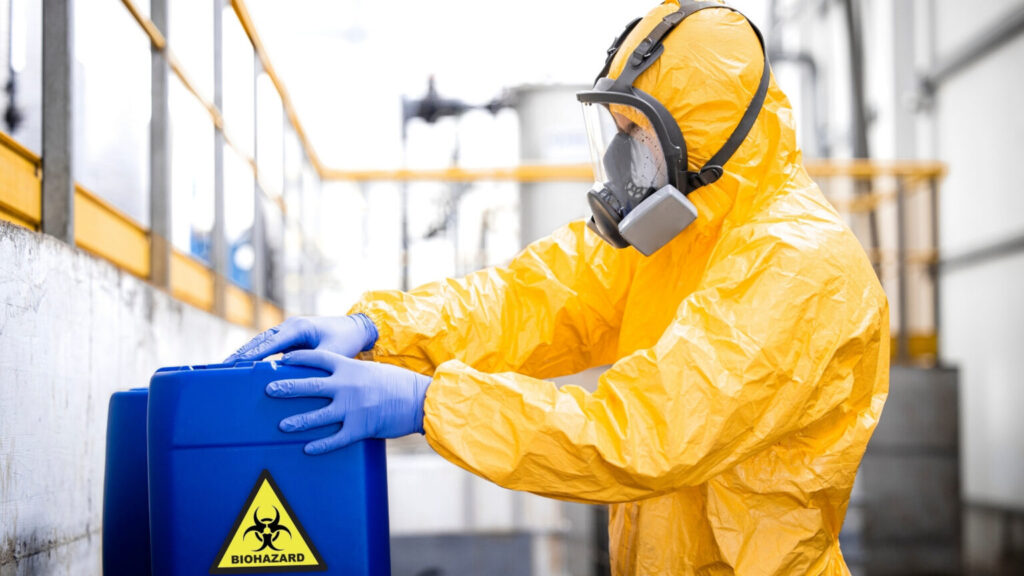
Under OSHA’s General Duty Clause and, where applicable, the Bloodborne Pathogens Standard, employers cannot direct untrained employees to clean up blood, bodily fluids, or other biohazardous material without providing the training, PPE, vaccination access, and exposure control protocols the law requires. An employee asked to clean up a blood spill, a decomposition scene, or any bloodborne pathogen contamination without proper training and equipment is being placed in a position that violates federal workplace safety law — regardless of how routine the task might seem to management.
If that employee is subsequently injured, exposed to a pathogen, or suffers psychological trauma from the assignment, the workers’ compensation exclusive remedy doctrine generally limits their recovery against the employer to statutory workers’ comp benefits — but this doctrine has meaningful exceptions. Several states recognize an exception where the employer’s conduct rises to the level of an intentional tort or where the employer deliberately disregarded a known, substantial risk. Directing an untrained employee to handle a bloodborne pathogen hazard without PPE or training, particularly after being made aware of the risk, can in some jurisdictions support a claim that pierces the exclusive remedy shield entirely — exposing the business to civil liability well beyond what a standard workers’ comp claim would cost.
Separately, the employee retains the right to refuse the hazardous task outright and to report the employer to OSHA without fear of retaliation. An employer who terminates or disciplines an employee for refusing an untrained bloodborne pathogen cleanup assignment creates a distinct whistleblower retaliation exposure on top of the underlying safety violation.
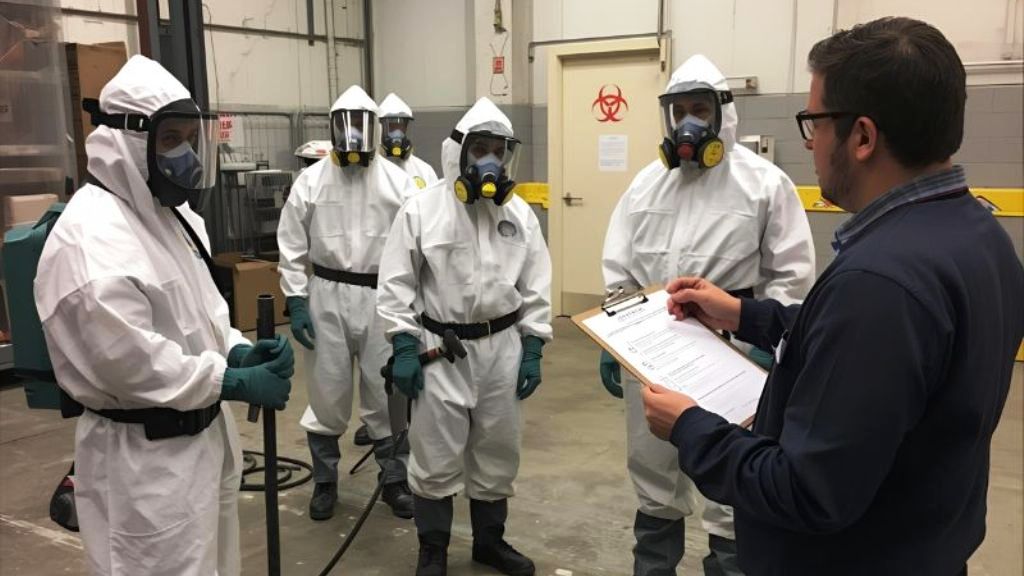
The straightforward risk management position: any business that experiences a biohazard incident should treat calling a certified remediation company as a non-negotiable first step, not an internal task to be assigned to whoever’s on shift. The cost of professional remediation is consistently lower than the combined exposure of an OSHA citation, a workers’ compensation claim, and potential civil liability stacked on top of each other.
Business Interruption Coverage When Biohazard Remediation Closes a Facility
For retail locations, office buildings, and any commercial space that generates revenue through occupancy or foot traffic, an unaddressed or ongoing biohazard situation creates a second financial exposure layered on top of the remediation cost itself: lost revenue from the closure.
Standard business interruption insurance is typically triggered by direct physical loss or damage to covered property from a covered cause of loss. Whether a biohazard incident qualifies depends heavily on how the underlying property or pollution liability policy characterizes the event — and this is precisely why coordinating business interruption coverage with a dedicated pollution liability rider matters. A business interruption claim tied to a biohazard closure needs to point to a covered peril in the underlying policy; if the biohazard incident itself isn’t a covered event under the primary policy, the interruption claim built on top of it has a materially weaker foundation.
Practical steps for aligning these coverages: confirm with your broker whether your business interruption policy explicitly extends to closures caused by biological contamination or pollution events, and whether that extension requires the underlying pollution liability policy to also respond. Document the exact closure period and lost revenue calculation methodology before an incident occurs, not during the crisis — insurers scrutinize business interruption claims closely, and having a clear, pre-established methodology for calculating lost revenue significantly speeds claim processing. For multi-location businesses, understand whether the policy covers extra expense incurred to redirect operations to another location during remediation, which is often a faster and cheaper path to minimizing loss than waiting for the affected location to reopen.
Building a Coordinated Risk Management Approach
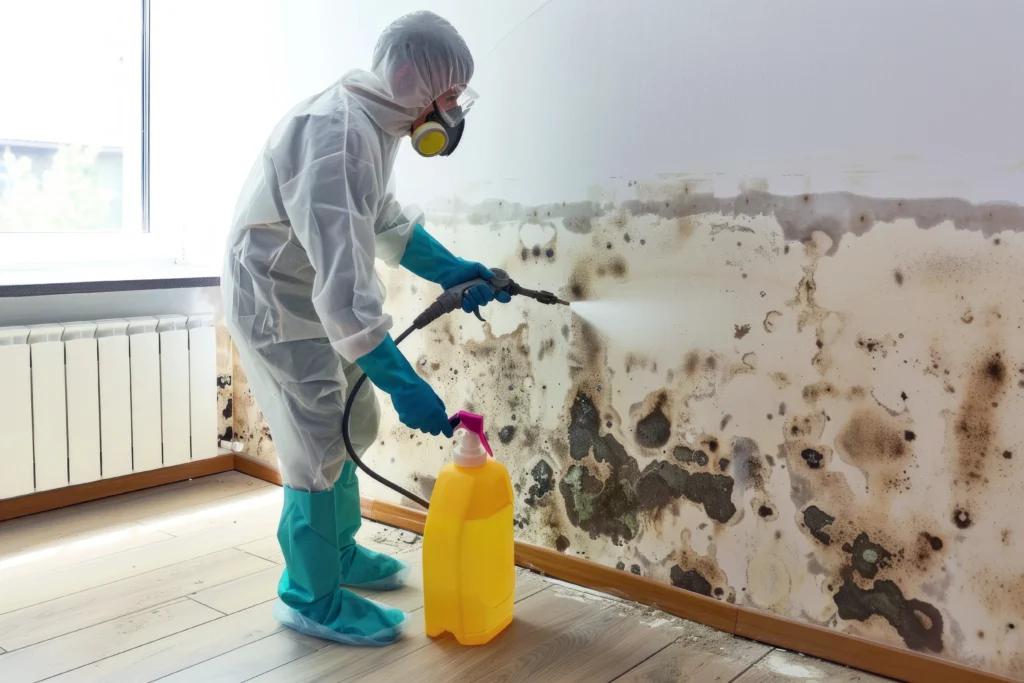
The businesses and property managers who navigate biohazard incidents most effectively treat this as a coordinated insurance architecture problem rather than relying on a single policy to cover every scenario. That means: a standard CGL policy for general premises liability, a dedicated pollution liability rider specifically covering biohazard and biological contamination remediation, workers’ compensation coverage paired with rigorous internal protocols that prevent untrained employees from ever being assigned biohazard cleanup, and business interruption coverage explicitly coordinated with the pollution liability policy rather than assumed to apply independently.
BioRecoveryPro works with corporate risk managers, property management firms, and REIT portfolio managers to connect commercial properties with certified biohazard remediation providers experienced in insurance documentation and rapid-response protocols that minimize both liability exposure and facility downtime.
Final Thoughts
Commercial property insurance biohazard coverage is not something most businesses discover they’re missing until an incident forces the question. The gap between what a standard CGL policy covers and what a biohazard incident actually requires is real, well-documented in the policy language itself, and entirely closeable with the right pollution liability coverage secured in advance.
The businesses that get this right review their policy exclusions before an incident occurs, secure the specific riders that close the gap, and build internal protocols that keep untrained employees away from biohazard cleanup entirely. The cost of getting ahead of this is consistently smaller than the cost of discovering the gap during an active crisis.

Pingback: From One-Off Jobs to Six-Figure Contracts: How Biohazard Companies Break Into Municipal and Corporate Work - BioRecoveryPro
Pingback: Biohazard Protocols for Facilities: What to Do After an Industrial Accident - BioRecoveryPro