Ask five biohazard operators which certification actually matters, and you’ll get five different answers, usually depending on which one they happen to hold. That’s not particularly useful if you’re the one trying to decide where to spend your training budget this year, or if you’re wondering how to become a certified bio recovery technician in the first place and don’t know which door to walk through.
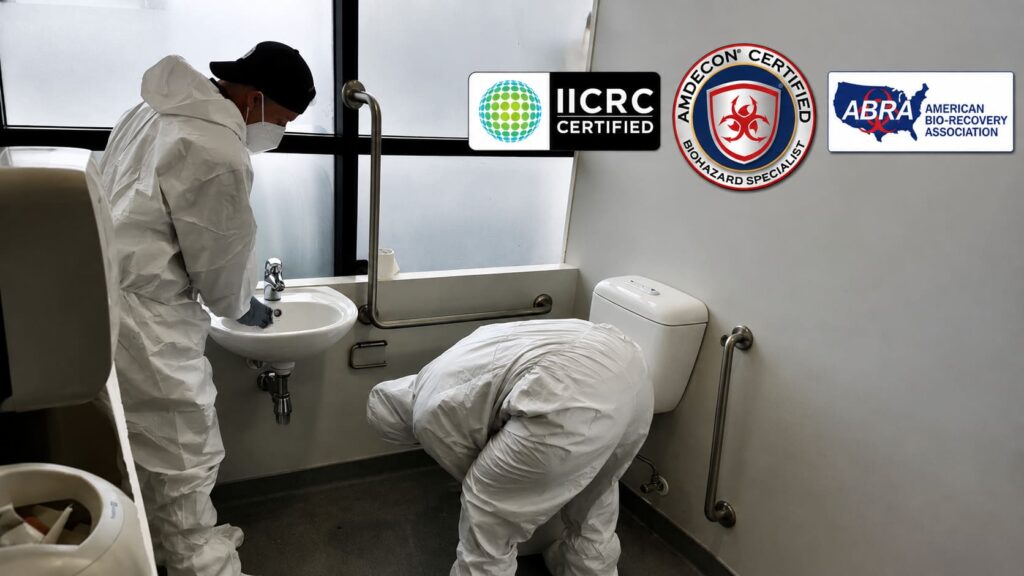
Biohazard certification cost, exam difficulty, and — most importantly — which credential actually opens doors with insurance carriers, police departments, and corporate accounts vary more than most training marketing admits. This is a straight, unbiased comparison of the three credentials that actually matter in 2026: IICRC’s Trauma and Crime Scene Technician program, ABRA’s Certified Bio Recovery Technician track, and Amdecon’s specialized biohazard training. If you’re researching the best biohazard training courses available right now, these three are where that search should actually start.
The Three Biohazard Certification Credentials, Head to Head
IICRC Trauma and Crime Scene Technician (TCST)
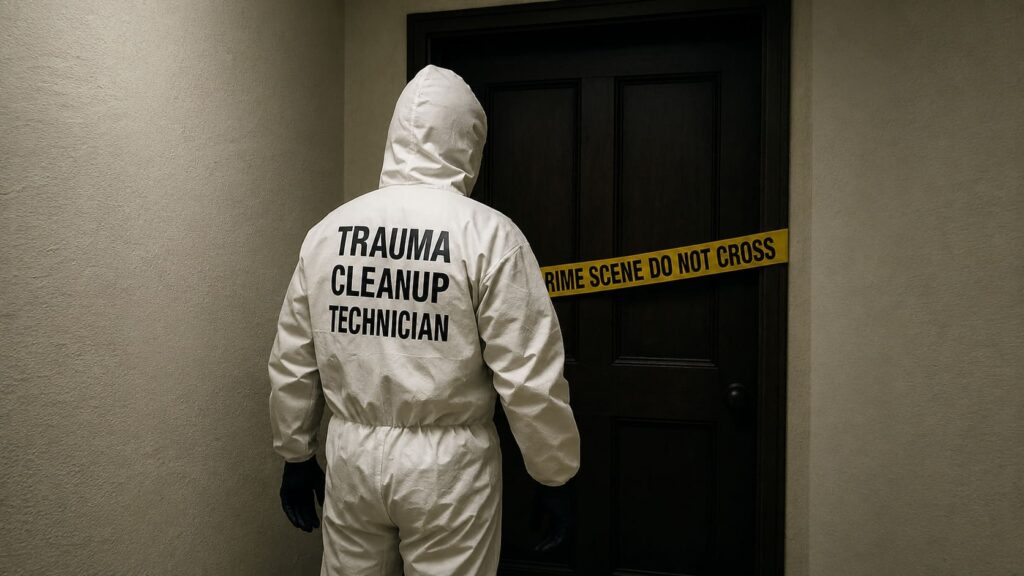
IICRC trauma scene credentials are built around the ANSI-approved S540 Standard for Trauma and Crime Scene Cleanup, and they’re the most widely recognized certification in the broader restoration industry — largely because IICRC already dominates water damage, mold, and carpet cleaning certification, and TCST extends that same institutional credibility into biohazard work.
The course runs two days, roughly 14 hours of instruction, covering hazard assessment, PPE donning and doffing, structural and contents remediation, and the legal framework around hazardous waste transport and disposal. Course tuition through approved schools typically runs around $449, with a separate $80 exam fee paid directly to the IICRC — retests, if needed, cost another $80. Certification requires renewal through 14 continuing education credit hours every four years, keeping technicians current as standards evolve.
There are no prerequisites for the TCST exam itself, which makes it one of the more accessible entry points into formal biohazard credentialing compared to ABRA’s multi-document application process. That accessibility is part of why it’s become the default starting certification for so many operators, even those who eventually add ABRA or Amdecon training on top of it.
The practical positioning: TCST was originally designed for employees of established restoration companies who occasionally handle trauma scenes alongside broader water and fire damage work, rather than technicians who work biohazard and crime scene cleanup exclusively. That doesn’t make it less valid — it makes it the right fit for a business that already runs a restoration operation and wants to add trauma cleanup as a service line, rather than a business built around biohazard work as its sole focus.
ABRA Certified Bio Recovery Technician (CBRT)
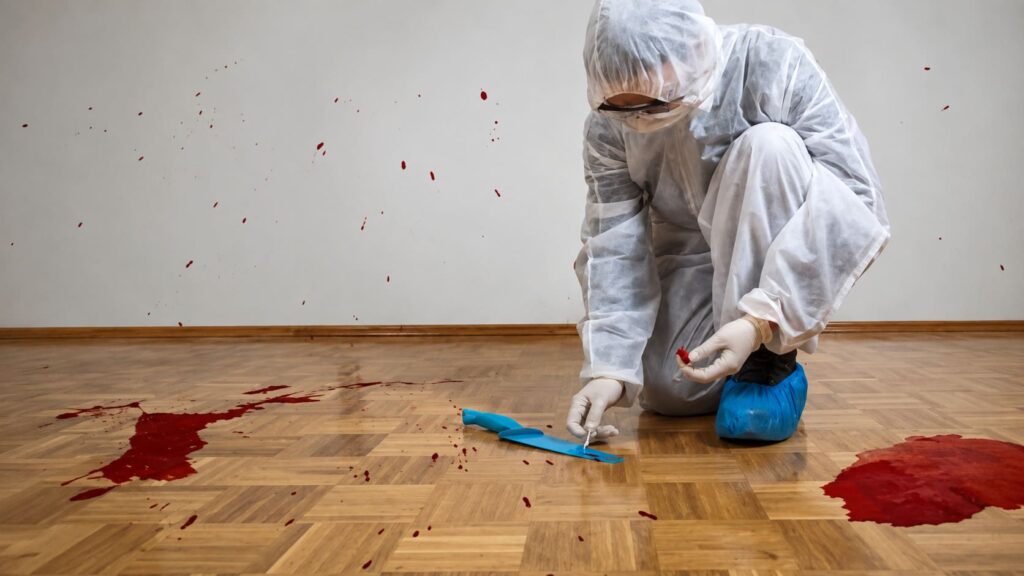
The American Bio Recovery Association takes a different structural approach entirely. Rather than a single bundled course-plus-exam, ABRA crime scene cleanup training requires assembling documentation from multiple sources: a minimum two-day lecture course in bio-recovery, crime and trauma mitigation, or blood and bodily fluid remediation from an approved independent instructor, plus a current OSHA 40-hour hazardous waste operations certificate, submitted together as part of the CBRT application before sitting the exam.
This layered application model means anyone researching how to become a certified bio recovery technician through ABRA specifically should plan the sequence carefully: secure the OSHA 40-hour certificate first if you don’t already hold one, complete the approved bio-recovery lecture course second, then submit both alongside the CBRT application before the exam is scheduled. Skipping ahead or assuming the exam alone qualifies you is one of the more common early missteps for technicians new to the field.
ABRA training is explicitly built for people entering this field as a primary profession rather than technicians adding it as a secondary skill. ABRA members also commit to industry best practices tied to both the IICRC S540 Standard and the newer S900 Standard for Illicit Drug Remediation, which matters increasingly as fentanyl and meth decontamination work grows as a service category. ABRA membership additionally requires participation in third-party certification, peer review, and continuing education — a heavier ongoing commitment than a straightforward renewal cycle.
Costs vary more with ABRA than with IICRC, since the prerequisite lecture course is sourced independently rather than bundled — total investment commonly falls in the $200 to $1,000 range depending on which approved instructor and course package a technician selects, plus the OSHA 40-hour course cost if not already held.
Amdecon Biohazard and Illicit Drug Remediation Training
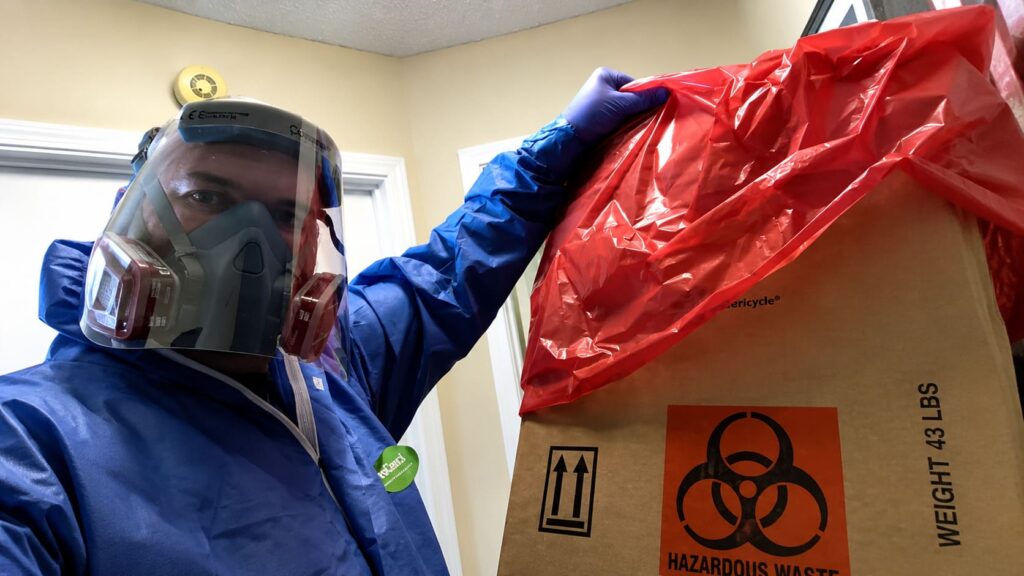
Amdecon occupies a narrower but deeper lane. Where IICRC instructors typically rotate between teaching water damage, carpet cleaning, and trauma cleanup depending on the week, Amdecon’s training is delivered by an instructor who has worked exclusively in biohazard and drug lab recovery field work since the early 2000s, with no rotation into other restoration disciplines. For an operator whose entire business model is biohazard and meth or fentanyl decontamination rather than general restoration, that specialization is a meaningful differentiator worth weighing against IICRC’s broader institutional name recognition.
Amdecon training programs are specifically positioned for individuals and business owners building a dedicated biohazard remediation specialty, rather than restoration companies adding trauma cleanup as one service among many. This makes it a natural complement to — rather than a replacement for — IICRC or ABRA credentials, particularly for operators expanding specifically into chemical and illicit drug decontamination work, where the S900 Standard for Illicit Drug Remediation increasingly governs the technical protocol expected on-site.
Curriculum content tends to run deeper into the specifics of clandestine lab hazards, chemical exposure risk, and the regulatory framework around drug residue clearance testing than either IICRC or ABRA’s general biohazard coursework covers, simply because Amdecon’s founding focus has always been narrower and more technical from the outset.
Comparing the Three at a Glance
| Credential | Format | Typical Cost | Renewal | Best For |
|---|---|---|---|---|
| IICRC TCST | 2-day course + exam | ~$449 + $80 exam | 14 CE hours / 4 years | Restoration companies adding trauma cleanup as a service line |
| ABRA CBRT | Independent course + OSHA 40-hr + exam | $200 – $1,000+ | Ongoing peer review / CE | Operators building biohazard as a primary specialty |
| Amdecon | Specialized field-focused course | Varies by program | Program-dependent | Chemical/illicit drug decontamination specialists |
Why Third-Party Certification Actually Matters for Contracts
This is the part training marketing tends to oversell, so it’s worth being direct: no single certification is legally mandatory to perform biohazard cleanup in most states. What third-party certification actually does is unlock the contracts that specifically require it.
Municipal and police contracts frequently list a named certification — IICRC S540 compliance most commonly — as a bid requirement, not a preference. A company that can’t produce the credential doesn’t get considered, regardless of how good their actual field work is. Corporate accounts, particularly larger property management firms and REITs, increasingly request proof of certification as part of vendor onboarding, treating it as a baseline risk-management signal rather than an optional nicety.
Insurance billing is where certification pays for itself most directly. Adjusters evaluating a biohazard remediation invoice are more likely to approve line-item charges without dispute when the technician’s certification is documented as part of the claim file, since it signals the work was performed to a recognized standard rather than by an unverified crew. This is precisely how certified technicians justify premium line-item rates on insurance billing — a certified crew’s labor rate reflects documented, standardized training that an adjuster can point to if a claim is later questioned, while an uncertified crew’s higher rate has nothing backing it up beyond the invoice itself.
Online vs. Hands-On Field Testing: What Actually Prepares You
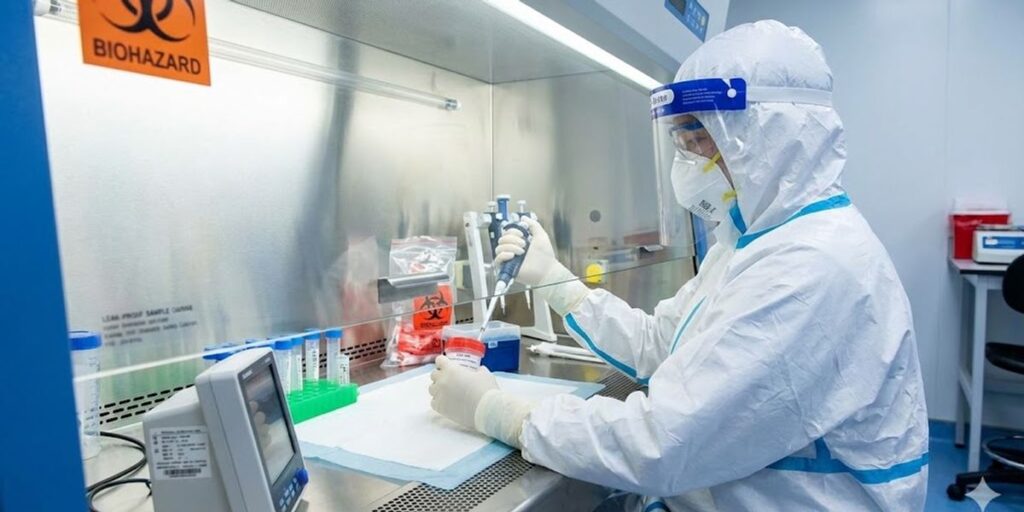
IICRC offers both live-stream and in-person course formats, with the exam itself administered under proctored conditions either way. The hands-on components — PPE donning and doffing, hazard assessment walkthroughs — translate reasonably well to live-stream instruction with an engaged instructor, though nothing fully replicates working a real contaminated space under supervision.
ABRA’s structure leans more heavily on in-person, hands-on instruction by design, since the prerequisite course explicitly requires lecture-plus-practical components from an approved instructor before the standalone exam can even be scheduled. Some ABRA-approved courses go as far as incorporating real blood and tissue samples into hands-on practical training, which is a meaningfully different preparation experience than a screen-based module.
Amdecon’s field-focused model similarly emphasizes direct instruction from practitioners with sustained real-world biohazard experience, rather than a generalized instructor rotating through multiple restoration disciplines.
For technicians who will primarily handle high-severity scenes — extended decomposition, chemical contamination, meth or fentanyl remediation — the practical consensus among experienced operators favors training with a genuinely hands-on component over a purely online pathway, regardless of which of the three organizations issues the credential.
Building a Credential Strategy for Your Business
The realistic approach for most growing biohazard operations isn’t choosing one credential exclusively — it’s layering them strategically. Start technicians with IICRC TCST if your business already touches broader restoration work, since the institutional recognition opens the widest range of contract opportunities immediately. Add ABRA CBRT for technicians who will specialize primarily in trauma and crime scene work, particularly if you’re pursuing police or municipal contracts that explicitly value ABRA’s professional association standing. Bring in Amdecon training specifically for any technician handling chemical or illicit drug decontamination, where its narrower, deeper specialization genuinely outperforms generalist training.
BioRecoveryPro works with certified remediation contractors holding IICRC, ABRA, and Amdecon credentials across all 50 states, connecting properly credentialed operators with the insurance-managed and municipal contracts that require documented, verifiable training.
The Bottom Line
There’s no single “best” certification among IICRC, ABRA, and Amdecon — there’s a best fit depending on what your business actually does and which contracts you’re chasing. IICRC’s institutional weight wins broad restoration and insurance-adjacent work. ABRA’s professional-association model and dual S540/S900 alignment suits operators building biohazard as their core specialty. Amdecon’s narrow, practitioner-led focus is hard to beat for chemical and illicit drug decontamination specifically.
What all three share is the thing that actually matters commercially: documented, third-party-verified training that lets an adjuster, a police procurement officer, or a corporate risk manager trust your invoice without needing to take your word for it.