Illicit fentanyl contamination has surpassed methamphetamine labs as the most common chemical hazard in rental properties, hotels, and vehicles across the United States. Unlike meth, it leaves no smell, no discoloration, and no sign visible to the naked eye that a property has been exposed — yet it remains biologically active at microgram concentrations on surfaces for extended periods. A hotel room that hosted a fentanyl user, a rental property where an overdose occurred, or a vehicle used in distribution can all carry surface concentrations high enough to require professional fentanyl decontamination and third-party clearance testing before any occupant safely returns.
For property owners and corporate managers, this is no longer a theoretical liability. This guide explains the 2026 clearance testing standards, the validated chemistry that actually works, and the step-by-step operational sequence that produces the documented proof of safety required to lift a health department quarantine.
Immediate Response Matrix for Property Managers
Before anything else, here is the protocol sequence for a confirmed or suspected fentanyl contamination event:
| Phase | Required Action | Compliance Basis |
|---|---|---|
| 1. Isolation | Shut down localized HVAC; seal supply and return registers with 6-mil poly-sheeting | Prevent cross-contamination of clean zones |
| 2. Entry & Containment | Deploy negative air machines with true HEPA filtration | OSHA Hazard Communication; EPA modified Level C PPE |
| 3. Testing Coordination | Retain an independent Certified Industrial Hygienist (CIH) | Prevent conflict of interest; ensure legally defensible data |
| 4. Decontamination | Apply validated binary oxidative agent with full dwell time | Chemical degradation, not surface masking |
| 5. Clearance Sampling | Independent LC-MS/MS wipe sampling at ≤ 0.1 µg/100 cm² | San Francisco DPH / field practitioner clearance standard |
Why Standard Bleach Fails — and What the Chemistry Actually Requires
The most dangerous mistake a property owner can make is having a space “cleaned” with household products and believing the problem has been solved.
Research confirms that physical removal of fentanyl via surface wiping reduces mass, but chemical degradation via spray application of validated oxidants is statistically more efficient at achieving the required decontamination level. pH-neutral household bleach lacks the oxidative capacity to reliably degrade fentanyl at field-realistic concentrations — and the problem compounds significantly when cutting agents are present in the preparation, because they consume the oxidant’s reactive capacity before it can act on the fentanyl molecule.
The validated chemistry that dominates professional fentanyl decontamination service in 2026 relies on binary oxidative formulations — specifically activated peracetic acid systems and military-tested products such as Decon7 (D7) and EasyDECON DF-200, both of which have been evaluated against fentanyl under realistic field contamination scenarios. These formulations work by breaking the piperidine ring of the fentanyl molecule through oxidation, chemically rendering it inert rather than simply displacing or masking it. Surface wipe-down with a generic household product does neither.
Understanding how to clean up fentanyl residue safely means working with these specific chemistries at specified concentrations and dwell times — not general cleaning products adapted from a janitorial context.
The HVAC System: The Hidden Reservoir That Fails Clearance Tests
The most operationally critical gap in most amateur or under-equipped cleanup attempts is the HVAC system. The EPA’s fentanyl laboratory cleanup guidance notes that fentanyl particle size ranges from 0.2 to 2.0 microns, which means it is easily airborne — and once airborne, it travels directly into return-air plenums and ductwork insulation.
If an HVAC system serving a contaminated space is operated during or after a superficial surface wipe-down, those internal duct surfaces and insulation become a primary reservoir of invisible residue. When the system runs again after the “cleanup,” that reservoir re-releases contaminated particulate back into every room the ductwork serves — instantly failing subsequent clearance tests and creating cross-contamination in previously clean zones.
Correct protocol requires that HVAC supply and return registers be sealed with 6-mil polyethylene sheeting from the moment contamination is identified, with the system remaining isolated until post-decontamination clearance sampling confirms the treated space — including ductwork — has met the clearance threshold. Duct cleaning or replacement should be explicitly addressed in the remediation scope of work, with its own post-treatment wipe samples.
Critical Pediatric Exposure Alert
Because infants and young children exhibit frequent hand-to-mouth behavior and have significantly lower body mass than adults, surface residues considered acceptable under occupational exposure standards can trigger acute toxic exposure in pediatric scenarios. The 0.1 µg/100 cm² clearance target was developed using a Cal/EPA standard exposure algorithm that accounts for these non-occupational risk factors — not just adult worker exposure. For any property with current or future child occupancy, the clearance standard applied must reflect pediatric exposure scenarios.
Fentanyl Clearance Testing Guidelines 2026: What the Numbers Mean
One of the most important questions property managers ask when commissioning professional fentanyl decontamination is: what does “clean” actually mean, and how is fentanyl clearance testing verified?
The surface residue target used in current field remediation practice is under 0.1 micrograms per 100 square centimeters (< 0.1 µg/100 cm²), established and applied as a cleanup standard overseen by the San Francisco Department of Public Health and developed with Ph.D. toxicologists using Cal/EPA exposure algorithms. This 0.1 µg/100 cm² figure represents the most common clearance threshold used by jurisdictions referencing field-practitioner standards, while the ACGIH’s recently adopted formal TLV-SL (Surface Limit) for fentanyl sits at 1 µg/100 cm².
For practical purposes, the more protective 0.1 µg/100 cm² standard is what field-operating industrial hygienists and health departments typically require for residential and hotel properties — particularly where children may be present. The 1 µg/100 cm² ACGIH threshold represents an occupational exposure standard, not a residential or pediatric one.
These levels are verified by LC-MS/MS (liquid chromatography-tandem mass spectrometry) analysis of wipe samples collected from defined surface areas — the only analytical method with the sensitivity to detect fentanyl at these concentrations reliably. Colorimetric field tests and immunoassay strips are screening tools only; they cannot confirm clearance to the 0.1 µg/100 cm² standard.
The Full Fentanyl Decontamination Process: Stage by Stage
Stage 1: Isolation and HVAC Lockout — All HVAC registers are sealed with 6-mil polyethylene sheeting before entry. This is non-negotiable: failure here creates duct-borne cross-contamination that subsequent cleaning cannot fully address.
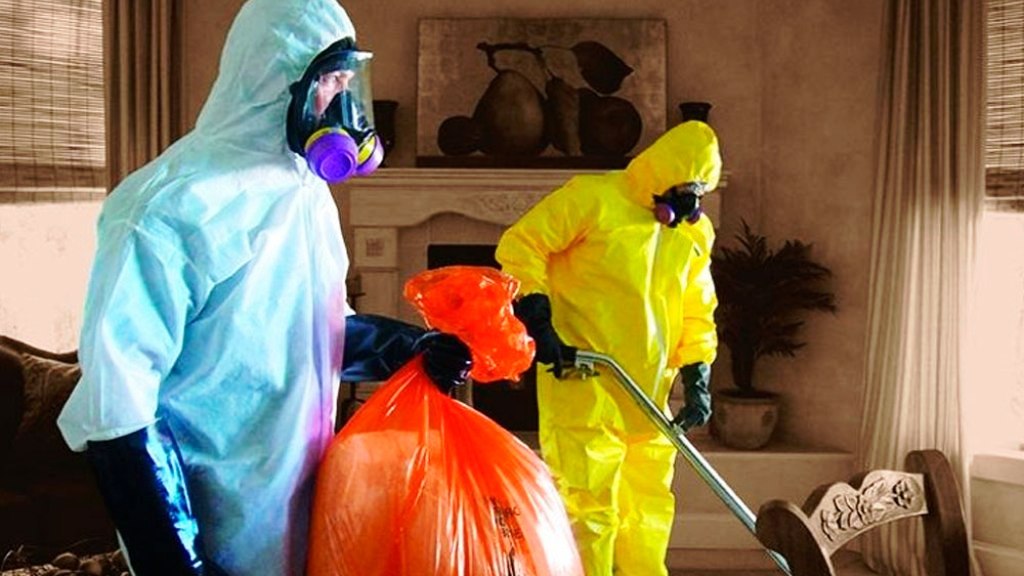
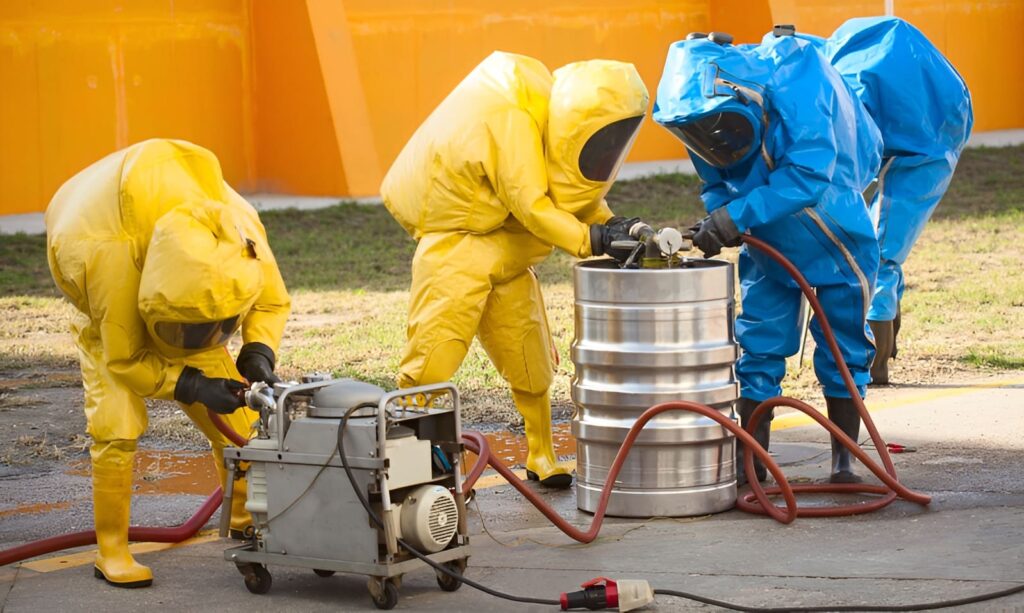
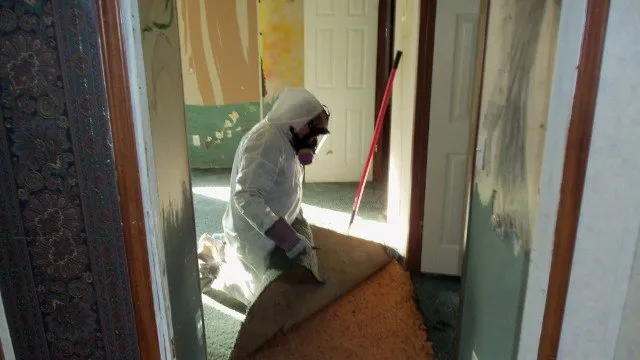
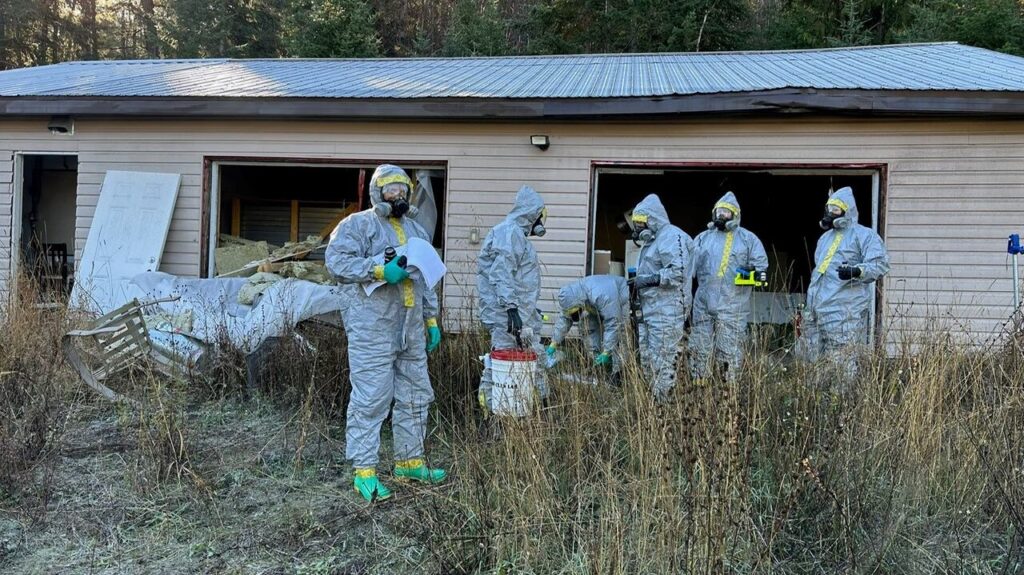
Stage 2: Entry, PPE, and Containment — Technicians enter in EPA-recommended modified Level C protection: chemically resistant hooded suits with taped seams and NIOSH-approved CBRN Powered Air-Purifying Respirators (PAPRs), providing an Assigned Protection Factor of 1,000. Negative air pressure containment is established using true HEPA-filtered air scrubbers.
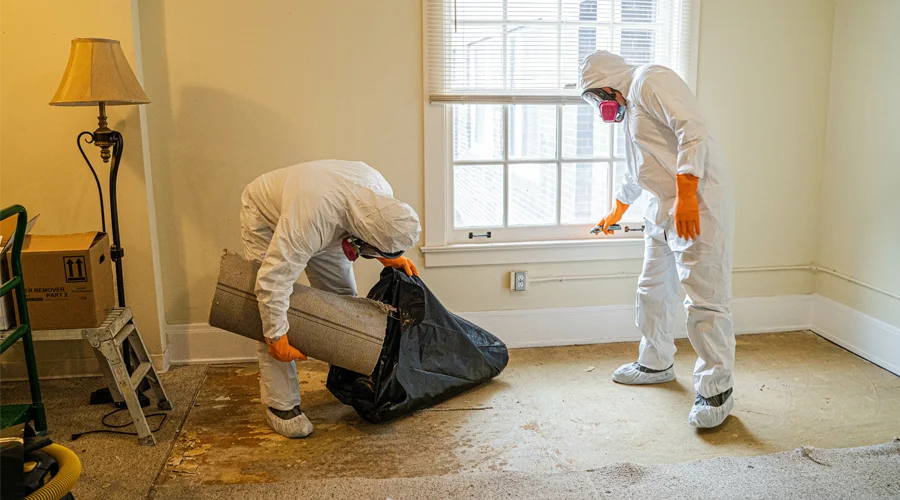
Stage 3: Bulk Material Removal — Porous contaminated materials — carpet, padding, affected drywall, soft furnishings — are removed and disposed of as chemical waste under applicable state hazardous waste regulations. These cannot be reliably decontaminated by surface treatment.
Stage 4: Binary Oxidative Decontamination — The validated agent (Decon7, activated peracetic acid, or EasyDECON DF-200) is applied at a specified concentration with mandated dwell time. Contact time is logged as part of the remediation record.
Stage 5: HEPA Vacuuming and Secondary Wipe — Surfaces are HEPA-vacuumed to remove degraded particulates, then wiped with a secondary agent. This two-stage sequence addresses both chemical degradation and physical removal.
Stage 6: Independent Clearance Sampling — A third-party Certified Industrial Hygienist (CIH) collects wipe samples under strict chain-of-custody protocols, including duct surfaces if HVAC contamination was identified. Samples are submitted to an accredited laboratory for LC-MS/MS analysis against the applicable clearance threshold.
The Certificate of Clearance: Lifting Health Department Quarantines
When a property has been placed under a quarantine or notice of uninhabitability following a fentanyl incident, the Certificate of Clearance is the document that lifts it.
The package submitted to the relevant health department or regulatory authority should include: the full remediation scope of work with chemical agents used and dwell times documented; post-remediation wipe sampling results from the accredited laboratory with chain-of-custody records; and a signed attestation from the independent CIH confirming results meet the applicable clearance standard.
This package also serves long-term protective functions for landlords and corporate property managers: it documents the event and the response, satisfies any chemical contamination disclosure requirements at the point of re-leasing or sale, and protects against future habitability claims from occupants who were unaware of the property’s history.
Chemical Remediation for Rental Properties: 2026 Cost Ranges
Chemical remediation for rental properties varies significantly based on the size of the contaminated area, porosity of affected materials, and extent of chemical work required:
| Scenario | Estimated Cost Range |
|---|---|
| Single hotel room or studio, limited contamination | $2,500 – $6,000 |
| Multi-room property, moderate contamination | $6,000 – $15,000 |
| Large property or heavy contamination with material removal | $15,000 – $35,000+ |
| Vehicle decontamination (car, van, RV) | $1,500 – $4,500 |
| Independent post-remediation clearance testing (CIH + lab) | $800 – $2,500 |
Standard commercial property insurance frequently categorizes fentanyl remediation under pollutant exclusions — a specific policy rider may be required. If the contamination resulted from a criminal act, your state’s Crime Victims Compensation program may cover costs as an eligible expense under the federal Victims of Crime Act.
Choosing a Professional Illicit Drug Cleanup Company: The Right Questions
Not every biohazard company has the specific training, chemistry, and equipment to handle a full fentanyl decontamination service correctly. The gap between a general biohazard cleaner and a specialist in professional illicit drug cleanup is significant — and it shows up in clearance test results. Before engaging any firm, ask:
- What decontamination agent do you use, and can you provide efficacy data against fentanyl specifically?
- Do your technicians carry NIOSH-approved CBRN PAPRs and EPA-recommended modified Level C suits?
- Do you use an independent third-party CIH for post-remediation clearance sampling?
- Can you support the Certificate of Clearance documentation process for a health department quarantine?
A company that answers all four questions specifically and confidently — with documentation behind each — is operating at the level this work requires.
BioRecoveryPro connects property owners and corporate clients with verified specialists experienced in fentanyl decontamination service and the full clearance testing and certificate workflow, available across all 50 states.
FAQ
Can you use standard household bleach to clean up fentanyl residue? No. Standard pH-neutral household bleach lacks the oxidative capacity to reliably degrade fentanyl, especially when cutting agents are present. Professional fentanyl decontamination requires validated binary oxidizers like activated peracetic acid or Decon7 to permanently break down the drug molecule through oxidative ring cleavage.
Can the cleanup company perform the final clearance testing? No. To maintain a legally defensible chain of custody and prevent conflict of interest, post-remediation clearance wipe sampling must be conducted by an independent third-party environmental professional or Certified Industrial Hygienist (CIH) and analyzed by an accredited LC-MS/MS laboratory.
What is the fentanyl surface clearance threshold? Field practitioners and health departments typically use the 0.1 µg/100 cm² standard for residential and hotel properties. The ACGIH’s formal TLV-SL of 1 µg/100 cm² is an occupational standard — more protective thresholds apply where children or non-occupational exposure is possible.