If you own rental property long enough, eventually you’ll face a situation you never planned for — a tenant passes away in the unit, a violent incident occurs, or severe hoarding leaves behind conditions that need more than a standard cleaning crew. The question that follows almost immediately is some version of: is this my problem to fix, legally speaking, and how fast does it need to happen?
Landlord biohazard cleanup responsibility is real, broader than most property owners expect, and governed by a mix of habitability law, statutory cure windows, insurance contracts, and federal fair housing protections that don’t always overlap neatly. This guide breaks down exactly where that responsibility starts, where it ends, and what separates landlords who handle these situations cleanly from those who end up in a dispute that drags on for months.
Understanding the Implied Warranty of Habitability and Biohazards
Every U.S. state recognizes some version of the implied warranty of habitability — a legal doctrine requiring a rental property to remain safe, sanitary, and fit for human habitation throughout the tenancy, regardless of what the lease says. It’s treated as a baseline obligation that exists independently of the lease agreement, and courts have consistently upheld it as non-waivable.
When a unit becomes contaminated — from an unattended death, a violent incident, or another biohazard event — that unit is, by definition, no longer habitable. Biological contamination poses a direct health risk to anyone who enters, placing it squarely within the category of conditions that habitability law is designed to address. A landlord who simply paints over a contaminated wall and re-lists the unit isn’t meeting that obligation — they’re creating a future liability problem, and one that’s easy for a future tenant’s attorney to uncover.
Emergency Notice Realities: The 24-to-48-Hour Statutory Cure Window
This is the timeline most property owners have never heard of until they need it. Once a tenant provides notice of a biohazard condition — a severe sewage backup, an undiscovered death, or a similarly hazardous situation — many jurisdictions place the landlord under a strict “notice and cure” window, often as short as 24 to 48 hours for genuinely emergency hazardous conditions, before the landlord risks violating state health and habitability codes. For less urgent habitability defects, state-by-state cure timelines typically run longer, but biohazard conditions are consistently treated at the most urgent end of that spectrum because of the direct health risk involved.
Some states have gone further and codified this explicitly. Colorado’s habitability statute now includes provisions addressing what it calls “environmental public health events,” requiring landlords to remediate to a documented standard and provide tenants with proof of compliance before a unit is considered habitable again — and notably, Colorado’s 2025 updates require rental agreements to include specific habitability statements up front.
Landlord liability trauma cleanup obligations don’t stop at the unit where the incident occurred, either. If contamination spreads through shared HVAC systems, common hallways, or adjacent units, the habitability obligation extends to every unit affected — property managers handling multi-unit buildings need to think about the building as a connected system, not a collection of isolated units.

Constructive Eviction: When a Biological Hazard Triggers Tenant Lawsuits
Constructive eviction occurs when a landlord’s failure to maintain habitable conditions effectively forces a tenant out — even though no formal eviction notice was ever issued. A biohazard event that isn’t remediated promptly is one of the clearest fact patterns courts recognize for this doctrine, because few conditions more directly render a unit unfit for occupation than active biological contamination.
Rent Withholding and Repair-and-Deduct: The Financial Risks of Delay
If a landlord misses the cure window, tenants in many states gain access to remedies that bypass the landlord entirely. Under rent withholding and repair-and-deduct statutes, a tenant may be able to withhold rent into escrow or hire their own cleaning crew and deduct the cost from their next rent payment — and in California, for example, the repair-and-deduct remedy under Civil Code Section 1942 is capped at one month’s rent and limited to twice in a 12-month period, but it requires no court order to invoke.
The risk for landlords here is twofold. First, an unvetted cleaning crew hired by a tenant is extremely unlikely to follow OSHA bloodborne pathogen protocols or proper biohazard waste disposal — meaning the underlying contamination may not actually be resolved, just hidden, while the landlord has lost control of both the remediation quality and the documentation trail. Second, in several states, retaliating against a tenant who exercises these rights — through a rent increase, a non-renewal, or reduced services — is presumed retaliatory if it occurs within a defined window (180 days under California Civil Code 1942.5) and can create an entirely separate legal exposure layered on top of the original biohazard issue.
Security Deposit Deductions vs. Fair Housing Considerations
A common question: can a landlord deduct biohazard or crime scene cleanup costs from a tenant’s security deposit? In most cases, yes — property damage exceeding normal wear and tear is a standard deduction, provided it’s documented and itemized per state security deposit law. Where this gets complicated is when the underlying cause is severe hoarding, which the next section addresses directly, because the standard security-deposit framework doesn’t operate in isolation from federal disability law in those cases.
Hoarding Cleanup Liabilities: Navigating Fair Housing Act Compliance
This is the section that catches the most landlords off guard, because it sits at odds with how they’d normally handle a damaged unit.
Under the Fair Housing Act, hoarding disorder is recognized as a mental health disability. If a landlord moves directly to eviction, security deposit deductions, or aggressive remediation billing without first engaging in what’s called the “interactive process” — essentially, a documented conversation about whether a reasonable accommodation could resolve the situation — they risk a federal fair housing discrimination claim, independent of and in addition to any habitability or lease violation issues.
In practice, this means that when an inspection reveals hoarding-level conditions, the recommended first step isn’t a notice to vacate. It’s an offer of a written “Plan of Action” — a remediation timeline developed collaboratively with the tenant, often involving mental health professionals or social workers, that gives the resident a structured opportunity to bring the unit back into compliance. Landlords aren’t required to tolerate conditions that are genuinely dangerous to other residents, staff, or the structure itself — blocked emergency exits, active pest infestations affecting neighboring units, or structural damage can still justify proceeding toward eviction. But the documented offer of a reasonable accommodation needs to come first, and skipping that step is where fair housing act hoarding reasonable accommodation claims most often originate.
For landlords, this means biohazard remediation in a hoarding context often runs on a different timeline than other biohazard situations — not because the contamination itself is less serious, but because the legal process leading up to remediation has an additional, federally-mandated step.

Does Landlord Insurance Cover Crime Scene and Unattended Death Decontamination?
Insurance is often where landlords assume the situation is “handled” — and it’s also where the most expensive misunderstandings happen.
What Standard Policies Typically Cover
Most landlord or commercial property insurance policies cover biohazard cleanup resulting from a sudden, accidental event — generally including an unattended death, an assault, or another incident that wasn’t the result of ongoing neglect. Coverage often depends heavily on specific policy language, though, and some policies explicitly exclude damage from “gradual” deterioration — relevant when a death went undiscovered for an extended period and caused additional structural damage beyond the immediate cleanup. Landlords without a specific commercial property insurance biohazard rider may find gaps exactly where they need coverage most, so reviewing policy language before an incident occurs — not after — is worth the time.
Documentation That Determines Outcomes
For a landlord filing a claim, insurers typically require a police report or coroner’s report, before-and-after photographic documentation, an itemized invoice from a licensed remediation company, and proof of proper biohazard waste disposal through a documented chain of custody under RCRA hazardous waste compliance standards. Some states, including Colorado, now require landlords to submit this documentation directly to tenants as proof of remediation — meaning the same paperwork supporting an insurance claim also satisfies a separate legal disclosure obligation. Notably, a landlord’s mere submission of an insurance claim is explicitly not, on its own, evidence of remediation in at least one state’s recent statutory framework — the claim and the completed, documented remediation are treated as two distinct things.
Who Pays While the Claim Is Processed
Professional biohazard remediation often needs to begin within hours, both because delay increases contamination and because cure-window deadlines are short — but insurance claims take time to process. Landlords who wait for claim approval before starting remediation frequently violate habitability timelines before the insurance question is even resolved. Most experienced property managers begin remediation immediately, using documentation gathered along the way to support the claim retroactively.
OSHA, RCRA, and the Cost of Cutting Corners
Two federal frameworks govern the technical side of any biohazard cleanup, and landlords who bypass them expose themselves to direct regulatory risk, not just civil liability from tenants.
Under the OSHA Bloodborne Pathogens Standard (29 CFR 1910.1030), regular maintenance staff cannot legally be directed to clean up significant biological waste or trauma scenes without comprehensive bloodborne pathogen training, a formal exposure control plan, and in many cases hepatitis B vaccination access. A landlord who pressures an uncertified employee into this kind of cleanup to save time or money faces an OSHA fine for unauthorized trauma cleanup that can run into significant civil penalties — on top of whatever happens with the tenant dispute.
Separately, RCRA governs how the regulated medical waste generated during biohazard cleanup must be tracked, transported, and disposed of. A landlord’s remediation partner should provide a waste manifest proving compliance — this manifest becomes part of the documentation record that protects against both insurance disputes and future “was this actually cleaned” disputes from tenants or buyers.
The Landlord Biohazard Liability Mitigation Checklist
To insulate yourself from tenant lawsuits and ensure your insurance claim is honored, document the following at every stage:
- Official scene release receipt — a written copy of the property release from the responding police precinct or health department, establishing the exact timestamp your liability window opened
- Pre-remediation testing baseline — air quality and surface contamination readings logged before any demolition begins, documenting the raw extent of the hazard
- Photographic chain of custody — a complete digital photo log of structural elements removed during remediation (subflooring, drywall, baseboards), so an insurer can’t later claim the work was cosmetic or unnecessary
- Certificate of decontamination and habitability — a formal, dated clearance document from a certified remediation firm, serving as your legal shield during future lease signings or property sales
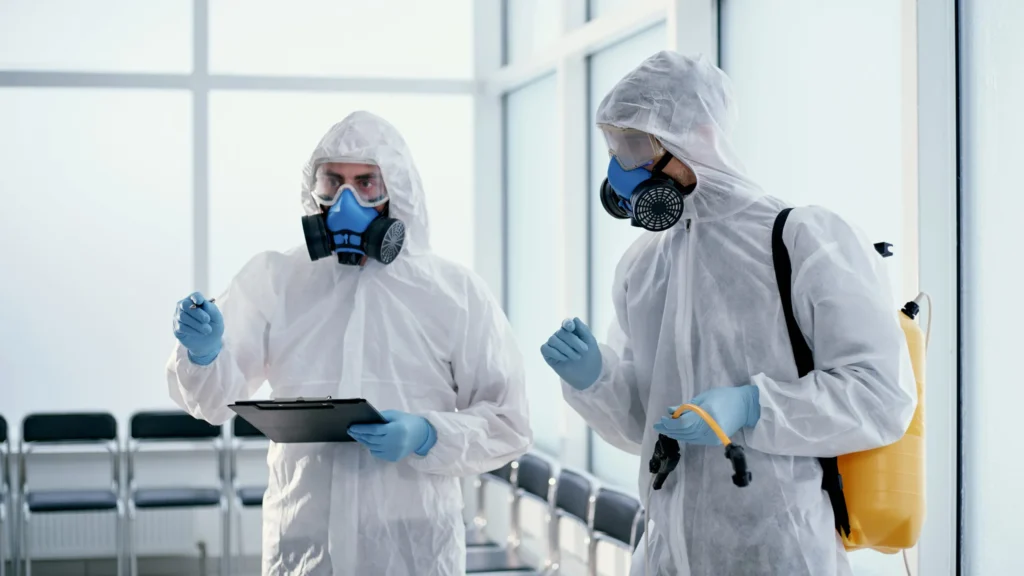
Bio Recovery Pro provides exactly this kind of documented remediation — working within OSHA and RCRA frameworks, responding within the cure-window timelines that matter, and issuing the certificate of decontamination that protects landlords both immediately and for years afterward.
Final Thoughts
Rental property biohazard laws sit at an intersection most landlords never think about until they’re standing in the middle of it — a 24-to-48-hour cure window that doesn’t pause for insurance approval, fair housing obligations that apply even when a unit is genuinely uninhabitable, and disclosure rules that can resurface years after a property has changed hands.
The landlords who navigate this well aren’t the ones who avoid these situations entirely — nobody can guarantee that. They’re the ones who treat the cure window as real, documentation as a habit rather than an afterthought, landlord negligence biohazard exposure as something to actively prevent rather than discover in a deposition, and the legal landscape as something to understand before it’s tested, not during.