
You’re about to list your house, and there’s a fact sitting in the back of your mind that you’re not sure what to do with: someone died there. Maybe it was a natural death, maybe something far more traumatic. Either way, you’re staring down one of the most legally inconsistent corners of real estate law in the country, and the honest answer to whether you have to disclose an unattended death when selling a house is: it depends entirely on which state you’re standing in.
This isn’t a federal question. There’s no national rule. What one state treats as legally irrelevant, another treats as a mandatory disclosure with real financial consequences for getting it wrong. Understanding exactly where your state falls, and what actually protects you regardless of the answer, is what this guide is for.
If you’ve searched anything close to “do you have to disclose an unattended death when selling a house,” you’ve probably already discovered that most general answers online are frustratingly vague. That’s because the honest answer really is state-specific, and the details matter enough that a vague answer can genuinely cost you.
Material Defect vs. Psychological Stigma: The Distinction That Decides Everything
Every state’s disclosure law starts by drawing the same basic line, even though where they land on each side of it varies wildly.
A material defect is a physical or legal problem that affects a property’s value, safety, or use — a cracked foundation, a failing septic system, an unpermitted addition, mold in the walls. Sellers across virtually every state are required to disclose known material defects, because the buyer can’t easily discover them and the seller can.
A psychological stigma is a completely different category. According to the National Association of Realtors’ definition, a stigmatized property is one psychologically impacted by an event — a death, a crime, an alleged haunting — that has no physical effect on the structure itself. The property’s foundation, plumbing, and electrical systems are exactly as sound as they’d be without the history. What’s changed is purely how a buyer might feel about living there.
This distinction is the entire reason a violent crime scene that’s been professionally decontaminated to a documented, verified standard can legally be treated as “no different structurally” from a house with no history at all, while a house with an undisclosed roof leak can trigger a lawsuit regardless of how anyone feels about it emotionally. Stigma property laws and biohazard contamination cases specifically sit at the intersection of these two categories, since the psychological history and the physical remediation are legally treated as entirely separate questions, even though most sellers experience them as one connected problem.
Real Estate Biohazard Disclosure Laws by State: Where the Lines Actually Fall
This is where it gets genuinely inconsistent, and sellers researching this topic are often surprised by how differently neighboring states handle the exact same scenario.
California is the state most people have heard of, and for good reason. Under Civil Code Section 1710.2, sellers must disclose any death that occurred on a property within the past three years, regardless of the cause. This came directly out of the landmark case Reed v. King, where a California court found that a decade-old multiple murder at a property could constitute a material fact worth disclosing given its dramatic effect on market value — a ruling that helped establish the entire modern concept of stigmatized property law.
Alaska requires disclosure of a known murder or suicide within a specific statutory window under AK Stat 08.88.615. South Dakota requires sellers to disclose whether a homicide, suicide, or felony occurred on the property within the past 12 months. Arizona takes the opposite approach, with a statute that specifically limits seller liability for not disclosing a natural death, suicide, homicide, or felony crime on the property.
Then there’s the much larger group of states that simply don’t require disclosure of a death at all, regardless of cause. Pennsylvania is the case study here: in Milliken v. Jacono, the Pennsylvania Supreme Court explicitly ruled that psychological stigma does not constitute a material defect, meaning sellers and their agents face no disclosure obligation for a prior death, including a murder, on the property. Massachusetts, Rhode Island, South Carolina, Illinois, Iowa, and Tennessee all follow similar logic through their own statutes, treating a death as a non-physical, non-material fact outside their disclosure requirements.
A handful of states carve out narrower exceptions worth knowing. Indiana doesn’t require disclosure of a psychologically affected property, but specifically does require disclosure if the home was previously used to manufacture methamphetamine — because that history carries a genuine physical contamination risk, not just a psychological one. That distinction alone tells you a lot about how these laws are actually reasoned: the moment an event leaves behind physical residue rather than just a story, most states’ analysis shifts.
South Carolina and several other non-disclosure states include an important caveat: while sellers aren’t required to volunteer psychological stigma information, they can still be held liable if they make an intentional misrepresentation in response to a buyer’s direct question. Lying when asked directly is a very different legal problem from simply not bringing something up.

Selling a House Where a Suicide Occurred: What Actually Changes
Suicide specifically sits inside the broader stigmatized property category in most states, governed by the same statutes covering homicide and natural death, though a few states single it out with slightly different language or timeframes.
Practically speaking, selling a house where a suicide occurred means checking your specific state’s statute for the exact category language used, since some laws list “suicide” separately from “homicide” or “felony,” and the disclosure trigger can depend on which specific term the event falls under. South Dakota’s 12-month window, for example, applies specifically to homicide, suicide, and felony — meaning if you’re outside that window, the statutory disclosure obligation may no longer apply even in a state that otherwise requires it.
Beyond the pure legal question, there’s a practical reality worth naming honestly: even in states with no disclosure requirement at all, a seller who is asked directly by a buyer and answers dishonestly is exposed to a fraud or misrepresentation claim regardless of what the disclosure statute says. Silence is legally different from a lie, and most of these statutes protect the former while still allowing consequences for the latter.
How a Certificate of Sanitization Protects Sellers From Future Lawsuits
This is the part of the process that turns a legally murky situation into a defensible, documented one — and it’s relevant regardless of whether your state legally requires disclosure at all.
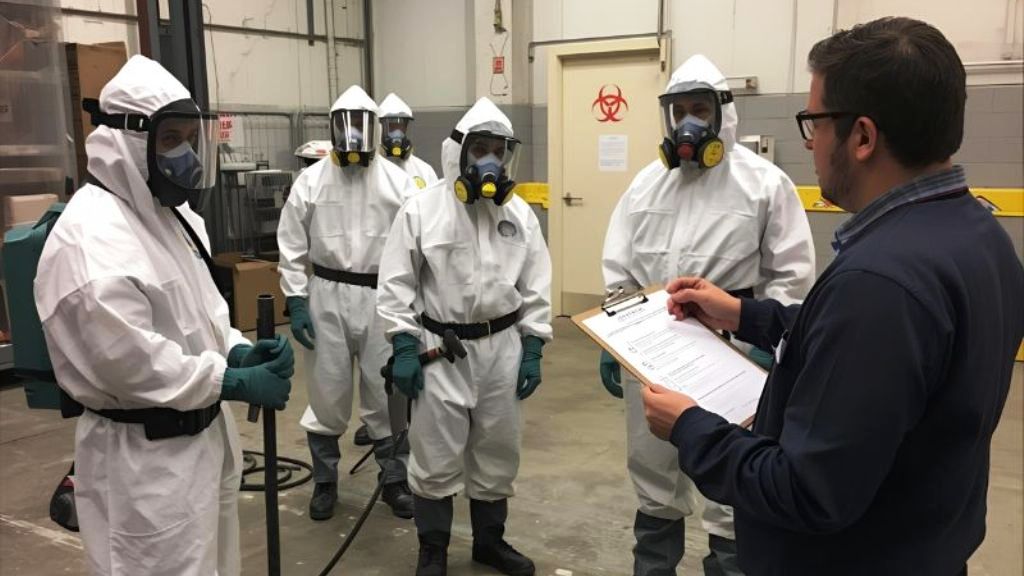
When a death involves any biological contamination — blood, bodily fluid, decomposition — professional remediation isn’t just a practical cleanup step. It produces documentation that becomes genuinely valuable during a sale. A certified remediation company should provide a formal completion report, sometimes called a Certificate of Sanitization or Decontamination, along with post-remediation testing data confirming the property meets a recognized safety standard.
This documentation matters for two separate reasons. First, in states requiring disclosure, it gives you something concrete and professional to actually disclose, rather than a vague description that invites a buyer’s imagination to fill in the worst version of events. Second, and often overlooked, it protects you from a very different kind of claim: a buyer alleging after closing that a property wasn’t properly remediated and that residual contamination created a health or habitability issue. A documented, professional Certificate of Sanitization is your evidence that the physical condition of the property — separate entirely from its psychological history — was properly addressed.
This matters even more in states that fall on the strict end of the disclosure spectrum. A seller in California, working within the three-year lookback window, benefits enormously from being able to disclose not just that a death occurred, but that it was followed by certified, verified remediation meeting a recognized industry standard. That single addition can be the difference between a buyer walking away and a buyer proceeding with confidence, because it answers the unspoken question behind every stigma disclosure: is this actually safe, or just technically disclosed?
Crime scene property remediation legal disclosure obligations, where they exist, are generally satisfied by accurate, factual language rather than exhaustive detail. You’re disclosing that an event occurred and, where applicable, that professional remediation was completed — not narrating the circumstances in a way that goes beyond what the law or a reasonable buyer’s question actually requires.
Best Practices for Agents Representing Stigma-Prone Properties
Real estate agents handling these listings carry their own professional exposure, separate from their client’s, and the smart ones treat this proactively rather than reactively.
Confirm your specific state’s statute language before advising a seller, since assuming “my state doesn’t require it” without checking the current statute can be an expensive mistake if the law has been updated. Recommend professional remediation and full documentation regardless of the legal disclosure requirement, since a Certificate of Sanitization protects the transaction even in non-disclosure states — a buyer who later learns about an undocumented death, even one the seller had no legal obligation to disclose, is far more likely to pursue a claim, warranted or not, than one who was given accurate information and professional documentation upfront.
Never answer a direct buyer question about a property’s history with anything other than an accurate answer, and coach sellers on this explicitly. The states that don’t require proactive disclosure still expose sellers to liability for direct misrepresentation, and agents share that exposure if they’re the one who answered incorrectly.
BioRecoveryPro works with certified remediation specialists who provide the documented Certificate of Sanitization and testing records that protect sellers and their agents through closing, regardless of which state’s disclosure rules apply.
Final Thoughts
Real estate biohazard disclosure laws by state genuinely do vary this much, and the only responsible approach is checking your specific state’s current statute rather than relying on general assumptions or what a neighboring state requires. What doesn’t vary, regardless of jurisdiction, is the value of professional remediation and clean documentation. Whether your state legally requires you to disclose or not, a certified Certificate of Sanitization is what actually protects a sale from unraveling later — turning an uncomfortable piece of history into a documented, defensible fact rather than a liability waiting to surface after closing.