
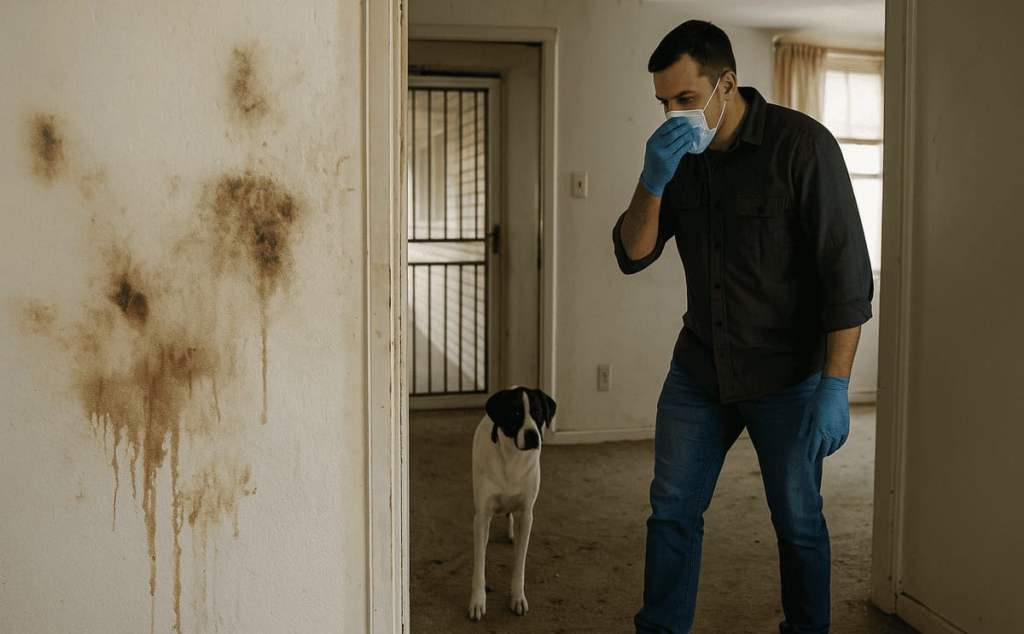
Finding out that a tenant turned your rental property into a clandestine drug lab is the kind of call no landlord is prepared for. There’s no gradual buildup — one day you’re managing a routine rental, and the next you’re standing outside a property with police tape across the door, a posted hazard notice, and a mounting list of legal obligations you didn’t know existed until this exact moment.
Knowing what to do if you find a meth lab in your rental determines everything that follows: how quickly you can legally re-lease the property, how much liability exposure you carry, and whether you comply with strict state decontamination law or walk into avoidable fines. This guide lays out the zero-tolerance protocol landlords and property managers need to follow from the moment of discovery through certified clearance.
Immediate Evacuation: Why the HVAC System Must Be Shut Down Instantly
The single most urgent action in any meth lab discovery landlord protocol has nothing to do with paperwork — it’s physical containment.
Methamphetamine production releases toxic vapor-phase byproducts, including solvents like toluene and acetone, anhydrous ammonia, and in some manufacturing methods, phosphine gas. These compounds don’t stay confined to the room where cooking occurred. If the property’s HVAC system is running, or gets turned on by anyone unaware of the contamination, the return air ducts pull those airborne chemicals directly into the ductwork and redistribute them through every room the system serves — instantly converting a single-room contamination event into a whole-building hazard.
The moment a meth lab is discovered or suspected, the HVAC system must be shut down and left off, full stop. This applies whether you discover it yourself, whether police notify you after a raid, or whether a tenant complaint tips you off before authorities are even involved. Do not enter the unit to investigate further. Do not attempt to ventilate by opening windows, which can spread airborne contamination into adjacent units in multifamily properties. Evacuate any occupants from the building immediately, including neighboring units in shared-HVAC buildings, and contact law enforcement and your local environmental health department without delay.
Steps After a Drug House Bust: What Happens and When
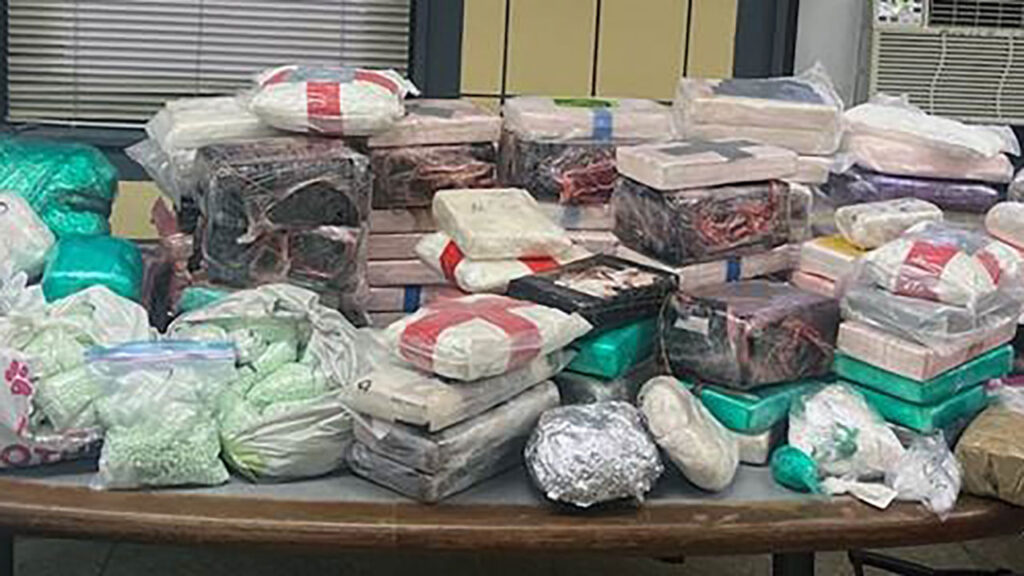
Once law enforcement executes a raid or otherwise confirms a clandestine lab on your property, a specific sequence unfolds — and understanding it helps you know what to expect and what’s required of you at each stage.
Law enforcement secures and processes the scene. Officers document the lab, collect evidence, and in many states, physically post a legal hazard notice on the property before leaving. Arizona’s clandestine lab statute, for example, requires the responding officer to affix a written “Notice of Removal” in a conspicuous location stating that hazardous substances may remain, that unauthorized entry is prohibited, and that violating the posted notice is a felony offense. Do not remove or disturb this notice under any circumstances — doing so is itself a separate violation in states with this requirement.
The property is reported to the state or local health authorities. In states with clandestine lab statutes, the law enforcement agency handling the case is required to report the contamination to the state environmental health department and, in many cases, the local health officer. Montana’s clandestine lab law, for instance, explicitly requires this dual reporting the moment an inhabitable property is confirmed contaminated.
The property may be added to a public or state registry. Depending on your state, the property may be listed on a state contaminated-property registry, the county health department’s list, or the federal DEA National Clandestine Laboratory Register. Indiana, for example, maintains a public list of clandestine lab addresses that isn’t removed until a certified inspector submits documentation confirming the cleanup level has been met.
You inherit specific notification obligations as the owner. Many states with clandestine lab statutes place a legal duty directly on the property owner: written notice to any subsequent tenant or purchaser that the property was used as a drug lab, unless and until it has been remediated to state standards by a certified contractor. Montana’s statute states this obligation explicitly, and it typically survives even after a change in property management, meaning ignorance of the history doesn’t remove the disclosure requirement once you become aware of it.
Working With Environmental Health Departments and Police
Chemical contamination cleanup property owner obligations are not something you navigate alone — and trying to manage this relationship informally is a mistake. Coordinate directly and in writing with two separate agencies.
Law enforcement handles the criminal investigation, evidence collection, and initial hazard posting. Get the case or incident number from the responding department immediately; you’ll need it for insurance claims, for any required state health department report, and for your own records if a dispute arises later about the timeline of discovery and response.
The local or state environmental health department governs the actual decontamination and clearance process. This is the agency that maintains your state’s numerical contamination standard — commonly expressed in micrograms of methamphetamine residue per 100 square centimeters of surface area — and the agency that ultimately determines whether your property meets the legal threshold for re-occupancy. States vary significantly here: Nebraska and New Hampshire apply a strict 0.1 µg/100 cm² standard, Indiana currently applies 0.5 µg/100 cm², and Montana sits at 1.5 µg/100 cm². Contact your state’s environmental health division directly rather than assuming a national standard applies — there isn’t one, since the EPA’s federal guidance is voluntary and states are free to set their own thresholds or decline to regulate at all.
Do not attempt to negotiate directly with either agency about shortcuts or expedited timelines. Property owners who cooperate transparently and move quickly toward certified remediation are treated far more favorably than owners who appear to be stalling or minimizing the situation.
Legal Requirements for Professional Chemical Testing and Clearance Mapping
Before any physical cleanup begins, a certified inspector must conduct pre-remediation testing to establish the scope and severity of contamination. This is not optional in regulated states, and it’s not something a general contractor or handyman is legally equipped to perform.
The testing process uses standardized wipe sampling: a swab is rubbed across a fixed surface area at multiple locations throughout the property — not just the room where the lab was located, since vapor-phase contamination spreads through shared air, particularly via any HVAC system that was operating during or after production. Samples are sent to a laboratory for quantitative analysis, and the results are mapped against your state’s specific clearance threshold to determine which areas require remediation and which, if any, already fall below the legal limit.
This pre-remediation clearance mapping accomplishes two things simultaneously: it defines the actual scope of work — telling a remediation contractor exactly which rooms, surfaces, and materials need treatment or removal — and it creates the legal documentation trail that will later prove the property was properly assessed, not just casually inspected. Some states, including Indiana, require this testing to be performed by a state-qualified inspector using a specific certification form submitted directly to the state health department as part of the official clearance process.
After remediation is complete, a second round of post-remediation clearance testing is required to confirm the contamination has been reduced below the legal threshold before the property can be legally re-occupied, re-leased, or sold without disclosure.
Why Standard Cleaning Companies Cannot Legally Clear This Property
This is the point where many landlords, trying to minimize cost and downtime, make an expensive mistake.
A general cleaning service, a standard restoration company without specific certification, or an in-house maintenance crew cannot legally clear a documented clandestine drug lab property, regardless of how thorough their cleaning appears. Several state statutes require that remediation be performed specifically by a state-certified drug laboratory site remediation contractor — a distinct credential from general biohazard or restoration certification. Certified meth lab decontamination help means hiring a company that can produce this specific state certification, not simply a company that advertises “biohazard cleaning” broadly.
The reason standard cleaning fails here is chemical, not just regulatory. Methamphetamine residue and its production byproducts penetrate porous materials — drywall, carpet, insulation, wood subfloor — far beyond what a surface wipe-down addresses. A visually clean room can still carry contamination levels well above the legal clearance threshold. Only a certified contractor using validated decontamination methods, combined with the pre- and post-remediation wipe testing described above, can produce documentation that a health department, an insurer, or a future tenant’s attorney will actually accept as proof the property is safe.
Attempting to cut corners here creates compounding liability: an improperly cleared property that’s re-leased and later causes a tenant health complaint exposes the landlord to a far larger civil liability claim than the cost of proper certified remediation would have been in the first place. Some states, recognizing this risk, offer limited liability protection to owners who voluntarily and properly remediate to state standards — a protection that only applies if the work was done correctly and documented properly.
What This Costs and How Long It Takes
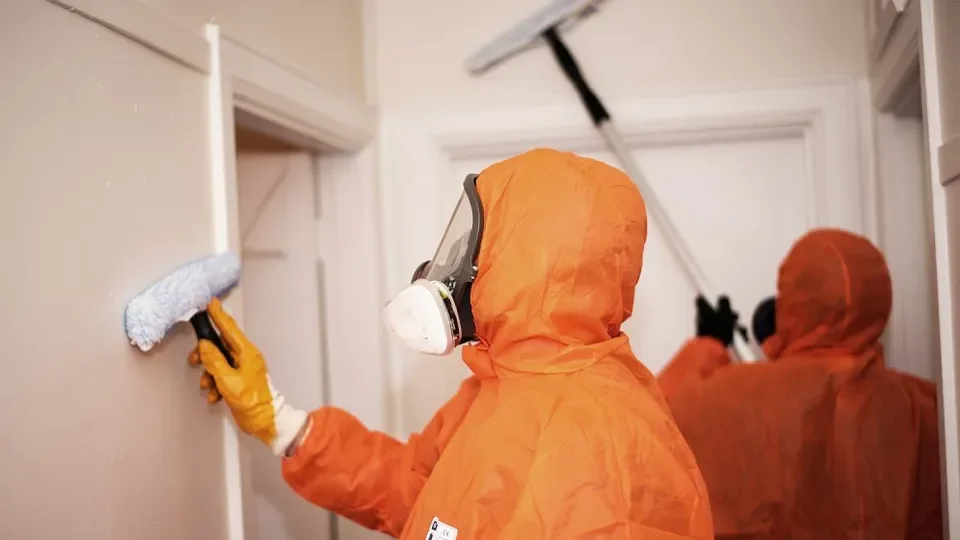
Realistic timelines and costs vary by contamination severity and state requirements, but landlords should expect the full process — from initial testing through certified clearance — to run anywhere from two to six weeks for a single-unit residential property with moderate contamination, and potentially longer for extensive multi-room or whole-building cases. Costs for testing, remediation, and clearance documentation commonly range from a few thousand dollars for a limited, single-room case to well over $25,000 for extensive contamination requiring significant material removal and HVAC system remediation.
BioRecoveryPro connects property owners and landlords with certified meth lab decontamination specialists experienced in state clearance testing, documentation, and the certification process required to legally re-lease a contaminated property — available across all 50 states.
Final Thoughts
Discovering a meth lab on your property triggers a legal and safety process that moves fast and doesn’t forgive shortcuts. Shut down the HVAC immediately. Do not disturb any posted legal notice. Coordinate transparently with both law enforcement and your state’s environmental health department. Insist on certified pre- and post-remediation testing, not a standard cleaning invoice. And treat the disclosure obligations that come with contaminated property history as permanent until a certified contractor’s documentation says otherwise.
The landlords who move through this correctly protect themselves from fines, future liability, and the far larger cost of getting it wrong.